REVIEW · OAXACA CITY
1 Hour Oaxacan Chocolate Making Class with Mole-making and Drinks
Book on Viator →Operated by Casa Crespo Cooking Class · Bookable on Viator
Chocolate and mole in one hour? Yes, please. This class in Oaxaca City turns cacao beans into chocolate bars you’ll use for a simple mole and hot chocolate, with real hands-on work. I like that it teaches the why behind the ingredients, not just the steps.
The other thing I love is the tight pacing: you get multiple stages of chocolate making—toasting, grinding, and shaping—within about an hour. One drawback to plan around: it’s a short class, so you won’t get a full multi-hour deep-dish cooking session or a long, sit-down tasting of everything Mexico does with chocolate.
In This Review
- Key highlights worth your time
- A One-Hour Chocolate Class That Actually Feels Hands-On
- Where You Meet in Centro (And Why Timing Matters)
- From Cacao Beans to Chocolate Bars: The Real Work
- The Mole Connection: Chocolate Meets Dry Chiles and Bread
- Hot Chocolate: The Drink Part You Can Actually Recreate
- What You Might Taste at the End (Beyond the Basics)
- Snacks, Licensed Guidance, and the Benefits of a Small Group
- Price and Value: Is $40 Fair for One Hour?
- Who This Class Suits Best
- Practical Tips Before You Go
- Should You Book This Oaxacan Chocolate Making Class?
- FAQ
- How long is the Oaxacan chocolate making class?
- What time does it start, and where does it meet?
- Is the class offered in English?
- How big is the group?
- What’s included in the class?
- What happens if I cancel?
Key highlights worth your time
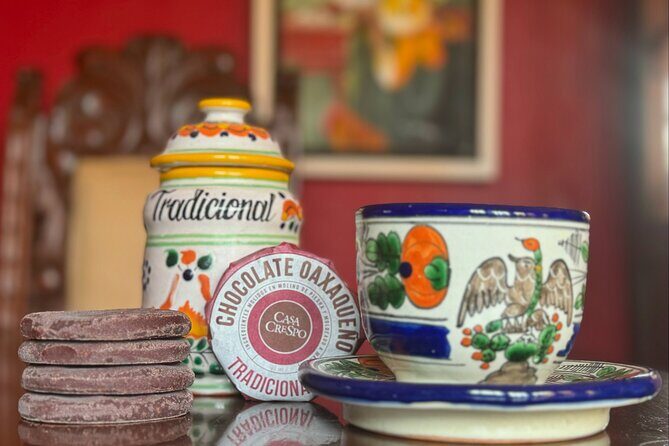
- Toast cacao beans and grind them: You’re not just watching.
- Make chocolate bars for mole and drinks: Ingredients you learn become flavors you taste.
- Dry-chile mole with chocolate and bread: A classic combo, explained in plain terms.
- Hot chocolate, made with chocolate and water or milk: You control the mix.
- Small group max of 14: Easier questions, more time at the work stations.
A One-Hour Chocolate Class That Actually Feels Hands-On
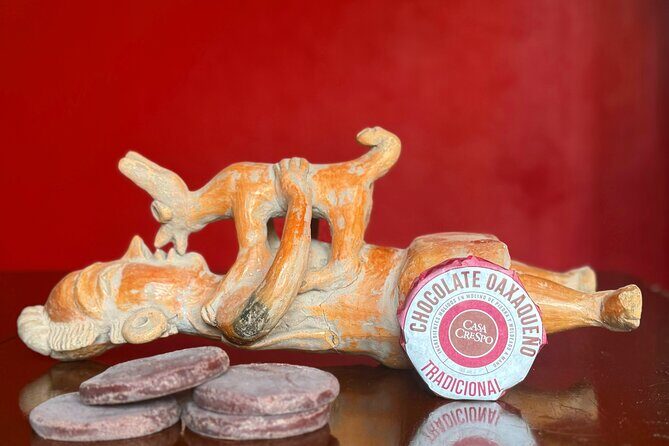
Oaxaca is famous for chocolate, but a lot of tastings stay at the surface level. This one is different because you do the work. You’ll learn how chocolate moves from cacao bean to something you can cook with.
The class runs about 1 hour, starting at 3:00 pm. That timing is great if you’re sightseeing earlier in the day and want a food-centered activity that doesn’t swallow your whole afternoon.
The group is capped at 14 people, which matters more than you’d think in a kitchen class. Fewer people means you’re more likely to get direct guidance instead of standing around waiting your turn.
If you're still narrowing it down, here are other tours in Oaxaca City we've reviewed.


Where You Meet in Centro (And Why Timing Matters)
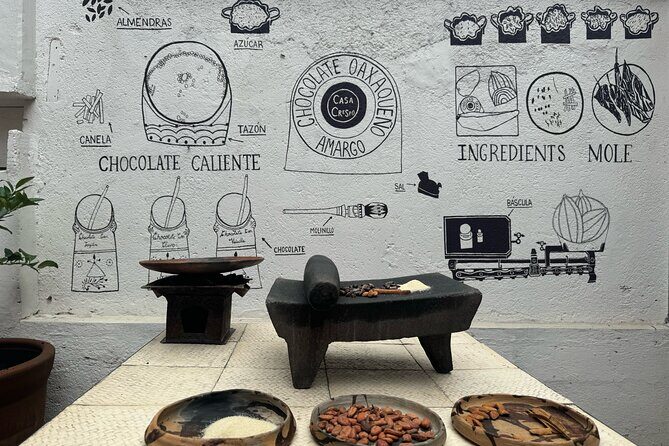
You’ll meet at Casa Crespo, address Reforma 808, Ruta Independencia, Centro, Oaxaca de Juárez. It’s in the city center, and the activity ends back at the same meeting point, so you’re not left improvising transport at the finish.
The experience provider uses a mobile ticket, and you receive confirmation when you book. That’s useful when you’re juggling maps, buses, and the usual Oaxaca schedule chaos.
Because it starts at 3:00 pm and lasts about an hour, you’ll want to build in some buffer before you arrive. You’ll likely be hungry once you start smelling toasted cacao, and you don’t want to walk in late and rush the early steps.
Also note: the class is offered in English. If you’re comfortable with basic cooking explanations, you’ll be able to follow along easily.
From Cacao Beans to Chocolate Bars: The Real Work
The heart of the class is the process. You’ll start with an explanation of chocolate in Mexico and why it matters in smaller communities. Then you move straight into the craft.
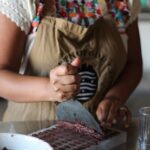
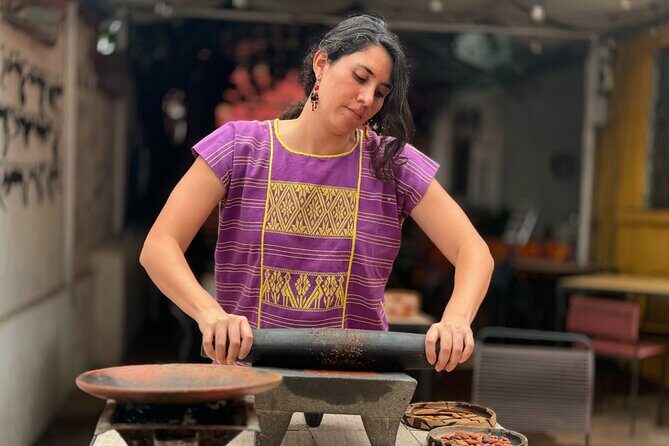
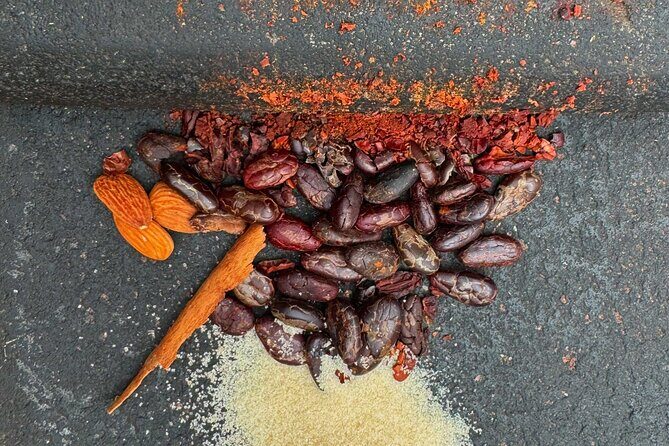
Expect steps like toasting cacao beans and learning how grinding changes what you’re working with. Cacao doesn’t taste like chocolate until you treat it right, and this class makes that connection fast.
Next comes the part you’ll remember later: turning your ingredients into chocolate bars. This is the big switch from food-as-a-product to food-as-a-process. You’re making something tangible, not just sampling.
Even if you’ve tried chocolate before, doing it yourself makes you pay attention to texture and smell. Toasted cacao has its own aroma—warm, earthy, and sharper than you might expect. Grinding also affects how smooth the final mixture feels.
The Mole Connection: Chocolate Meets Dry Chiles and Bread
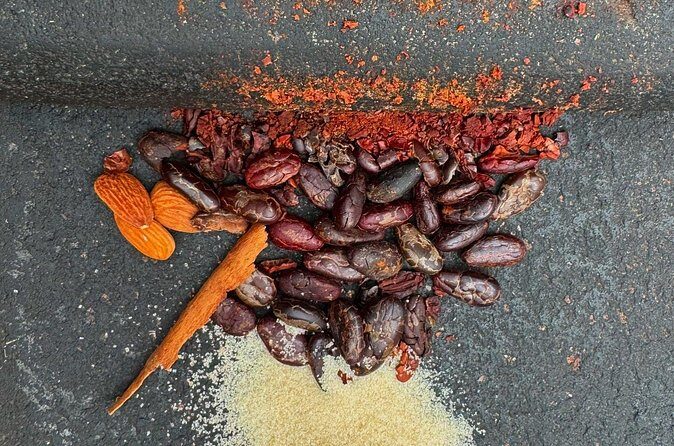
Once you’ve made chocolate bars, you’ll use them to create a simple mole. The mole is described as made with dry chiles, chocolate, and bread.
This is where the class becomes culturally interesting in a practical way. You’re not just learning a sauce recipe. You’re learning how chocolate can be a savory ingredient, not only a dessert one.
Dry chiles add heat and depth, while bread helps with body and helps the mixture come together. And the chocolate brings a darker flavor that can taste both smoky and slightly sweet, even when the final dish is savory.
What I like about this approach is that it teaches balance instead of pretending mole is one fixed formula. You’ll see how ingredients that seem unrelated in a candy shop end up working together in a single sauce.
Hot Chocolate: The Drink Part You Can Actually Recreate
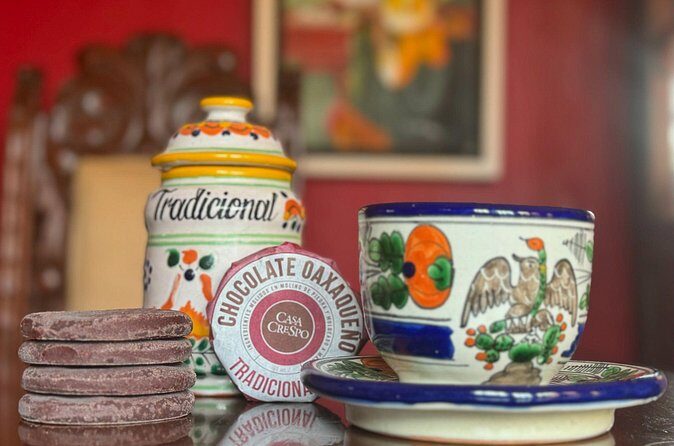
After the savory work, the class shifts to dessert mode with hot chocolate. The sample menu includes hot chocolate made by mixing chocolate with water or milk.
That detail is small, but it’s useful. It gives you a decision you can repeat at home or on your next trip: lighter and more straightforward with water, or richer with milk.
In class, you’ll likely get guidance on mixing so the chocolate dissolves and doesn’t turn grainy. That’s one of those kitchen lessons that doesn’t sound important until you try making hot chocolate later and realize you needed the technique.
If you love drinking chocolate that tastes like actual chocolate instead of sweet cocoa powder, this part will click for you.


What You Might Taste at the End (Beyond the Basics)
The official sample menu lists mole as the main and hot chocolate as dessert. That’s already a solid outcome for a 1-hour class.
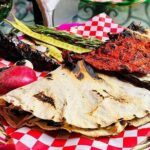
Some classes, though, go a step further. In one recent experience, a mole sauce was served over chicken, and chocolate ice cream showed up for dessert. The meal was served on a rooftop patio with twinkling lights.
I can’t promise every session includes chicken and ice cream, because that level of detail isn’t stated in the core description. But it does suggest the class has a habit of delivering a fuller tasting moment at the end, not just a quick pour of drink and out the door.
If you want food value, that’s a good sign. A cooking class that includes real plating and an actual serving moment makes the experience feel complete.
Snacks, Licensed Guidance, and the Benefits of a Small Group
You’ll get snacks during the class, and it’s led by a licensed guide. That combination matters because it keeps you from feeling like you’re doing labor for free air and a sip of chocolate.
With a max group size of 14, you also get a better chance to ask questions. You can usually tell when a class is designed for a large crowd. This one is set up for people to work together at the same stations.
And because it’s hands-on, the guide’s role isn’t just narration. A good guide becomes part coach, part safety net, and part translator between Mexican food terms and what you can actually do with your hands.
Price and Value: Is $40 Fair for One Hour?
At $40 per person for about an hour, you might wonder if that’s steep. In many cities, chocolate tastings can cost more and still leave you with no real skill.
Here, your money buys more than samples:
- You work through key stages (toasting, grinding, forming bars).
- You cook with what you make (mole ingredients and hot chocolate).
- You get guidance, snacks, and a structured end result.
So the value is in the active learning. You’re leaving with a clearer sense of how mole and chocolate connect, plus the kind of technique you can actually attempt later.
Also, this class is popular enough that it’s often booked about 16 days in advance on average. That usually means the sessions are filling with people who like cooking classes and want something short but satisfying.
If you’re choosing between a long cooking tour and a quick activity, this one sits in a useful middle ground.
Who This Class Suits Best
This fits you if you want:
- A short food experience that still includes real making.
- A class in English that doesn’t feel dumbed down.
- An Oaxaca activity with a clear focus: chocolate and mole.
It also suits travelers who like practical culture. Instead of only reading about Mexico’s ingredients, you handle them, smell them, and taste the result.
If you’re the type who needs a long leisurely meal or a deep course on regional cooking traditions over several hours, you might find the hour limiting. But if you want a high-impact hit of Oaxaca chocolate, it’s a smart choice.
Practical Tips Before You Go
Since you’re working with food smells and hands-on steps, wear something comfortable. You’re in a kitchen-style environment even if the class is organized and clean.
Go hungry but not overly stuffed. Snacks are included, and you’re making mole and hot chocolate, but the tasting part may be the highlight. Arriving too late in your meal planning could mean you don’t enjoy the flavors as much as you should.
Bring curiosity, and don’t worry about knowing any Spanish terms. The class is English offered, and the guide’s job is to help you connect the dots between ingredients and the final dish.
Should You Book This Oaxacan Chocolate Making Class?
I think you should book it if you want a one-hour Oaxaca experience that’s hands-on and focused. The combination of cacao-to-chocolate-bar making, then mole and hot chocolate, gives you a tight arc from ingredient to finished flavors.
It’s also a good pick for solo travelers and couples because the group stays small at 14 people. You’ll get more attention than you would in a big tasting line.
Skip it only if you want a long cooking event, or you’d rather spend your time on broader Oaxaca sightseeing than in a kitchen. With a 1-hour format, you won’t leave feeling like you solved world cuisine. You will leave feeling like you made something real.
FAQ
How long is the Oaxacan chocolate making class?
The class lasts about 1 hour.
What time does it start, and where does it meet?
It starts at 3:00 pm and meets at Casa Crespo, Reforma 808, Ruta Independencia, Centro, 68000 Oaxaca de Juárez, Oax. Mexico. The activity ends back at the meeting point.
Is the class offered in English?
Yes, the class is offered in English.
How big is the group?
The class has a maximum of 14 travelers.
What’s included in the class?
It includes snacks and a licensed guide.
What happens if I cancel?
This experience is non-refundable and cannot be changed for any reason.