REVIEW · OAXACA CITY
Private Tour, all inclusive: Tlacochahuaya, Mezcal, Teotitlán del Valle
Book on Viator →Operated by Guide Oaxaca · Bookable on Viator
A day where Oaxaca’s crafts and flavors walk right beside you. This private tour blends Teotitlán del Valle weaving with a Dominican-era church, then adds mezcal country and studio time—so you’re not just seeing places, you’re understanding how the region makes its art and drink. I love the way the day runs with no surprises: entrance tickets and transportation are handled, and the only extras are the usual ones (tips and your own lunch/meals).
One more thing I really like: the guide team brings real expertise, and my time with Rosario showed how much context can fit into a few well-chosen stops. The only real drawback to keep in mind is the schedule moves at a steady pace for a 7 to 8 hour day, so if you want long, slow wandering in one place, you’ll want to arrive hungry for variety.
In This Review
- Key highlights you’ll actually notice
- Price and what you get for $199 per person
- The flow of the day: how a 7–8 hour plan stays enjoyable
- Stop 1: Teotitlán del Valle and the wool rug tradition
- Stop 2: San Jeronimo Tlacochahuaya and the fresco-filled complex
- Stop 3: Mezcal Don Agave distillery visit and a traditional drink
- Stop 4: Casa Viviana and the honey + wood smoke atmosphere
- Stop 5: Pantaleón Ruiz Studio for etchings and metal sculpture
- The guides and why it matters: Rosario’s kind of context
- Included details that make your day easier (and cheaper)
- What’s not included (so you don’t get surprised)
- Who this tour is best for
- Should you book this private tour?
- FAQ
- FAQ
- Is pickup offered?
- How long is the tour?
- What’s included in the price?
- What isn’t included?
- What languages are the guides?
- Is this tour private?
- Are there any limitations on who can join?
- What if I need to cancel?
Key highlights you’ll actually notice
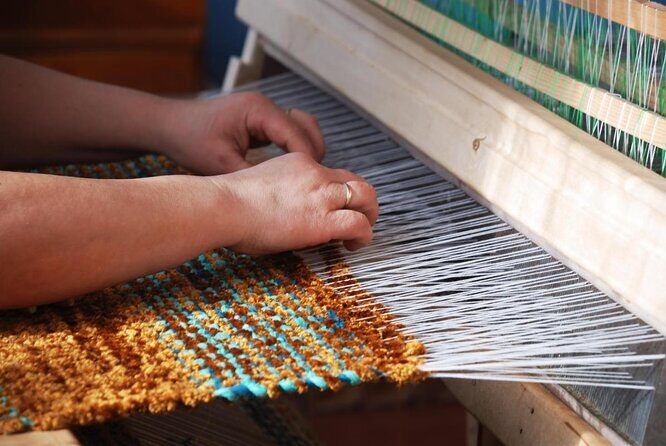
- Teotitlán del Valle natural-dye wool rugs and art reproductions by major artists
- San Jerónimo Tlacochahuaya: a Dominican religious complex built on an earlier temple base
- Mezcal Don Agave: a distillery visit with a traditional drink included
- Casa Viviana: honey scent and wood-burning atmosphere in the village of Teotitlán del Valle
- Pantaleón Ruiz Studio: metal sculpture and etching work from a locally known artist
Price and what you get for $199 per person
At $199 per person, this is priced as a private, full-day experience rather than a quick “grab a bus” outing. For that money, you’re not just paying for transportation—you’re paying for a guide who can connect the dots between Oaxaca’s craft traditions, religious art, and mezcal production.
Here’s what’s covered: private transportation, bottled water, an entrance ticket to each stop, and a traditional mezcal drink at the distillery. Language support is available in French, English, or Spanish, and you have a real guide working with you throughout. If you prefer to keep your day simple—no hunting for tickets, no figuring out routes—this package style is a strong value.
What you should plan for: lunch isn’t included, and tips aren’t included either. That’s normal, but it’s worth budgeting. Also, this tour is built as a shared-group format within your own private booking (only your group participates), and the day is designed to fit multiple stops, not just one long one.
If you're still narrowing it down, here are other tours in Oaxaca City we've reviewed.


The flow of the day: how a 7–8 hour plan stays enjoyable
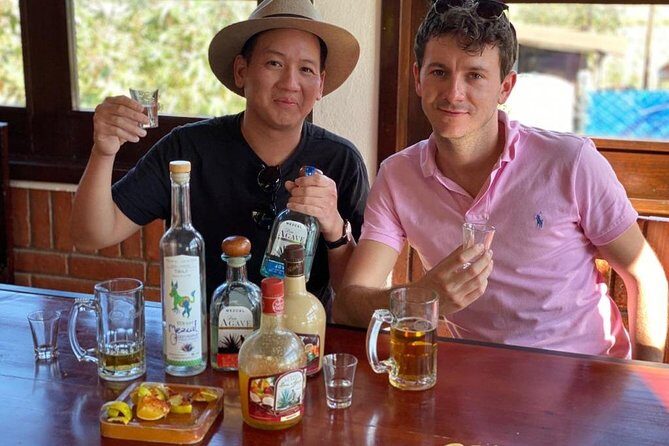
This is a full day (about 7 to 8 hours) built around five stops. You get pickup offered, and you’ll be guided door-to-door in the sense that you’re not managing transit between locations. That matters in Oaxaca, where a “simple” plan can become stressful fast if you’re doing everything solo.
The pacing is purposeful. Each stop is short enough to keep momentum, but long enough to leave with something concrete:
- You’ll see crafts being made and learn why materials matter (natural dyes, wool).
- You’ll get historical context at a church that shows how religious sites evolved over time.
- You’ll taste mezcal in a distillery setting rather than just hearing the word.
If you hate rushing, pick this tour only if you’re the kind of person who enjoys hopping from one focused experience to the next.
Stop 1: Teotitlán del Valle and the wool rug tradition
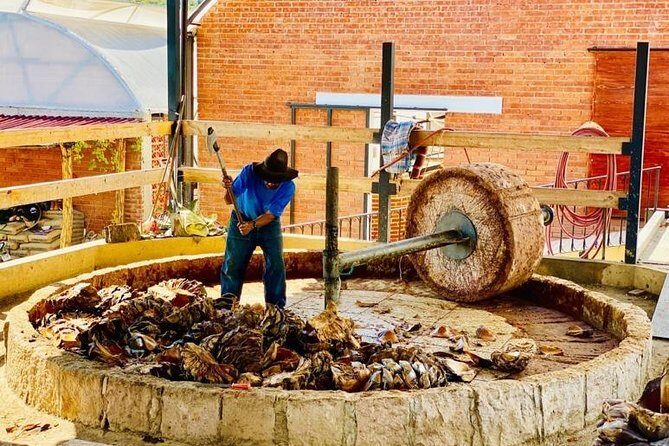
Teotitlán del Valle is one of those places where the product tells you a story. The focus here is wool rugs made with natural dyes, and you can expect to see beautifully crafted pieces as part of your visit.
I love this stop because it gives you a hands-on feeling for how Oaxaca’s “everyday” crafts become serious art. Wool is only part of it. The dye process is the other half—especially when the colors come from natural sources. That’s the kind of detail that makes later rug shopping (or rug spotting back in Oaxaca City) way more interesting.
You may also run into reproductions of works associated with well-known modern artists such as Tamayo, Frida Kahlo, Miró, Matisse, Toledo, and Picasso. That blend—local technique paired with famous imagery—helps you understand how artists and artisans think about audiences. This isn’t just folk craft behind glass.
Time on the ground is about 1 hour, and admission here is free.
Practical consideration: if you’re planning to buy a rug, remember this is a short stop. You’ll likely need to decide fast, or be ready to limit yourself to smaller items like coasters or wall pieces.
Stop 2: San Jeronimo Tlacochahuaya and the fresco-filled complex
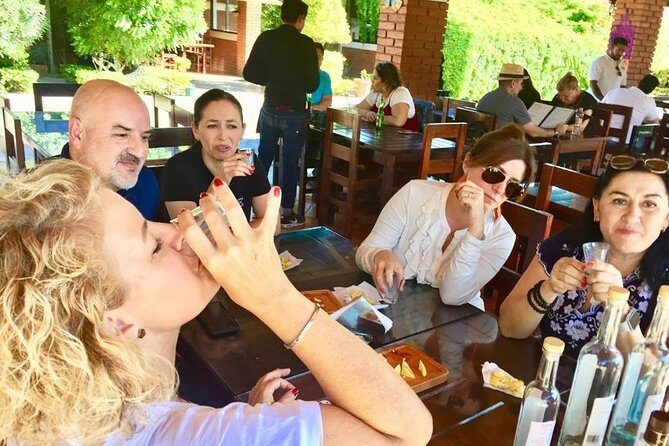
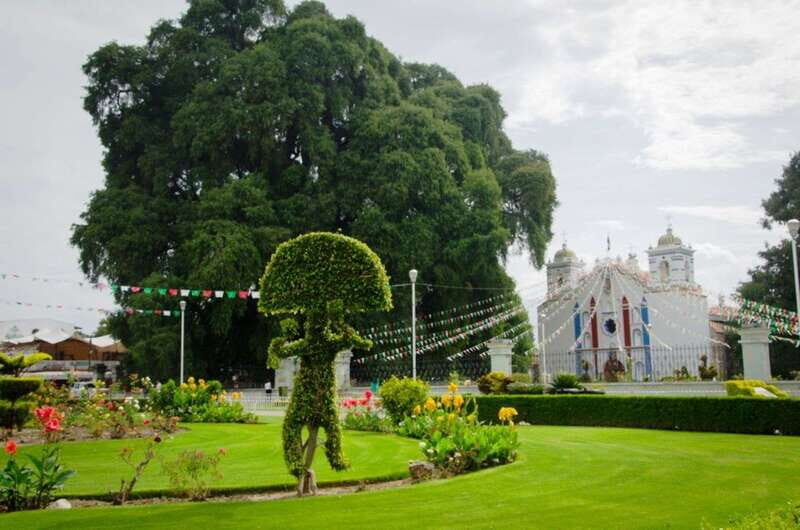
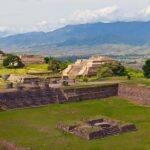
Next up is San Jerónimo Tlacochahuaya, a religious complex built by Dominican monks in the 16th century on top of the base of a pre-Hispanic temple. That layering is a key reason this stop hits differently than a typical church visit. You’re not only looking at religion—you’re looking at how places were reused, transformed, and given new meaning.
The complex includes frescoes with features of native people, painted using cochineal. Cochineal is a powerful detail to know because it’s more than a color fact—it’s a reminder that materials used in art also connect to trade and local knowledge. When you understand that, the frescoes feel more grounded and less generic.
This stop runs about 45 minutes, and admission is free.
What could be a drawback: if you’re mostly there for mezcal and food, this is the most history-heavy segment. Give it your full attention, and it will reward you. Treat it like a quick photo stop, and you’ll miss the story of the site’s timeline.
Stop 3: Mezcal Don Agave distillery visit and a traditional drink
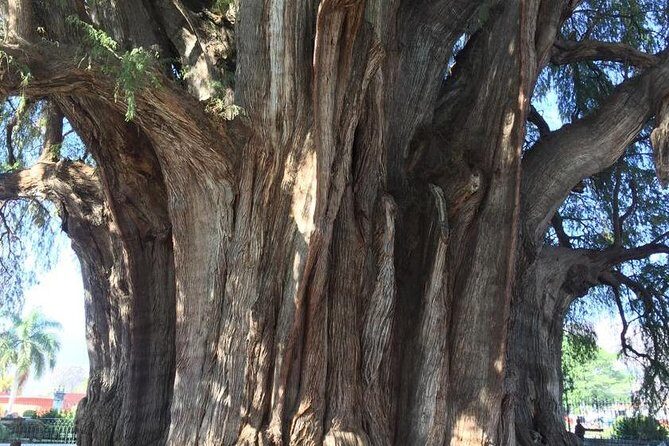
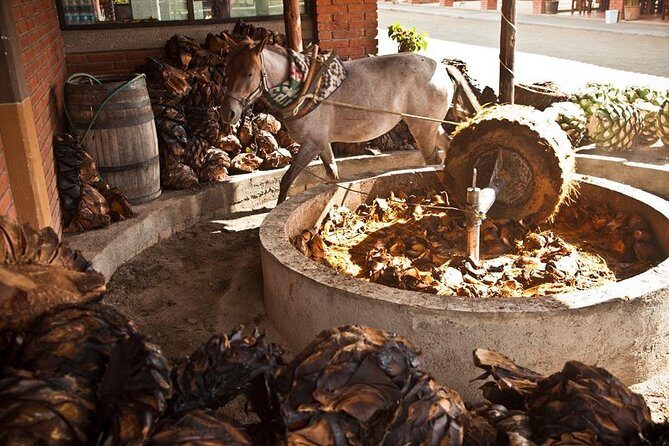
Then you shift from art history to something you can taste. The drive through the region sets you up for what you’ll see: agave fields ripe for mezcal production. Passing distillation facilities adds to the feeling that mezcal isn’t a novelty here—it’s part of the landscape and the economy.
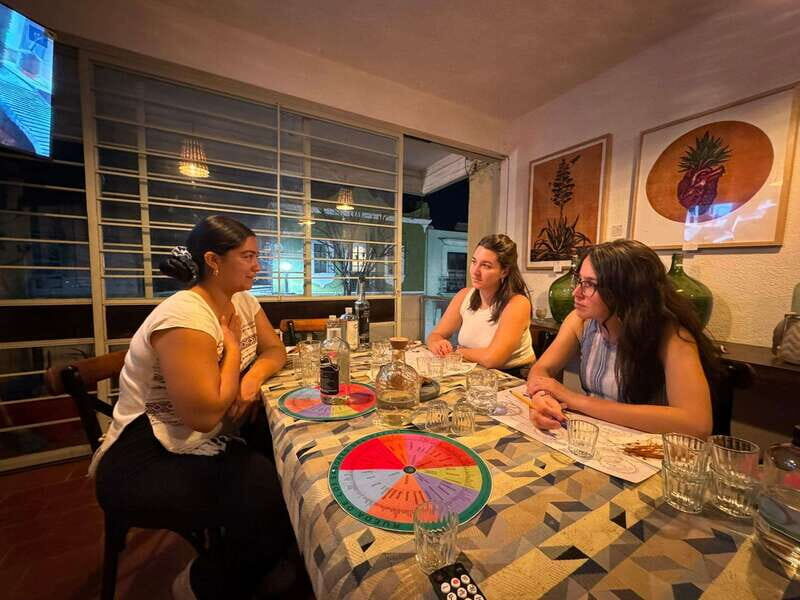
At Mezcal Don Agave, plan for about 2 hours and a included entrance ticket. The big win is that you get the traditional mezcal drink as part of the tour, not as an optional add-on.
This matters for two reasons:
- You’re learning in context. You’re at the production site, not just at a counter.
- You save money and time. You don’t need to hunt for a separate tasting tour.
A quick reality check: the actual mezcal experience can be as much about the explanations as about the sipping. If you enjoy hearing how production works and why certain plants and processes matter, you’ll get more out of this stop.




Stop 4: Casa Viviana and the honey + wood smoke atmosphere
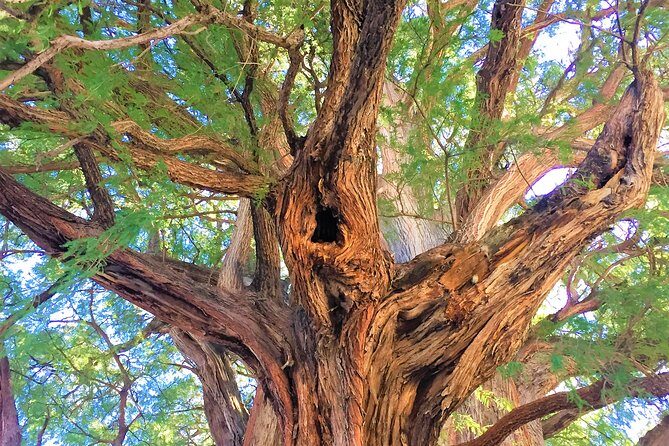
Back in the village of Teotitlán del Valle, you’ll stop at Casa Viviana. This is described as a place where the smell of honey and burning wood fills the quiet street, and that sensory note is exactly why I’d put it on your “don’t skip this” list.
You’ll experience what the space feels like: a modest brick-front setting with activity behind it, tied to local goods (honey is the star mentioned here). Even if you’re not buying anything, it gives you a break from the more formal craft and distillery settings.
This stop is about 40 minutes, with admission included.
Consideration: this is more atmosphere-focused than “one big thing to do.” If you prefer hands-on workshops, you might wish this portion ran a bit longer—but it still serves as a nice reset in the middle of a full-day schedule.
Stop 5: Pantaleón Ruiz Studio for etchings and metal sculpture
For the final stop, head to the Pantaleón Ruiz Studio, where art is created rather than merely displayed. This is one of the more rewarding segments if you like watching technique meet creativity.
The studio is tied to a regional artist, and it’s described as work involving etchings and collaborative metal sculpture. That combination is useful for understanding Oaxaca’s contemporary craft scene. It’s not only pottery, weaving, or wood. There are artists working in mixed media who still draw from local talent and local networks.
Time here is about 45 minutes, and admission is included.
Practical tip: if you want the most out of this stop, ask your guide about what you’re seeing and how the pieces connect to the region’s artistic culture. A good guide can turn a quick studio walk into a meaningful conversation.
The guides and why it matters: Rosario’s kind of context
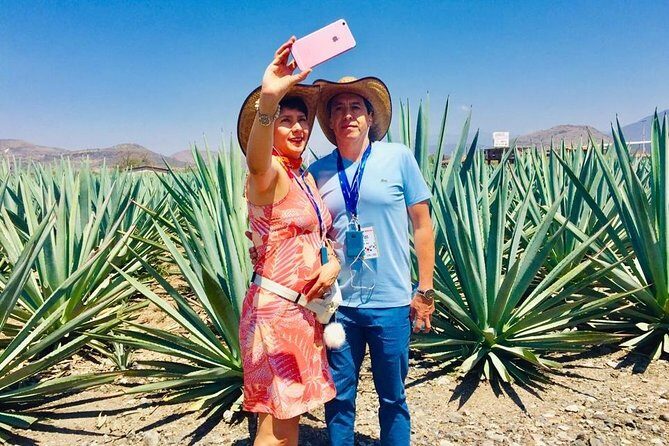
One of the strongest parts of this experience is the guide quality. My time with Rosario (and the way the guides are described) reflects a specific standard: these are graduate guides with extensive knowledge of the region, and they pass through a guide degree. That’s important because it shapes how the tour feels. You’re not just hearing facts; you’re getting context that ties each location to the next.
In my experience, Rosario was the kind of guide who can explain history without dumping a textbook on you. The result: the day feels organized, and you leave knowing why each place matters.
And yes, you’ll likely feel the difference between a guide who can name things and a guide who can explain them. This tour leans strongly toward the second type.
Included details that make your day easier (and cheaper)
I like travel days that handle the friction. Here, bottled water is included, and entrance tickets to all visiting sites are included too. That means you’re not juggling cash or trying to figure out what’s free, what’s not, and what you need to buy before a gate.
Also, since private transportation is included, you’re not trying to piece together local transit while staying on schedule. In a day that includes both rural-feeling stops and historical sites, that convenience isn’t fluff—it keeps your time focused on the experience.
What’s not included (so you don’t get surprised)
Two things aren’t included: lunch and tips. That’s it. Everything else that could cause mid-day stress is already covered: transportation, tickets, water, and the mezcal drink.
If you want the day to feel smooth, plan a lunch strategy ahead of time. Either eat before you start, or set aside budget for lunch once the tour finishes or at a quick meal stop if your guide suggests one (your day’s schedule doesn’t promise lunch being part of the tour).
Who this tour is best for
This is a great match if you want:
- A private, guided day without ticket hassles
- A mix of craft + history + mezcal in one schedule
- A guide who can explain what you’re seeing in plain language
It’s also smart for groups who want to stay together, since it’s only your group participating. If you love watching how local artisans work and you like learning the “why” behind a process (dyes, fresco materials, production settings), you’ll enjoy it.
If you’re the type who wants one attraction for half a day and then nothing else, this may feel like too much movement. But if your idea of a perfect day is “many meaningful stops,” you’re in the right place.
Should you book this private tour?
Yes—if you want a guided, all-in-one Oaxaca craft-and-mezcal day that stays organized. At $199, the real value is not just that it’s private; it’s that transport, entrance tickets, water, and the mezcal drink are built in. That lets you spend your energy on the experience itself instead of logistics.
Book it especially if:
- You care about natural-dye weaving and local artist work
- You like history that connects to materials (like cochineal in frescoes)
- You want a guide who can keep the day coherent (Rosario-style, with real context)
Skip it only if you’re hunting for lots of free time in one place or you’d rather build your own plan from scratch with no structured stops.
FAQ
FAQ
Is pickup offered?
Yes. Pickup is offered as part of the tour.
How long is the tour?
The duration is about 7 to 8 hours.
What’s included in the price?
The tour includes a traditional mezcal drink, an English/French/Spanish speaking guide, private transportation, bottled water, and entrance tickets to all visiting sites.
What isn’t included?
Lunch isn’t included, and tips are not included.
What languages are the guides?
Guides are available in French, English, or Spanish.
Is this tour private?
It’s a private tour/activity. Only your group will participate.
Are there any limitations on who can join?
Most travelers can participate. Service animals are allowed, and the meeting areas are near public transportation.
What if I need to cancel?
You can cancel for a full refund if you cancel at least 24 hours before the experience starts.