REVIEW · OAXACA CITY
Oaxaca Artisan Pottery Alebrijes, Black Clay Tour and Frida Kahlo
Book on Viator →Operated by Panama San Blas Tours · Bookable on Viator
This day has a lot of craft packed into it. You’re set up for Oaxaca folk art at three respected ateliers, with time to watch real artisans at work and even try clay yourself. I love that the route mixes two standout styles—colorful alebrijes and the mirror-shine of barro negro—and I also like the hands-on pottery moment where you can make your own mezcalero. One thing to keep in mind: lunch isn’t included, so you’ll want to budget for the midday stop.
It’s a longish outing (about 8 hours) starting at 8:30 am, with pickup around Oaxaca center hotels and Airbnbs. The tour runs in English with a guide, and you go by private car both ways, which makes the ride between workshops feel less stressful. If you’re hoping for a short, low-effort day, plan for some walking and waiting while you watch demonstrations.
In This Review
- Key Points to Know Before You Go
- Why Alebrijes and Black Clay in One Day Works
- Route and Timing: Getting Around Oaxaca in About 8 Hours
- Stop 1: Hotel Pickup and First Transfer in Oaxaca
- Stop 2: Jacobo and María Ángeles Alebrijes Workshop
- Stop 3: Azucena Zapoteca Lunch Break (Plan for It)
- Stop 4: Alfarería Doña Rosa and the Shine of Barro Negro
- Stop 5: José García’s Manos que ven Pottery Class (Make Your Own Mezcalero)
- What You’ll Take Home—and What to Buy Carefully
- Price and Value: Is $195 a Good Deal for This Day?
- Who Should Book This Tour
- A Quick Reality Check: Matching the Exact Workshops
- Should You Book This Oaxaca Artisan Tour?
- FAQ
- How long is the Oaxaca Artisan Pottery, Alebrijes, and Frida Kahlo experience?
- How much does the tour cost?
- What time does the tour start?
- Is pickup available in Oaxaca City?
- Is lunch included?
- What’s included in the tour price?
- Is the tour private?
- Can I participate in the pottery class?
- Are admission tickets included?
- What is the cancellation policy?
Key Points to Know Before You Go

- Alebrijes made from copal wood, with designs inspired by Zapotec iconography
- Barro negro’s signature shine, explained through the traditional molding and polishing process
- Hands-on pottery class where you can craft a mezcalero to take home
- Three master workshops plus an on-the-ground lunch stop (but lunch costs extra)
- Private, English-guided day trip with hotel pickup in Oaxaca center
- One possible scheduling mismatch to check, since a prior guest had questions about exact stops
Why Alebrijes and Black Clay in One Day Works
Oaxaca artisan days can turn into a blur of shops if you’re not careful. This one has structure: you start with one craft tradition, pause for a proper meal stop, then switch to another technique entirely, and finish with a class where you do something with your hands.
What I like most is the contrast. Alebrijes are all about imagination—fantastic creatures carved and painted with intense detail. Barro negro is the opposite mood: quiet, methodical work with clay that becomes glossy through a specific approach. Seeing both in one day helps you understand Oaxaca isn’t just one style. It’s a whole set of traditions that hold up under close inspection.
And yes, you’ll be offered the chance to buy at the workshops too. That can be a plus if you like supporting artisans directly—and it’s also why you should pay attention to what’s being demonstrated versus what’s being sold.
If you're still narrowing it down, here are other tours in Oaxaca City we've reviewed.



Route and Timing: Getting Around Oaxaca in About 8 Hours
The day begins at 8:30 am, and pickup happens at hotels or Airbnbs in Oaxaca center. From there, the tour includes transport by private car both ways, so you’re not bouncing between multiple vehicles or negotiating rides with strangers.
Think of it like a workshop circuit. You’ll spend around two hours at the alebrije workshop, about one hour at each of the other stops, plus time for the lunch break. Total duration is listed as about 8 hours, and that’s a good match for a full morning-to-mid-afternoon craft day.
A practical note: workshop schedules can feel hands-on and slow at the same time. You’ll likely see demonstrations, watch steps, and get explanations—so even if a stop is “only” an hour, it can still feel like you’re really there. Wear comfortable shoes and plan to look with your head and your eyes, not just your phone.
Stop 1: Hotel Pickup and First Transfer in Oaxaca
Your first hour is basically getting you moving. Pickup is offered across Oaxaca center, then there’s about one hour transfer before you settle into the first artisan experience.
This opening period matters more than it sounds. Oaxaca workshops are spread across different neighborhoods and nearby communities, and the private car keeps the day from eating itself alive with logistics. If you start already tired, the later stops—especially the hands-on class—won’t feel as satisfying.
Also, since the tour is private for your group, you can generally expect fewer delays from the usual group-changes. Still, bring a little patience: workshops run on time, but artisans don’t work like theme parks.
Stop 2: Jacobo and María Ángeles Alebrijes Workshop
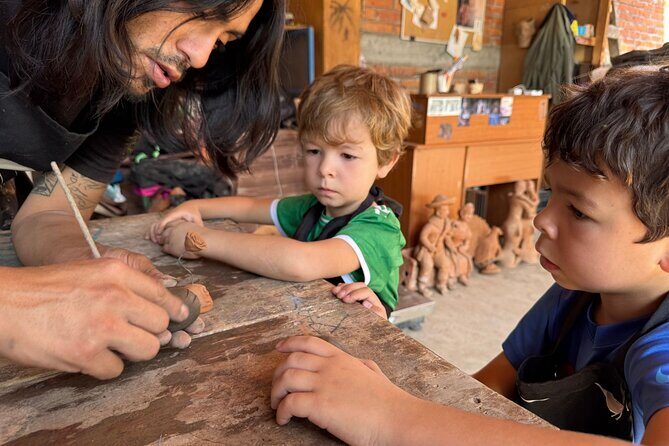
This is where the day gets colorful fast. You’ll visit the Jacobo and María Ángeles Workshop in San Martín Tilcajete, a place known for making alebrijes—hand-carved and painted wooden sculptures of fantastic creatures.
What you’re really learning here is the full workflow. You’ll hear how carvers start with choosing copal wood, then move into carving and shaping, and finally apply intricate designs. Those designs are linked to Zapotec iconography, which gives the art more meaning than just decoration. It becomes a visual language you can read once someone points out the patterns.
This stop also includes time in the workshop store, where you can purchase certified alebrijes. The tour description frames them as art investments with value increasing over time. Even if you’re not buying, it’s still useful to see how certification and sourcing work—because it’s often what separates mass-made souvenirs from pieces with long-term credibility.
One small consideration: alebrijes are detailed, and the store can tempt you to overbuy quickly. If you’re not sure what you want, take your time during the demonstration first. Then revisit the shop with a plan.
Stop 3: Azucena Zapoteca Lunch Break (Plan for It)
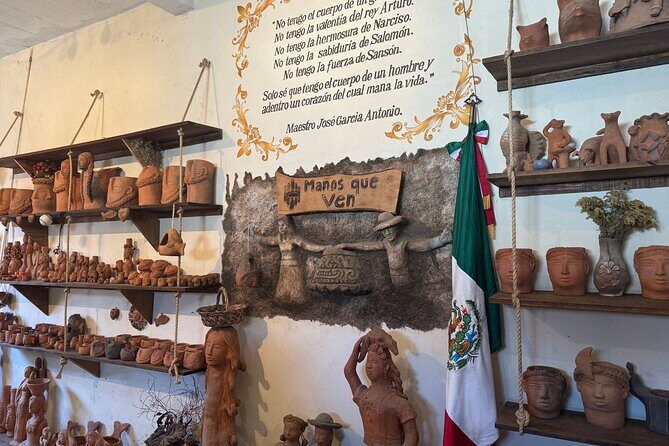
Lunch is your reset button. The stop is at Azucena Zapoteca, and you’ll have a chance to try traditional Oaxaca food.
The key detail is simple: lunch isn’t included. So if you have dietary needs or a specific budget, this is where you’ll want to be ready. On the positive side, a past guest described the lunch stop as a gorgeous property with food that was fantastic—so it’s not just a random pit stop.
Timing here is worth considering. Since the rest of the day is workshop-heavy, lunch is the moment you’ll want to actually refuel, not just grab a snack. If you’re sensitive to long gaps, eat earlier rather than later within the time window.






Stop 4: Alfarería Doña Rosa and the Shine of Barro Negro
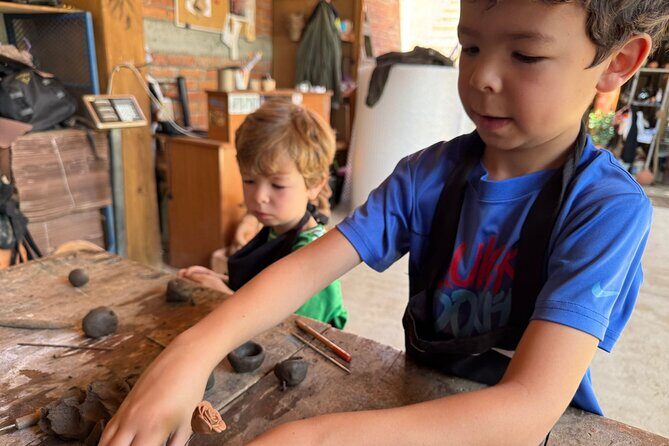
Next you switch crafts, and the mood changes. You’ll visit Alfarería Doña Rosa in San Bartolo Coyotepec, famous for barro negro—Oaxaca black clay pottery.
What makes Doña Rosa’s work special is a technique that gives the finished pieces their distinctive glossy shine. The tour focuses on the process: you’ll observe skilled artisans demonstrating how clay is molded and polished using traditional methods.
This is one of those crafts where the magic is in the steps you don’t normally think about. If you’ve only seen the final pottery, you might assume shine comes from paint or glazing. Here, you’re meant to see the craftsmanship behind the surface, and that makes the objects feel more earned.
One practical tip if you’re shopping: the “wow” pieces tend to be the ones with the best finish and the most consistent look. Don’t rush through the pottery selection. Use the demonstration time to understand what features you should look for.
Stop 5: José García’s Manos que ven Pottery Class (Make Your Own Mezcalero)
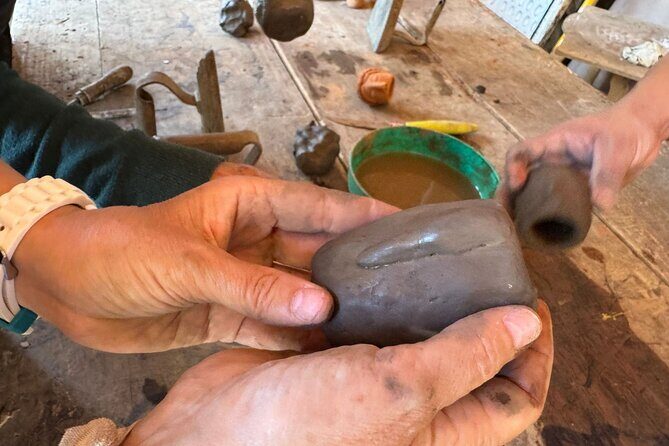
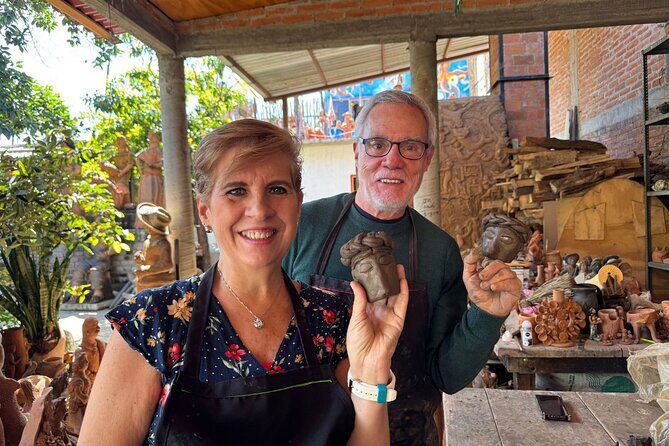
This is the most personal stop of the day. You’ll go to José García’s Workshop at Manos que ven in San Antonino Castillo Velasco, where the master, Maestro José García Antonio, is known for creating clay sculptures despite losing his sight. His work, especially his iconic mermaid figures, is highlighted as an example of skill powered by touch and sound craftsmanship.
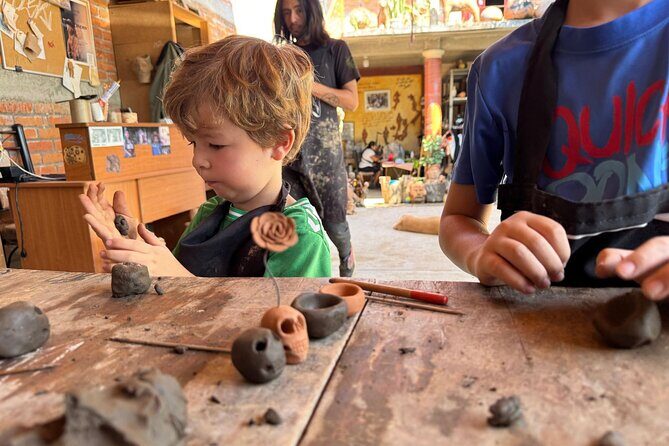
Even better, you don’t just watch—you do something. The tour includes a pottery class led by an apprentice, and the experience culminates in you crafting your own mezcalero, an iconic piece of Oaxacan culture that you can take home as a keepsake.
This class is one of the best value parts of the itinerary, because it turns sightseeing into participation. If you like learning by doing, you’ll likely find this is the moment you remember most later, not just the photos.
A balanced note: the class can be time-consuming compared to a quick demo. One past guest appreciated how the guide supported kids who spent extra time sculpting. If you’re traveling with children or you know you’ll get absorbed in the making process, this tour’s workshop flow is a good match.
What You’ll Take Home—and What to Buy Carefully
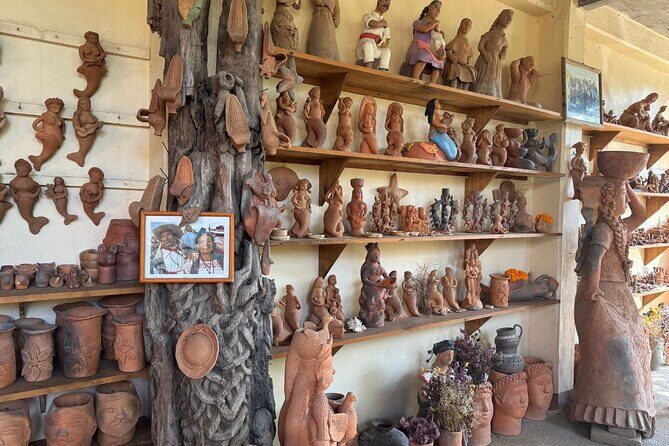
You’ll definitely come away with something from the hands-on portion: your own mezcalero from the Manos que ven pottery class. That’s a tangible souvenir, and it also makes the whole day feel more grounded.
You may also shop at the workshops. Alebrijes are sold at the Jacobo y María Ángeles workshop store with mention of certification. Barro negro pieces are usually available for purchase as well (even if the exact purchasing rules aren’t detailed here). If you plan to buy, keep two things in mind:
- Buy after you understand the process. The demonstrations help you notice quality cues—detail level, finish, and consistency.
- Decide your budget before the store. Workshop shops can be tempting, and Oaxaca craft quality often comes with craft pricing.
If you’re buying gifts, consider wrapping needs and how fragile your choices are. Pottery can be surprisingly heavy, and alebrijes can have delicate carved details.
Price and Value: Is $195 a Good Deal for This Day?
At $195 per person for about 8 hours, the question isn’t only cost—it’s what you get for your time. Here’s the value logic:
- You’re paying for private car transport and an English-speaking guide, not just entry tickets.
- You visit three different master craft stops—alebrijes, black clay pottery, and a workshop class.
- You get a hands-on pottery experience with a take-home mezcalero.
- Admission is described as free at each stop, which helps keep expectations clear.
The missing piece is lunch. Since lunch isn’t included, your total day budget will be a little higher than the sticker price once you factor in a meal. Still, because the lunch stop is included as a scheduled break, you’re not stuck hunting for food while you’re already running on a tight schedule.
Group discounts exist, and the tour is private for your group, which can make it feel better than a standard group bus day—especially if you’re traveling with family.
Who Should Book This Tour
This works best if you want a serious craft day without the stress of planning the stops yourself.
I’d point it toward:
- Families who enjoy hands-on activities (the class portion is a big draw).
- Art lovers who want more than shopping—you’ll see how the work is made.
- Travelers who like contrast: fantasy carving in one place, black clay technique in another.
- People who prefer guided explanations in English rather than trying to figure everything out on their own.
If you’re short on time or you’re very sensitive to long days, you might consider fewer stops. But for a full-day window, this itinerary gives you enough variety to feel like you truly learned something.
A Quick Reality Check: Matching the Exact Workshops
A past guest raised a concern about visiting different workshop locations than expected. The response clarified that the tour does take guests to Doña Rosa for barro negro, Jacobo y María for alebrijes, and Manos que ven for Maestro José García’s pottery class.
So here’s my advice: if workshop location names matter to you, check that your confirmation details line up with the addresses you care about, especially before you leave the hotel. It’s rare, but it’s worth being proactive.
Should You Book This Oaxaca Artisan Tour?
If you want one day that explains Oaxaca crafts in a practical way—watching real methods, getting guided context, and making your own small piece—this is an easy yes. The mix of alebrijes and barro negro, plus the mezcalero class, makes it more than a drive-through.
Skip it only if you’re mainly interested in shopping with minimal learning, or if you want lunch included in the price and don’t want to think about extra spending. Also, plan your expectations: it’s not a quick hit. It’s an artisan day, so you should lean into slower attention.
If you do book, go in ready to look closely at details. The best part isn’t just what you buy—it’s how the work is made and why those styles matter.
FAQ
How long is the Oaxaca Artisan Pottery, Alebrijes, and Frida Kahlo experience?
It’s about 8 hours.
How much does the tour cost?
The price is $195.00 per person.
What time does the tour start?
The start time is 8:30 am.
Is pickup available in Oaxaca City?
Yes. Pickup is offered in hotels or Airbnbs in Oaxaca center.
Is lunch included?
No. Lunch is not included, though there is a lunch stop at Azucena Zapoteca.
What’s included in the tour price?
You get a private car round-trip from Oaxaca, an English speaking guide, and visits to three masters of folk art: pottery at Manos que ven, black clay at Alfarería Doña Rosa, and alebrijes at the Jacobo and María Ángeles workshop.
Is the tour private?
Yes. It’s a private tour/activity for your group.
Can I participate in the pottery class?
The tour notes that most travelers can participate, and the class includes making your own mezcalero take-home keepsake.
Are admission tickets included?
The stops list admission ticket free, and the tour includes those workshop visits as part of the experience.
What is the cancellation policy?
You can cancel for a full refund if you cancel at least 24 hours before the experience’s start time. If you cancel less than 24 hours before, it isn’t refunded. Free cancellation is offered, and the local time rules apply.