REVIEW · OAXACA CITY
Mitla Half Day Guided Tour
Book on Viator →Operated by Lescas Co Tours · Bookable on Viator
Mitla hits different when someone explains the carvings. This half-day tour from Oaxaca City strings together Santa María del Tule, the Mitla ruins, and a wool-and-dye weaving stop in Teotitlán del Valle, then brings you back to town. You get an air-conditioned ride, a bilingual Spanish/English guide, and a small group size that keeps questions from getting lost.
What I really like is the way the guide connects the sites to everyday Oaxaca. One moment you’re looking at the giant Tule tree, and the next you’re learning why Mitla’s famous grecas matter, then you’re watching how rugs and textiles are made in a working family workshop. The second big plus is the guided time plus breathing room: you get interpretation, and you also get time to wander the ruins on your own.
One thing to consider: this is a tight schedule. Even though Mitla is the main event, you’re moving on pretty quickly between stops, and a few past participants noted that the vehicle/seat comfort wasn’t always perfect. If you want slow sightseeing and lots of lingering time, you might find the pace a bit brisk.
In This Review
- Key things that make this tour work
- Morning Logistics: Getting from Oaxaca City to the countryside and back
- Santa María del Tule: The widest tree stop (and the optional ticket)
- Mitla archaeological zone: Grecas, guided explanations, and free time to explore
- Teotitlán del Valle: Wool weaving workshop, natural dyes, and cochineal grana
- Lunch at Restaurante/Hotel Donaji: Expect a buffet and an extra cost
- Value and total cost: What your $37.69 covers, and what you’ll still pay
- Guides and group vibe: Why the bilingual format matters
- Who should book this Mitla half-day tour
- Should you book it?
- FAQ
- FAQ
- How long is the Mitla half-day guided tour?
- What’s included in the price?
- What costs extra during the tour?
- Is pickup offered from Oaxaca City hotels?
- What time does the tour start?
- How big is the group?
- Can I cancel for a full refund?
Key things that make this tour work
- Small group (max 10 travelers) keeps the guide’s attention on you
- Bilingual guide (Spanish/English) helps every stop land, including Q&A
- Tule + Mitla + Teotitlán in one morning-to-midday block is efficient without feeling rushed all day
- Mitla guided walk with a focus on grecas gives you something to look for
- Teotitlán family workshop shows wool, spinning, and natural dyes
- Buffet lunch stop is built into the route, with a set extra cost
Morning Logistics: Getting from Oaxaca City to the countryside and back
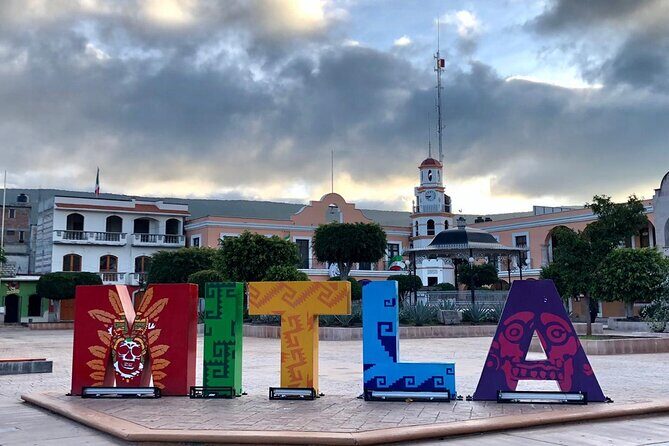
You start at 8:00 am in the Oaxaca City center area, with Gral. Antonio de León 1, Centro, 68000 Oaxaca de Juárez listed as the meeting point. Pickup is offered, but you’ll need to confirm your hotel or address (if you’re not on the pickup list, the operator asks you to note it when you reserve). At the end, the tour returns you back to the meeting point.
This is not a “shuffle around Oaxaca for hours” kind of day. It’s set up around an air-conditioned vehicle and a Spanish/English guide, plus travel insurance. That matters because the stops are outside the city, and being comfortable during the drive makes the morning easier on your body and your patience.
One extra detail that can help your expectations: the road out of Oaxaca passes through countryside with agave fields and mountain scenery. It’s a nice lead-in to the cultures you’ll see once you start stopping.
If you're still narrowing it down, here are other tours in Oaxaca City we've reviewed.


Santa María del Tule: The widest tree stop (and the optional ticket)

The tour’s first stop is Santa María del Tule, famous for the widest tree in the world. The visit is intentionally brief, mainly a photo-and-lookaround break so you can catch the tree and the surrounding gardens without turning the morning into a long detour.
Here’s what to plan for: there’s an optional admission at Tule (listed as 20 MXN, and it can be tied to getting closer). That means the “free” part of the stop is really about seeing the tree in the main area, while the paid option is the chance to get more directly near it.
If you’re the kind of traveler who loves one great visual anchor for a day, Tule works well. You get a memorable landmark early, and then the tour pivots to the bigger story of Oaxaca’s ancient and living cultures.
Mitla archaeological zone: Grecas, guided explanations, and free time to explore

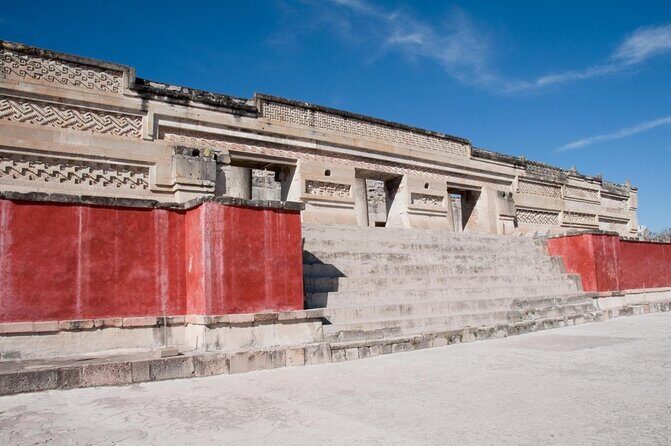
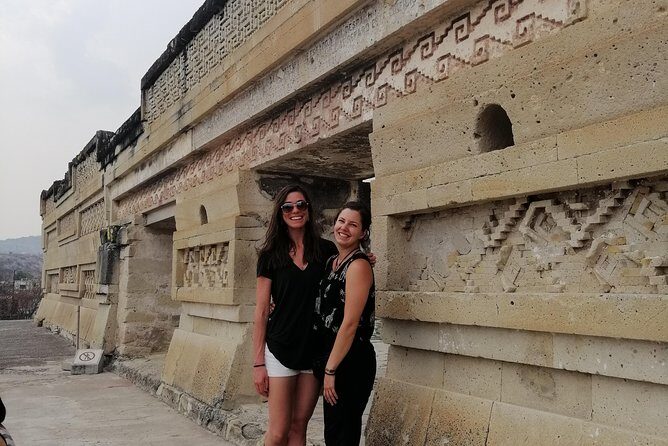
Mitla is the reason most people choose this tour, and the structure here makes a difference. You arrive at the Zona Arqueológica de Mitla, described as one of Oaxaca’s most important archaeological areas. The standout theme for your visit is the ornamentation: the fine grecas that decorate the palaces.
Instead of just walking through stones, you’ll get a guided tour that focuses on the meaning of what you’re seeing, with a guide who shares the site history in a passionate, hands-on way. This is the stop where a bilingual guide really earns their keep. Even with a mix of languages in the group, the explanations are delivered in Spanish/English, and you can ask questions as you go.
After the guided portion, you get free time to explore. That’s important because Mitla isn’t just “look and move on.” It rewards slowing down just a little—wandering, picking out patterns in the stonework, and reading the layout without someone rushing you.
Two practical notes for your expectations:
- Mitla’s ruins can feel smaller than Monte Albán, so if you’re comparing ruins mentally, don’t let size distract you from details like the geometry of the grecas.
- Admission isn’t included. For January 2026, the listed entry costs are 105 MXN for Mexican visitors and 210 MXN for foreign visitors. (There’s also a separate figure mentioned for Mitla admission elsewhere, so treat this as a “check the current rate” situation.)
Teotitlán del Valle: Wool weaving workshop, natural dyes, and cochineal grana
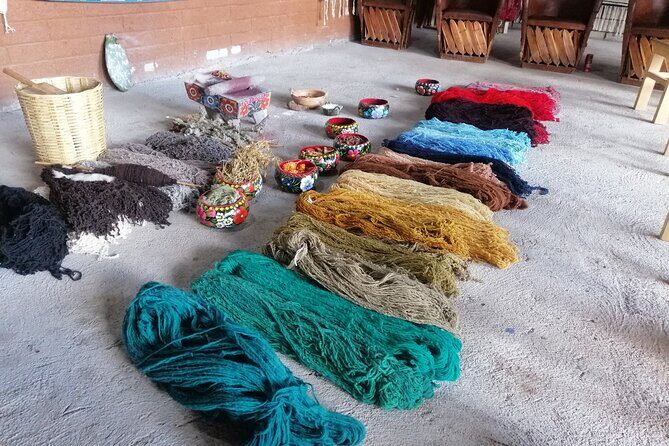
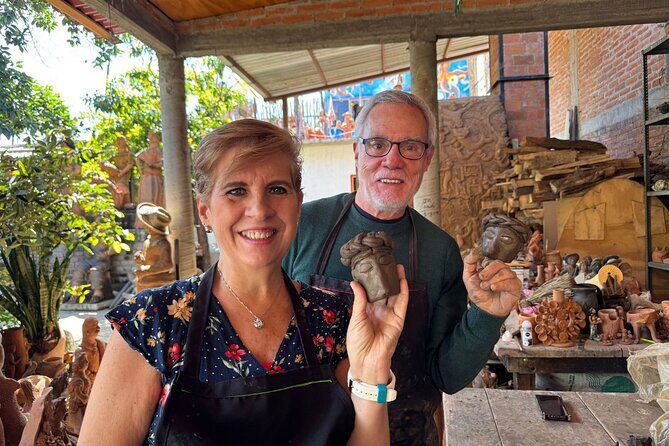
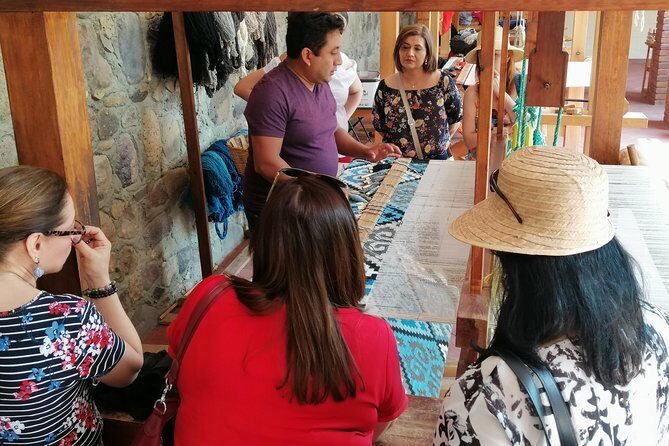
After Mitla, the tour heads to Teotitlán del Valle for a family workshop experience. This is one of those stops where you can tell the difference between a sales pitch and a real craft demonstration. You’re visiting one of the few workshops that still preserves traditional weaving practices, and you’ll see the process step by step.
The focus is wool textiles and coloration. You’ll watch how artisans make wool rugs, and you’ll also see how they paint/color with natural dyes, including cochineal grana. That detail matters because it turns the colors you see in finished products into something with a process behind it. It’s not just a pretty item for sale; it’s a living chain of craft knowledge.
You’ll also have about an hour at this stop, which is long enough to learn what you came for and then browse. Many people leave with two things in mind: a better sense of why certain textiles look the way they do, and the option to buy directly from the workshop store.
A good time-management tip for this stop: go in asking yourself what you actually want. If you’re shopping, compare items with the dye explanation in your head. If you’re not shopping, the workshop still gives you a concrete cultural connection that a quick photo-stop can’t.
Lunch at Restaurante/Hotel Donaji: Expect a buffet and an extra cost

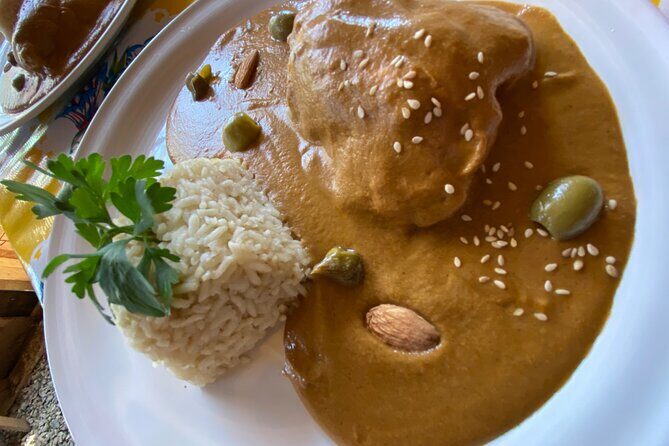
Lunch is built into the day, with a stop at Restaurante/Hotel Donaji for an Oaxacan food buffet. This is one of the easiest parts of the schedule because it’s planned: you don’t have to figure out where to eat or hunt down a menu while the group is waiting.
You should budget 200 to 250 MXN for lunch, since it’s listed as an additional cost. The food is typical of the region, and the buffet format makes it practical for a mixed group with different tastes and hunger levels.
Timing is also set: this is another 1-hour block. That means you’ll eat, recharge, and still have time to keep the tour flowing without turning lunch into a second afternoon.






Value and total cost: What your $37.69 covers, and what you’ll still pay
The price you see for the tour is $37.69 per person and it’s a real value for what’s included on paper: air-conditioned vehicle, travel insurance, and a Spanish/English guide. The real key is understanding that the ticket price covers the experience logistics and interpretation, not the site entries and lunch.
Plan on separate costs for:
- Tule optional admission: 20 MXN (if you want to get closer)
- Mitla archaeological zone entry: 105 MXN (Mexican) or 210 MXN (foreign) for January 2026 (confirm current rate)
- Lunch buffet: 200 to 250 MXN
When you look at it this way, you’re paying for a guided cultural day with transportation. Without a guide, you could piece together the stops on your own, but you’d lose the explanation that helps you “read” grecas at Mitla and understand what you’re seeing in the textile workshop.
And the small-group cap (max 10 travelers) is part of the value. In a big bus day, your chance to ask questions disappears. Here, you have a better shot at conversations with the guide, and the pace stays manageable.
Guides and group vibe: Why the bilingual format matters
The tour experience hinges on the guide, and the names Ángel and Miguel come up in the strongest positive feedback. The common thread isn’t just fluency. It’s the way they pace information so people can follow in both languages, shifting between English and Spanish without leaving one side behind.
That bilingual structure also helps you enjoy the free-time parts better. If you understand what you’re looking for at Mitla or what dye process is behind the textiles, you’ll spend that time more actively instead of staring at details wondering what they mean.
The group size also shows up in comfort and attention. With a maximum of 10 travelers, you’re less likely to feel like you’re one face in a crowd, especially during guided explanation moments.
Who should book this Mitla half-day tour

This is a strong fit if you want:
- A culture-heavy day without committing to a full day of driving and museum time
- A route that mixes ancient sites with living craft in Teotitlán del Valle
- Guided time that helps you understand what’s in front of you, not just where it is
It’s also a good choice if you’ve already seen major highlights like Monte Albán and you want something different. Mitla may not be the biggest ruins you’ll ever visit, but it’s a distinct experience once you know what to look for in the grecas.
If you’re the type who hates schedules and prefers long, unstructured wandering, you may find the stop timing tight. This is built for efficiency with meaning, not for slow travel.
Should you book it?
Yes, you should book this tour if you want a well-paced half-day that connects Oaxaca’s ancient design with its living textile traditions. The biggest selling points are the bilingual guide, the focus on Mitla’s grecas, and the hands-on workshop stop with natural dyes and cochineal grana.
I’d skip it only if you strongly prefer a slower pace, lots of time at each site, or you’re already set on touring Mitla without interpretation. Otherwise, this one is an efficient way to get countryside context, a major archaeological stop, and a craft experience in a single morning-to-midday block.
FAQ
FAQ
How long is the Mitla half-day guided tour?
It runs about 6 to 7 hours.
What’s included in the price?
You get an air-conditioned vehicle, travel insurance, and a Spanish/English guide.
What costs extra during the tour?
You’ll need to pay admission at Mitla (and Tule’s optional admission if you choose it) plus lunch at Restaurante/Hotel Donaji (listed as 200 to 250 MXN).
Is pickup offered from Oaxaca City hotels?
Yes. You can request pickup by confirming your hotel, room, address, or office of preference. If your place isn’t on the pickup list, you should mention it in your reservation.
What time does the tour start?
The start time is 8:00 am.
How big is the group?
The tour has a maximum of 10 travelers.
Can I cancel for a full refund?
Yes. Cancellation is free up to 24 hours before the experience starts, with a full refund if you cancel at least 24 hours in advance.