REVIEW · OAXACA CITY
Mitla, Tule, Hierve el agua and Teotilán
Book on Viator →Operated by Encuentro T · Bookable on Viator
Four stops, one unforgettable Oaxaca day. This trip strings together Santa María del Tule, Mitla, Hierve el Agua, and Teotitlán del Valle, with a guide and easy hotel pickup so you can spend your time looking instead of figuring out transport.
I love the mix of what you actually see: a 2,000-year-old tree, dramatic “petrified waterfalls,” and artisan dye work in Teotitlán. I also like that it’s a small group (up to 20), which usually means you get more direct attention from your guide and clearer explanations as you move between sites.
One important consideration: Mitla is only available Wednesday to Sunday, so if your dates fall outside those days, the flow of the day can change.
In This Review
- Key Things to Know Before You Go
- A 9–10 Hour Oaxaca Circuit With Four Big Names
- Price and Logistics: What You Really Get for $88
- Santa María del Tule’s 2,000-Year Tree in 30 Minutes
- Mitla’s Stepped Palaces and the Place of the Dead
- Hierve el Agua’s Petrified Waterfalls and Natural Spa Pools
- Teotitlán del Valle Rug Dyes and Wool Craft in About 30 Minutes
- Guides Matter: Angel, Martha, Pablo, and Hugo’s Impact
- Meal Plan and What to Bring (Since Food Isn’t Included)
- Who This Tour Fits Best (and Who Might Skip It)
- Should You Book This Tour?
- FAQ
- What time does the tour pick up in Oaxaca City?
- How long is the tour?
- Is hotel pickup included?
- Where does the pickup happen?
- How big is the group?
- Is the tour offered in English?
- Which attractions include admission tickets?
- Are meals included?
- Is Mitla open every day?
- Do I need a paper ticket?
- Can I get a full refund if I cancel?
Key Things to Know Before You Go
- Small group (max 20) makes it easier to ask questions and keep track of the plan.
- Mitla and Hierve el Agua admissions are included, so you avoid surprise ticket stops.
- Hierve el Agua includes a meal window, but food and drinks aren’t covered.
- Mitla runs only Wed–Sun, so your exact day matters.
- Teotitlán del Valle is short (about 30 minutes), so come with focus: rugs, wool, and dye process.
- Guides get strong praise by name for storytelling and patience, especially Angel, Martha, Pablo, and Hugo.
A 9–10 Hour Oaxaca Circuit With Four Big Names
This is the kind of day trip that works well when you only have one free day in Oaxaca City. You start in town, then you slowly change gears: from living nature (Tule), to ancient ceremonial architecture (Mitla), to geologic time made visible (Hierve el Agua), and finally to living craft (Teotitlán rugs).
The timing is built around “see it, understand it, move on.” You won’t spend half the day stuck in a single spot. Instead, you’ll get quick, guided context at each stop and still have time to breathe, take photos, and wander at your own pace where it’s allowed.
The total day is about 9 to 10 hours, and pickup starts between 8:00 AM and 8:30 AM. If you prefer slow travel, this will feel busy. If you want maximum Oaxaca in one go, it’s a strong format.
If you're still narrowing it down, here are other tours in Oaxaca City we've reviewed.


Price and Logistics: What You Really Get for $88

At $88 per person, the value comes from what’s bundled. You get an air-conditioned vehicle, a professional driver, a guide, and (for selected hotels) hotel pickup. You also get tickets for Mitla and Hierve el Agua included, which helps keep the day predictable.
Where it’s less all-in: food and drinks are not included. That matters because your stop at Hierve el Agua includes about 1 hour 20 minutes for meals, but you’ll be paying for what you eat. If you’re the type who likes a sit-down lunch, check your expectations. If you pack a light plan, you’ll feel happier with how the day flows.
Also note this detail: pickup happens in the lobby of your hotel or Airbnb in Oaxaca Centro. The operator meets you there and asks for your name at the front desk. That sounds simple because it is, but it also means you should be ready at the lobby at the pickup time window.
And yes, one practical heads-up: a couple of people reported issues with the final drop-off not matching the expected hotel location. It’s not the norm implied here, but it’s worth confirming with the operator where you’ll be dropped off before the day ends. With a fixed route and limited time, small mismatches can become a hassle.
Santa María del Tule’s 2,000-Year Tree in 30 Minutes
Santa María del Tule is one of those stops you can’t fake, even with a great camera. You’re looking at a tree estimated at around 2,000 years old, and what makes it magical is the way it grows. Over centuries, the branches and bark form shapes that people naturally read as faces, animals, and imaginative figures.
The time here is about 30 minutes, and the ticket is free. That short visit is actually smart. You get in, you get the story, you look closely, and you get out before the crowds and heat take over.
What to do with your time:
- Walk a little, not just straight to one photo angle. The texture is the point.
- Take a few photos, then look with your eyes for a full minute without shooting.
- If your guide points out what to look for in the bark, listen once and then verify it yourself by staring up.
A quick consideration: since the visit is brief, don’t treat this like a long botanical stop. It’s a “moment” stop, not a half-day nature break.
Mitla’s Stepped Palaces and the Place of the Dead
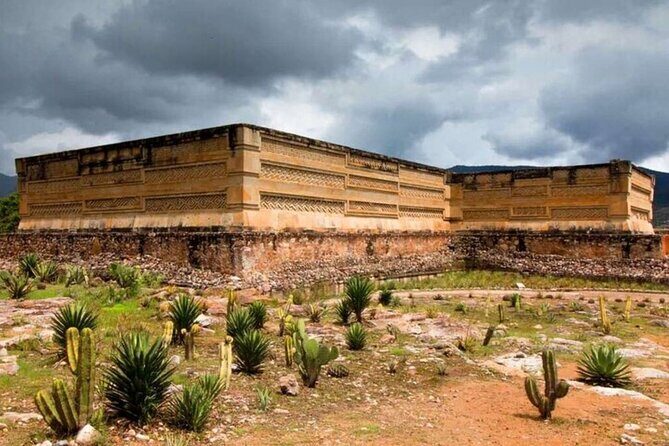
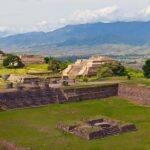
Mitla is where the day gets older fast. The site is called a Nahuatl term meaning place of the dead, and the architecture gives you a clear reason why people take it so seriously. The palaces are decorated with very fine geometric designs, including stepped fretwork that feels precise rather than decorative.
Your time here is about 2 hours, and admission is included. One key detail to plan around: Mitla is only available Wednesday through Sunday. If you book for another day, the itinerary can’t magically create access, and your schedule may shift.
Also, there can be real-world timing variation. The data notes that time on site may vary due to pandemic-related circumstances. Translation: don’t assume the timing will be identical on every date, even if the tour description looks consistent.
How to get more out of the 2 hours:
- Spend time on the patterns. If you rush, it turns into “cool ruins.” If you slow down, it becomes “how did they do this?”
- Ask your guide to connect the geometry to the meaning of the site. The best guides will tie visuals to culture rather than listing facts.
- Keep your expectations realistic about what’s inside versus what’s viewable from outside. Ruins often have limits, and that can affect how “explorable” they feel.
Mitla is one of the stops with the biggest payoff if you like history that’s visual and hands-on. If you prefer museums over ruins, you’ll still probably enjoy Mitla because the details are right there in front of you.
Hierve el Agua’s Petrified Waterfalls and Natural Spa Pools

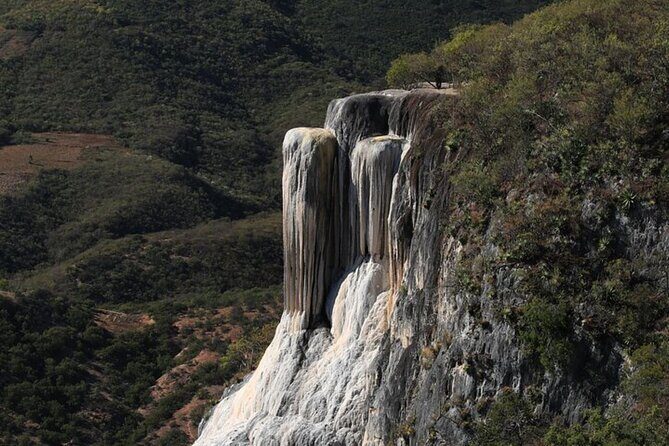
Hierve el Agua is a standout because it’s not just a pretty viewpoint. It’s an entire scene shaped by geology: petrified waterfalls with a white, mineral look. The scale is huge for a day trip, with structures that can measure over 200 meters high.
The story you’ll hear is part science, part wonder. The deposits formed over millions of years through carbonated water runoff. Springs at the top of the ravine feed the area, and the pools you see can be warm and turquoise, with locals treating them as natural spa spots.
Your time here is about 1 hour at the site, plus about 1 hour 20 minutes for meals. That’s helpful because Hierve is remote and sun can be intense. You’re given a block for food, even if it’s not included.
What you’ll want to plan for:
- Bring water and something light for snacks. Even if there’s a meal stop arranged, you may not want to rely on it for your whole day.
- Wear shoes you trust on uneven terrain. The area is dramatic, but that also means footing matters.
- If you want spa-time, keep an eye on your schedule. One hour can fly if you’re taking photos and then deciding you also want to soak.
A practical tip from real-world experiences: some people noted that water wasn’t always easy to find during the day. So don’t assume. Bring your own bottle and treat it as part of your day strategy.
If you like “wow” travel, Hierve is where you’ll feel it most. If you’re more history-minded, it still works because the guide can translate the landscape into a clear explanation.






Teotitlán del Valle Rug Dyes and Wool Craft in About 30 Minutes

Teotitlán del Valle is the craft side of the trip, and it’s quick. You spend about 30 minutes, with admission free.
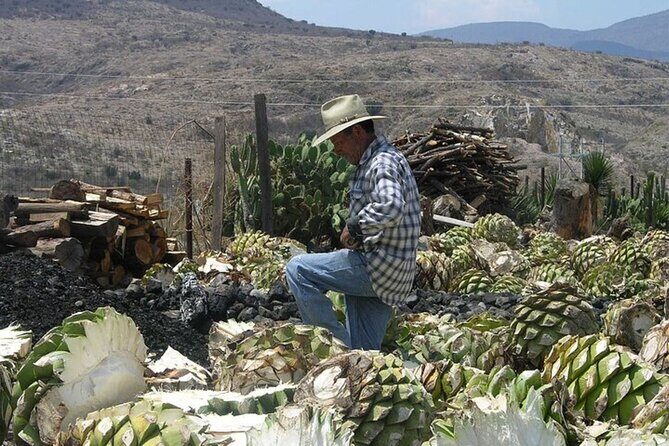
This is the part where you see how the rugs are made and what drives their color palette. The focus is on wool rugs made with natural colors. A big highlight is cochineal grana, a product strongly associated with Oaxaca. You’ll also see a demonstration of how dyes are prepared and applied.
The value here is not “shopping time” first. It’s a short education stop that helps you read the rug like a story: fiber, dye source, and the design choices that show up in finished pieces.
A drawback to be aware of: thirty minutes disappears fast if you want to watch every step. If you’re serious about rugs, use your guide’s attention wisely: ask what colors are made from, what the dye process does to the final shade, and how to tell natural dyes from look-alike colors.
If you’re buying, go with patience. Don’t let a rushed purchase turn into a regret. This stop is brief enough that you should decide your goal before you arrive: admire and learn, or admire and buy.
Guides Matter: Angel, Martha, Pablo, and Hugo’s Impact

The quality of this tour often comes down to the guide. In the experiences tied to this tour, several names get a lot of praise for making the day feel smoother and more meaningful.
Angel is praised for being friendly, professional, and fun, with stories that keep things lively. Martha gets standout mentions for being well prepared and one of the best guides people have had anywhere—meaning the explanations land and the pacing feels intentional. Pablo also earns high marks for being patient and never making people feel rushed. Hugo is credited with being a great guide and delivering a strong carpet demonstration.
You can’t guarantee which guide you’ll get, but you can plan your part. Before you hop on, ask yourself what you want most: culture explanations, clear timing, or hands-on craft focus. Then match that with your guide’s style once you’re there.
And here’s a practical move: if you care about details, ask one question early. Good guides run with curiosity, and small-group formats make that easier.
Meal Plan and What to Bring (Since Food Isn’t Included)
The day includes a meal window of about 1 hour 20 minutes connected to the Hierve el Agua stop. Food and drinks aren’t included, so this is your time to eat and reset without losing the day.
Because meals aren’t covered, you’ll probably want a small strategy:
- Bring a light snack or two and a water bottle so you don’t get stuck waiting if lunch runs long.
- If you’re picky about drinks, plan on paying for what you want. The day’s schedule is set, and your meal spot won’t be a flexible restaurant choice.
- Wear sun protection. Hierve can feel bright and exposed, especially between viewpoints.
One more timing consideration: this is an active day. You’ll be walking, climbing slightly, and taking in views. If you show up hungry and dehydrated, the experience can feel more stressful than it needs to be.
Who This Tour Fits Best (and Who Might Skip It)
This tour is a good fit if you:
- Want multiple Oaxaca highlights in one day without arranging separate transport.
- Like guided context for ancient sites and craft.
- Appreciate a small group format, even if the day is packed.
It’s less ideal if you:
- Want a slow pace or lots of free time at one place.
- Book on a day when Mitla isn’t operating. Since Mitla is only Wednesday to Sunday, your planning needs to match the calendar.
- Prefer full meals included. You’ll need to budget for food and drinks.
If you’re traveling with kids, note that children must be accompanied by an adult. The route includes several stops and walking time, so you’ll want to keep an eye on stamina and shade breaks.
Should You Book This Tour?
Book it if you want a well-rounded Oaxaca day that combines ancient architecture, a geologic “what am I seeing” moment, and a taste of living craft—without the headache of driving yourself. At $88, the admissions included for Mitla and Hierve, plus the guide and hotel pickup in Oaxaca Centro, add up to solid value.
Before you commit, do two small checks:
1) Confirm your travel day works for Mitla (Wed–Sun).
2) Plan on paying for lunch and bring water. That one choice will shape how good the day feels.
If those fit your style, this tour is an efficient way to turn one day into four memorable Oaxaca stops. If not, you’ll probably prefer a slower, more flexible plan with longer time at fewer sites.
FAQ
What time does the tour pick up in Oaxaca City?
Pickup runs from 8:00 AM to 8:30 AM, seven days a week.
How long is the tour?
It lasts about 9 to 10 hours.
Is hotel pickup included?
Hotel pickup is included for selected hotels, and the operator can pick up from hotels and Airbnbs in Oaxaca Downtown (Oaxaca Centro).
Where does the pickup happen?
The operator meets you in the lobby of your hotel or Airbnb and asks at the front desk for your name.
How big is the group?
The tour has a maximum of 20 travelers.
Is the tour offered in English?
Yes, it is offered in English.
Which attractions include admission tickets?
Admission tickets are included for Mitla and Hierve el Agua. Santa María del Tule and Teotitlán del Valle are listed with free admission tickets.
Are meals included?
No. Food and drinks aren’t included, though you have about 1 hour 20 minutes for meals during the Hierve el Agua stop.
Is Mitla open every day?
No. Mitla is only available Wednesday through Sunday.
Do I need a paper ticket?
No. You receive a mobile ticket.
Can I get a full refund if I cancel?
Yes, free cancellation is available up to 24 hours in advance for a full refund.