REVIEW · OAXACA CITY
Monte Albán, Arrazola, Cuilapam y San Bartolo Coyotepec.
Book on Viator →Operated by Oaxacatours · Bookable on Viator
Monte Albán is the kind of place that hooks you fast. This day trip strings together major sights and hands-on culture: UNESCO ruins up in the high hills, then artisan Oaxaca in small towns, with a guide who keeps the story moving. I loved how the tour pairs big archaeology (Monte Albán’s ball court, temples, tombs, and the South Platform views) with everyday craft traditions like alebrijes and barro negro pottery. One thing to plan for: there’s real walking and stairs at Monte Albán, plus sun.
From the 8:30am start, you get hotel pickup and an air-conditioned coach, then a full circuit that feels efficient without being rushed. The group stays small (up to 18), and you’ll hear both Spanish and English, though if you’re a light Spanish speaker you may want to lean into asking questions in English. Bring water and comfy shoes, because your legs will notice every step.
In This Review
- Key highlights worth your time
- A Oaxaca day that feels practical, not just impressive
- Monte Albán: ball court, tombs, and views that do the talking
- Quick on-site reality checks
- San Antonio Arrazola: alebrijes carved from imagination and copal wood
- Cuilapam de Guerrero: the Dominican convent and the open chapel
- Optional museum time
- San Bartolo Coyotepec: black pottery, MEAPO, and a real craft market
- What to watch for when shopping
- Timing and logistics: what an 8-hour circuit really feels like
- Language balance (English/Spanish)
- Price and value: what $37.55 covers, and what you still pay
- So is it a good deal?
- Who should book this tour (and who might not)
- Should you book this Monte Albán, Arrazola, Cuilapam y Coyotepec day trip?
- FAQ
- What language is the tour offered in?
- How long is the tour?
- Is hotel pickup and drop-off included?
- Is admission included for Monte Albán and Cuilapam?
- Is there an extra cost at Cuilapam if I want to visit a museum?
- What about lunch?
- How much walking is involved?
- Can I cancel and get a full refund?
Key highlights worth your time
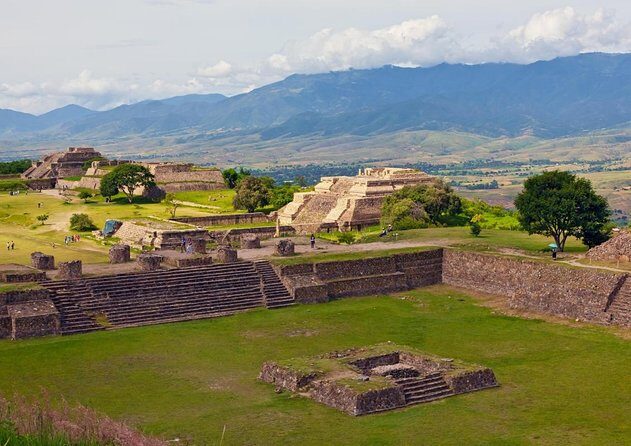
- Monte Albán’s major set-pieces: ball court, temples, tombs, and the South Platform viewpoints
- Arrazola alebrijes: watch folk art carved from copal wood in a lively workshop stop
- Cuilapam Convent + open chapel: Dominican-era colonial architecture and context
- San Bartolo Coyotepec black pottery: MEAPO museum and a craft market for barro negro ceramics
- Small-group feel: max 18 travelers with guided pacing and time to explore
A Oaxaca day that feels practical, not just impressive
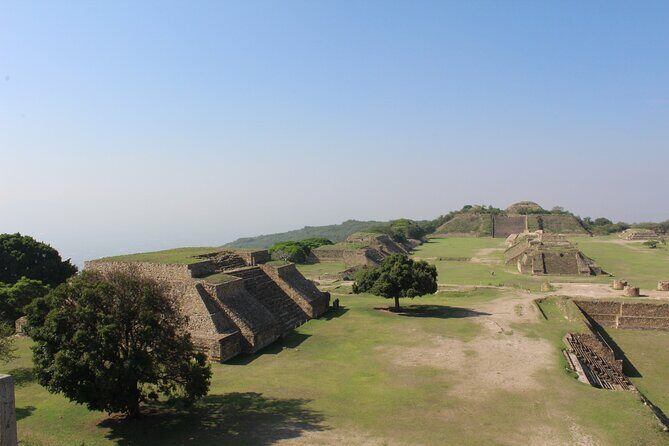
This isn’t only a check-the-box ruins outing. The shape of the day matters: you start with the big Zapotec site, then you move down into towns where craft and colonial history show how Oaxaca kept changing. You’ll spend about 2.5 hours at Monte Albán, then shorter stops for Arrazola, Cuilapam, and San Bartolo Coyotepec.
I like that the itinerary gives you both guided time and breathing room. Several guides on this route are archaeologists or long-time local specialists (you may even get names like Antonio, Emanuel, Moisés, Gabriel, Daniel, Silvia, or Jorge), and the best part is they connect the dots for you instead of rattling facts.
The only real “gotcha” is physical. If you’re expecting a flat stroll, Monte Albán will politely ruin that plan.
If you're still narrowing it down, here are other tours in Oaxaca City we've reviewed.


Monte Albán: ball court, tombs, and views that do the talking
Monte Albán is a mountaintop UNESCO site (listed in 1987) built by the Zapotecs, and you feel that intention the moment you step onto the plateau. Your guide will walk you through the Grand Plaza, ceremonial areas, and key rock features, including Los Danzantes (The Dancers)—rock carvings that are famously expressive and still make people lean forward.
One of the most impressive details is the ball court. It’s an I-shaped court, constructed around 100 BC, and it’s one of the reasons Monte Albán feels so alive as an ancient “public stage” rather than a pile of stones. Then come the temples, altars, and the scale of the site’s history—your visit also includes time to understand the tombs. Monte Albán has 170 tombs, and excavations revealed paintings and stone carvings, so your guide can point out what those findings mean for Zapotec life and belief.
You’ll also climb to the South Platform (Plataforma Sur). This area is known for a wide stairway and great views over the city and Oaxaca Valley, and that climb is worth it even if you do it slowly. Expect heat, wind, and uneven ground in parts. Wear shoes with grip, not just “nice looking” sneakers.
Quick on-site reality checks
- Some paths are steep and stair-heavy, so go at your own speed.
- Get sunscreen on early; shade can be spotty where you actually need it.
- If you want more English detail, don’t be shy about asking your guide to explain a specific carving or tomb feature again in clearer terms.
San Antonio Arrazola: alebrijes carved from imagination and copal wood
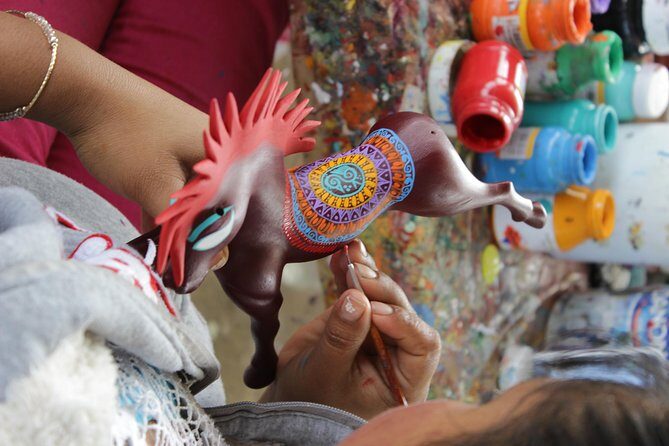
After Monte Albán, you head down to San Antonio Arrazola, a quieter town at the base of the UNESCO site. This is where the day shifts gears from ancient stone to living folk art.
You’ll have about 45 minutes to stroll and focus on the alebrijes tradition. These are the fantastical woodcarvings—mythical animals, monsters, and hybrid creatures—often made from copal wood. The craft isn’t just pretty; it’s a window into how Oaxaca turns stories into objects people can hold.
Many people end up enjoying this stop because it feels like art you can actually picture at home. If you’re curious, ask how the carvers think through the “fantastic zoology” shape language—because once you look closely, you start spotting patterns in how movement and personality are built into the form.
A practical note: this is also a shop moment. You’ll likely see lots of work and tempting price tags, so decide what you’re shopping for before you arrive (small souvenirs vs. larger pieces).
Cuilapam de Guerrero: the Dominican convent and the open chapel
Next up is Cuilapam de Guerrero and the Cuilapam Convent, a 16th-century Dominican site. This stop is about colonial-era architecture and the way religious spaces were designed to reach Indigenous communities.
You’ll see the famous unfinished basilica and the capilla abierta (open chapel). That open chapel detail is key: it was built to accommodate larger numbers of people and to support conversion efforts in a colonial context. Your guide should connect this design choice to the larger story of how Spanish missions operated in Oaxaca.
Expect about 1 hour here. The tone is different from Monte Albán—more architectural and historical interpretation, less “walk around and stare at ruins.” If you like mission history and how buildings shape cultural change, this will land well.




Optional museum time
There’s an optional museum component that costs extra—listed as $70 pesos per person if you choose to see it. If you’re short on time later, you can skip it and still get the main architecture and context.
San Bartolo Coyotepec: black pottery, MEAPO, and a real craft market
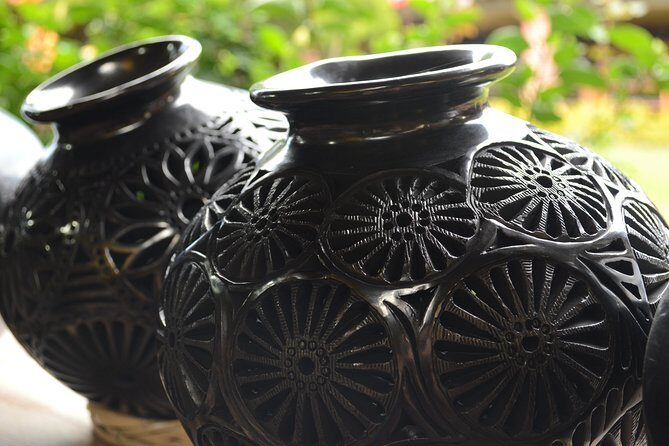
Your final cultural hit is San Bartolo Coyotepec, a town widely known for black pottery (barro negro). This tradition is made locally and has been practiced since pre-Columbian times, which is a rare thing to see stated plainly and then confirmed by what you’ll watch and handle.
You’ll visit the 16th-century San Bartolo Coyotepec Church, then the Oaxaca State Museum of Popular Art (MEAPO). After that, you’ll have time at a craft market where work from more than a dozen families may be on display.
The best part here is that you can compare styles. One stand might focus on certain shapes or finishes, while another emphasizes different figures or textures. This is one reason I like the stop even for people who don’t usually buy pottery: you’re learning how the craft is organized across families, not just looking at a single display.
You’ll also get explanations of the pottery-making process. If you’ve only seen barro negro in markets in Oaxaca City, you’ll appreciate the extra context once you see the workflow and local sourcing behind it.
What to watch for when shopping
- Barro negro pieces vary a lot in size and detail, so ask what the piece is and how it’s finished.
- If you’re buying for decoration (not for heavy use), you’ll have more flexibility in choosing a size that fits your home.
Timing and logistics: what an 8-hour circuit really feels like
This tour runs about 8 hours. It starts with 8:30am pickup by coach from your Oaxaca hotel (hotel pickup/drop-off is included), and it loops you back to the hotel area later in the afternoon (some listings frame the end at the meeting point).
The sightseeing time is spread like this:
- Monte Albán: about 2 hours 30 minutes
- Arrazola: about 45 minutes
- Cuilapam: about 1 hour
- Coyotepec: about 45 minutes
- Lunch stop: about 1 hour at a buffet restaurant
Walking notes from real experience on this route are consistent: there’s uphill climbing and many steps at Monte Albán. It’s worth it, but don’t dress like you’re going to a museum. You want shoes you trust on stairs and heat.
Also pack sun basics. People consistently recommend a hat, sunscreen, and water. If you can, bring a light umbrella for sun protection too.
Language balance (English/Spanish)
The tour is offered in English with a bilingual guide (and Spanish too). Still, a few people have found the explanations leaning more Spanish than they expected. If English is your main language, ask a question early and keep asking for clarifications when you want details.
Price and value: what $37.55 covers, and what you still pay
At $37.55 per person, this price feels like the transportation + guide portion is the main value. Your ticket includes:
- a professional English- and Spanish-speaking guide
- travel insurance
- an air-conditioned vehicle
- hotel pickup and drop-off
What’s not included is the part people often forget: admissions and lunch. Monte Albán tickets are not included, and Cuilapam tickets are not included either. The lunch is also not included in the base price.
Here’s what you should budget based on typical on-the-day costs people report:
- Lunch buffet is often around 200–300 pesos, sometimes with drinks included in that estimate.
- Monte Albán and the Cuilapam-related entrances can add up; one common figure shared is about 175 pesos per person for entrances.
Then there’s the human part: tips. If your guide like Antonio, Gabriel, Emanuel, or Daniel keeps everything flowing and explains carvings clearly, it’s a normal and appreciated expense.
So is it a good deal?
Yes, if you want a single organized day that hits both world-class archaeology and living craft culture. The value comes from how much you cover in one outing with a guide to interpret it. If you’d rather only do Monte Albán, you might feel the later craft stops are optional extras rather than essentials.
Who should book this tour (and who might not)
Book it if you:
- want Monte Albán without the hassle of planning transport and route alone
- enjoy learning how ancient sites connect to today’s Oaxaca crafts
- like guided storytelling, including colonial mission context in Cuilapam
- don’t mind stairs and heat for a once-in-a-lifetime viewpoint
Skip or consider a smaller option if you:
- want a very relaxed day with minimal walking
- get stressed by mixed language delivery (since explanations can tilt more Spanish)
- prefer to spend longer at fewer places rather than covering four stops
If you’re traveling with kids, this tour can work, but only if everyone is ready for the climb and the long day rhythm.
Should you book this Monte Albán, Arrazola, Cuilapam y Coyotepec day trip?
I think this is a strong buy if your goal is to get a true taste of Oaxaca in one day: Zapotec ruins up top, colonial architecture in the middle, and craft traditions that are still alive at the end of the loop.
Book it if you can handle walking and sun, and if you’re excited by the idea that the story of Oaxaca doesn’t stop at the archaeological stones. The best moments are usually Monte Albán itself and the artisan stops—especially when your guide can translate what you’re seeing into why it mattered.
Skip it only if your priority is strictly Monte Albán and nothing else. If that’s you, you can spend your time and money on a narrower plan. If your priority is understanding, then this day trip does a lot of work for you.
FAQ
What language is the tour offered in?
The tour is offered in English, and you’ll also be guided in Spanish by a professional guide.
How long is the tour?
The tour is about 8 hours.
Is hotel pickup and drop-off included?
Yes. The tour includes pickup and drop-off from your Oaxaca hotel.
Is admission included for Monte Albán and Cuilapam?
No. Monte Albán tickets are not included, and Cuilapam tickets are not included.
Is there an extra cost at Cuilapam if I want to visit a museum?
If you want to visit the museum at Cuilapam, there is an extra cost listed as $70 pesos per person.
What about lunch?
Lunch is not included in the base price. The tour includes a buffet meal stop where you’ll pay on your own (cost varies by what you order).
How much walking is involved?
The tour is best for a moderate physical fitness level, and Monte Albán includes climbing and many steps.
Can I cancel and get a full refund?
Yes. You can cancel up to 24 hours in advance for a full refund.