REVIEW · OAXACA CITY
Oaxaca City Walking Tour – Markets, Textile museum & Lunch
Book on Viator →Operated by Mexico Kan Tours · Bookable on Viator
Oaxaca starts fast at street level. You get a focused, small-group introduction that mixes early markets with stories around the Zócalo and cathedral area, so the city feels less like a map and more like a living place.
I especially like the way the route balances food, shopping help, and culture in a way that stays practical. The Ethnobotanical Garden of Oaxaca and the textile museum add calm, plus context for why Oaxaca textiles matter; just note the day is long and the garden portion can run a bit longer than some expect.
In This Review
- Key points worth knowing
- Start in the Zócalo area and set your Oaxaca mindset
- Market time: Benito Juárez, Mercado 20 de Noviembre, and pasillo de humo
- Food, chocolate, and mezcal stops that make the markets make sense
- A break in the Ethnobotanical Garden of Oaxaca (and why your photos will thank you)
- La Cosecha Organic Market lunch: clean, open-air, and built for regional bites
- Santo Domingo Church and the textile museum in a restored colonial mansion
- Price and value: what $59 buys you in time, access, and guidance
- Who should book this Oaxaca City tour
- Should you book this Oaxaca City walking tour?
- FAQ
- FAQ
- How long is the Oaxaca City walking tour?
- Where does the tour start?
- Where does the tour end?
- Is the tour offered in English?
- What’s the group size?
- Are admission tickets included?
- Is lunch included?
- Is this tour outdoors?
- Is the tour suitable for most travelers?
Key points worth knowing

- Small group size (max 10) keeps the pacing easy and makes it simpler to ask questions in the markets.
- Early market timing helps you see how things work before crowds make it harder to browse.
- Market guidance for shopping includes a walkthrough of layouts so you don’t wander in circles.
- Food and drink sampling comes in as part of the experience, not an afterthought.
- Ethnobotanical garden + textile museum give you contrast: plants, then woven art with real explanations.
Start in the Zócalo area and set your Oaxaca mindset
The tour begins near Café BienAv in the Centro, right where it’s easy to connect with the rest of the city. From there, you start with the main square area and take in the cathedral zone and the colonial feel of the center. It’s a smart opener because it anchors you fast: you understand where you are before you start moving through the bigger market world.
Oaxaca is one of those places where you can absolutely get lost in a good way. But if you’ve only got one day in the city, you’ll appreciate the structure. This walk gives you a clear sequence: first the public heart of the city, then the markets, then calmer breaks, and finally a cultural stop that explains the deeper craft side of Oaxaca.
You’ll also be in English, and the group is kept to a maximum of 10 people. That matters when you’re navigating crowded aisles and lane-like market corridors where everyone has to share space.
If you're still narrowing it down, here are other tours in Oaxaca City we've reviewed.


Market time: Benito Juárez, Mercado 20 de Noviembre, and pasillo de humo
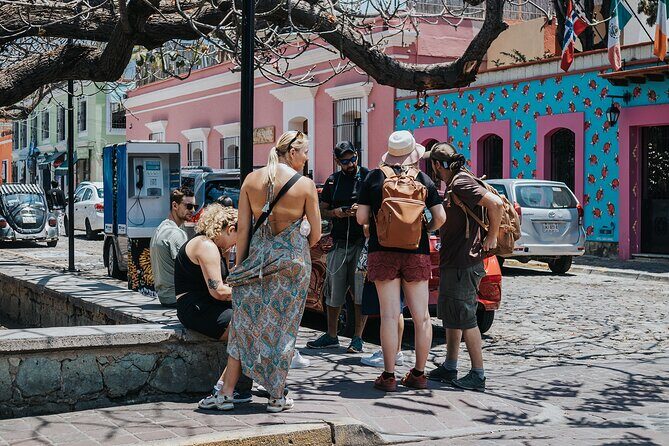
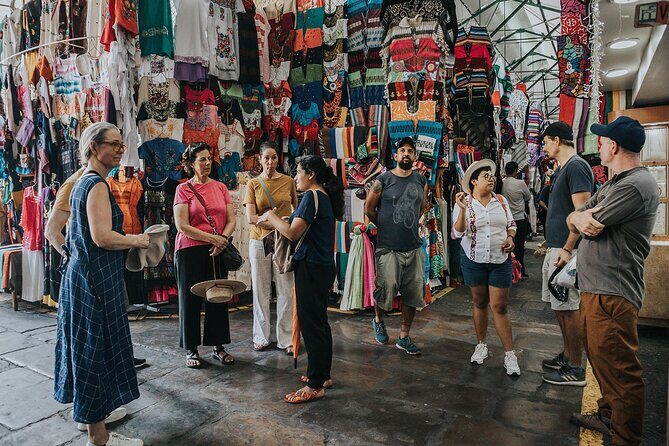
The heart of the day is market exploration, and timing is the secret weapon. You start before the markets get too busy, which means you get to look, ask, and compare without constantly dodging shoulders.
You’ll visit both the Benito Juárez food market area and Mercado 20 de Noviembre craft market. Between them you’ll see the everyday side of Oaxaca—produce, snacks, street-food stalls—as well as the crafts side, where textiles and handmade goods start to dominate your view. It’s the sort of place where items and vendors can blend into one big visual swirl, and the guide’s job is to give you a mental map while you’re walking.
One standout stop is the pasillo de humo, often called the corridor of smoke. It’s famous enough that it’s worth seeing with context, not just for the photo. In practical terms, it’s a narrow lane where the market atmosphere feels intense—smells, movement, and the sensation that everything is happening at once. The tour doesn’t treat it like a gimmick; it helps you understand where you are inside the market maze so you can later find your way back for purchases.
You may spot fried crickets among the food-stall options too. If you’re a curious eater, this is part of the fun. If you’re not, you can still enjoy the market energy and focus your attention on the snacks and drinks you’re comfortable trying.
Food, chocolate, and mezcal stops that make the markets make sense
This isn’t a walk where you only look at food—you’ll sample typical foods and drinks as you go. That’s a big value add because food sampling in Oaxaca can take a lot of time to figure out on your own. Having a route that includes tasting keeps you from spending your precious hours guessing what’s good and what’s worth paying for.
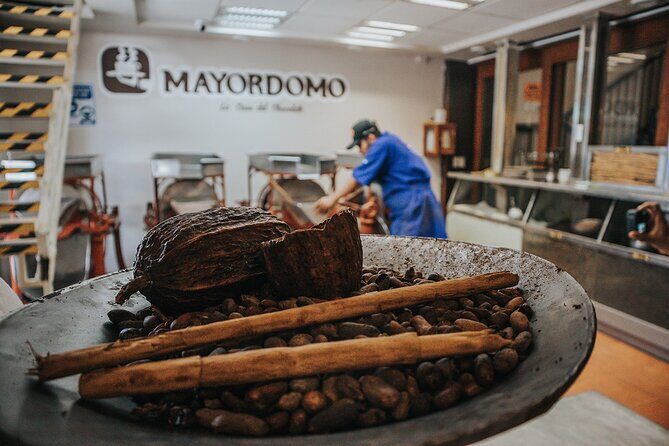
A related win is that the tour connects flavors to local production. You’ll have a look at how chocolate is made, and that helps you understand why cacao shows up so often in Oaxaca’s food culture. It also turns chocolate from a generic sweet into a regional ingredient with history behind it—without forcing a long lecture.
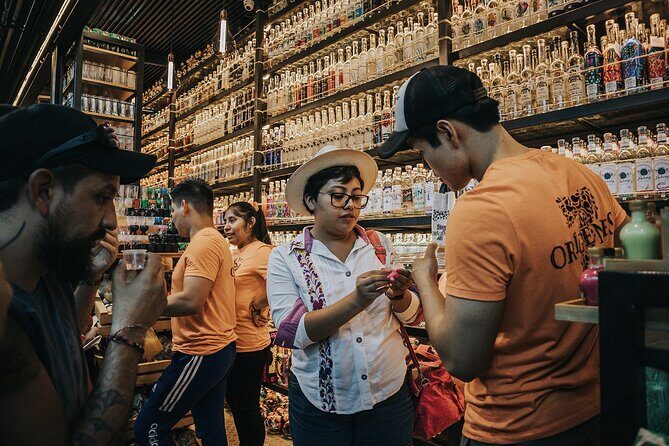
You’ll also stop by a mezcal superstore. This is more than just a quick peek at bottles. The benefit is that you can see what’s available, learn the basic framing around mezcal culture, and walk away with clearer questions for your own tastings later.
If you get a guide like Bruno or Jorge, expect the pacing to stay friendly and the explanations to focus on what matters for your day. In feedback, both names come up with the same theme: helpful, clear guidance and recommendations beyond the city center for what to see next.
A break in the Ethnobotanical Garden of Oaxaca (and why your photos will thank you)
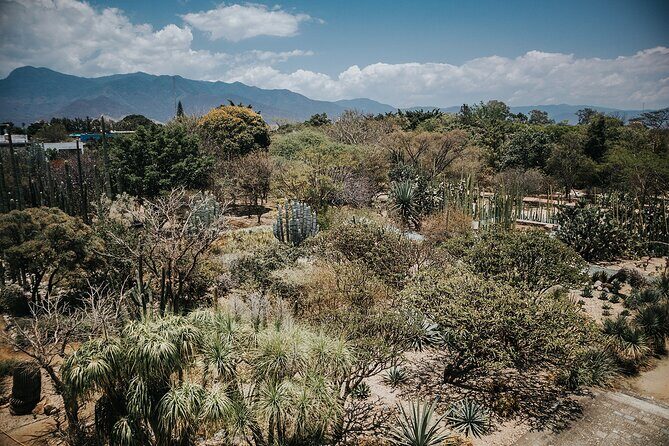
After the market intensity, you move into the Ethnobotanical Garden of Oaxaca. This part of the route is a reset button. Even though it’s relatively small, it’s packed with cacti and agave, including species that are endemic to the region. That mix makes it feel like Oaxaca’s plants are a story you can walk through.
The garden stop is about calm and clarity: you slow down, you step away from crowds, and you get a better sense of the natural environment behind the region’s famous products—especially agave, which connects back to mezcal culture you saw earlier in the day.
Timing matters here. One practical consideration: the garden portion can run longer than some people expect. The upside is that the time is for walking and photo opportunities, not just standing around. If you’re the type who wants to read signs and take pictures, you’ll be happy. If you’re only interested in the quick highlights, you’ll still get value, but you’ll want to move at your own pace within the group flow.
If you’re planning your day around energy, treat this segment as your buffer. It’s also a good time to drink water and pause so the afternoon doesn’t feel rushed.
La Cosecha Organic Market lunch: clean, open-air, and built for regional bites
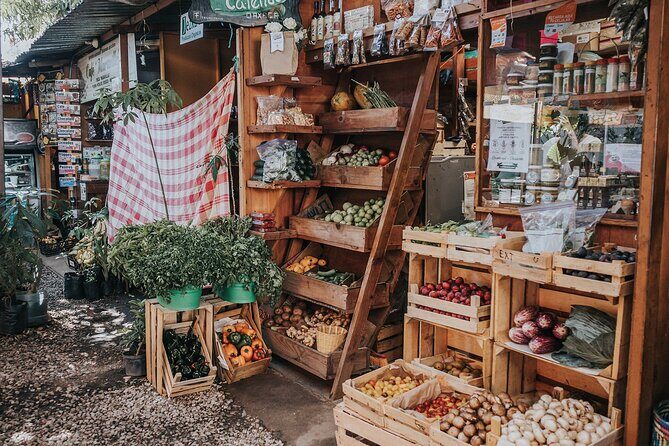
For lunch you’ll head to La Cosecha Organic Market, a smaller open-air market that’s known for being very clean. The key idea is simple: different vendors offer food from different regions of Oaxaca, and you choose based on what you’re craving. That means you’re not stuck with one menu style.
This is a smart stop for a walking tour because it keeps you seated near the group while still letting you feel like you’re making choices. You’ll eat in a common area surrounded by vendors, which makes it easy for the guide to handle timing without turning lunch into a scramble.
Also, since you already had market tastings earlier, this lunch works as a light but satisfying bridge into the afternoon. It’s described as a light lunch, not a heavy sit-down meal, so you can still do the church and museum part without feeling stuffed.
If you’re food-motivated, this is one of the best moments to use your newly learned market instinct. You’ll know how to ask about what you’re eating and you’ll recognize the kind of ingredients you saw during the morning stops.






Santo Domingo Church and the textile museum in a restored colonial mansion
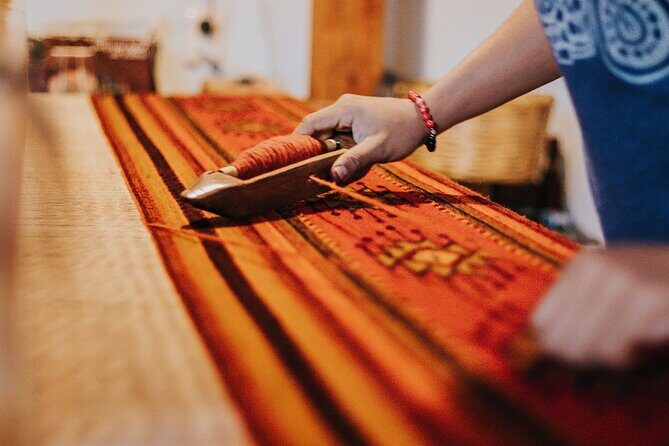
The afternoon ends with Santo Domingo Church and then the textile museum. This museum is one of those stops that tends to hit harder than expected because it explains Oaxaca’s specialty through real objects. Oaxaca is known for its textiles, and the museum focuses specifically on the collection from around the state.
What makes this museum feel worthwhile on a walking tour is that it’s not only about admiring. It’s in a beautifully restored colonial mansion, and the setting helps you picture how weaving culture fits into daily life across generations. Even if your travel style is more practical than museum-heavy, you’ll likely enjoy it because textiles are tangible. You can see patterns, construction, and design choices that connect to place.
If you came for the shopping, this is where the shopping becomes smarter. You learn what you’re actually looking at: what makes one piece different from another, and why the craftsmanship is the point. That makes your later purchases (or your future browsing) more confident.
This is also a great finale because it gives your feet a break at the exact time you might otherwise feel mentally tired. You’ve had the sensory overload of markets, then a plant reset, then food. Now you get a cultural “why” stop that ties the day together.
Price and value: what $59 buys you in time, access, and guidance
At $59 per person for about 7 hours, you’re paying for a guided route that does several things at once: navigation, cultural context, and food moments. The admission tickets at the stops are listed as free, so a chunk of the cost is really about the guide, the pacing, and keeping the day coherent.
The best value is the combination of early market timing and guided layout help. Market browsing without guidance can turn into wasting time—especially if you’re trying to hunt specific types of textiles or crafts. Here, the guide helps you understand the market structure, which saves you from wandering until your legs give up.
You also get sampling—typical foods and drinks—plus chocolate and mezcal-related stops. That’s the kind of “included extras” that makes a guided tour feel more efficient than piecing it together yourself, especially if you don’t yet know where to go for quality snacks.
Group size (max 10) also boosts value in a subtle way. It reduces the chaos factor. In tight lanes like the pasillo de humo, that comfort matters.
One more practical note: this experience needs good weather. If you’re booking in a season with rain risk, consider building flexibility into your travel schedule so you’re not stuck with a day that doesn’t go as planned.
Who should book this Oaxaca City tour
This is a great fit if you want a first-time-friendly overview that still feels hands-on. You’ll get market culture, a food break, plant context, and a textile-focused museum, all without turning the day into a long series of disconnected stops.
You’ll especially like it if you:
- enjoy markets and want help figuring out what to look for
- like food sampling but don’t want to plan it all alone
- care about Oaxaca’s textiles and want context beyond shopping
You might think twice if you:
- prefer very short garden or museum time and get restless with slower segments
- dislike open-air spaces (the lunch market and walking portions are outdoors)
If you love guides who can connect stories to what you can actually see in front of you, this tour tends to deliver. In the feedback I’ve seen, Bruno and Jorge are both praised for being friendly, asking-and-answering capable, and sharing suggestions beyond the central district.
Should you book this Oaxaca City walking tour?
If you have one full day in Oaxaca City and you want it to feel like Oaxaca—markets, food, plants, and textiles—this is a strong choice. The route is efficient for the time you’re spending, and the early start gives you breathing room to enjoy the market rather than just survive it.
Book it if you want real guidance in busy places and you’ll appreciate the afternoon’s cultural payoff at the textile museum. Pass if you only want a quick highlights loop, or if you’re allergic to long walking days.
FAQ
FAQ
How long is the Oaxaca City walking tour?
It runs for about 7 hours.
Where does the tour start?
It starts at Café BienAv, Av. José María Morelos 402, Ruta Independencia, Centro, Oaxaca de Juárez, Oaxaca, Mexico.
Where does the tour end?
It ends at La Cosecha Organic Market, C. Macedonio Alcalá 806, Ruta Independencia, Centro, Oaxaca de Juárez, Oaxaca, Mexico.
Is the tour offered in English?
Yes, it’s offered in English.
What’s the group size?
The tour has a maximum of 10 travelers.
Are admission tickets included?
Admission tickets are listed as free for the stops included in the itinerary.
Is lunch included?
Yes. You’ll have a welcome break for refreshments and a light lunch at La Cosecha Organic Market.
Is this tour outdoors?
It includes outdoor walking through markets and an open-air lunch market, plus the garden portion, so good weather matters.
Is the tour suitable for most travelers?
Most travelers can participate.