REVIEW · OAXACA DE JUAREZ
Oaxaca: The Cocoa Experience, from the Grain to Your Cup
Book on GetYourGuide →Operated by Chimalapa Cacao con Origen · Bookable on GetYourGuide
Cacao turns into chocolate in your own hands. In Oaxaca, this 3-hour workshop walks you through Oaxacan cocoa from bean to beverage, including roasting on a clay comal and peeling the seeds by hand. I like how the process is practical and sensory, and I also love that you learn how Oaxacan chocolate differs from what many people expect from commercial versions. One thing to consider: it isn’t suitable for people with food allergies.
In a small group of up to 6, you’ll choose your sugar level, mix in regional ingredients, and finish by making the drink with a molinillo. The session ends with a cocoa-flavor snack and chocolate you can take home. If you want a simple dessert class, this is not that—it’s a culture-and-flavor workshop built around cacao.
In This Review
- Key points worth knowing
- Oaxaca cocoa: what this workshop really teaches
- Where it starts in Oaxaca de Juárez (and how to plan your 3 hours)
- The comal roast: where the flavor story begins
- Peeling the beans by hand: ritual, not just technique
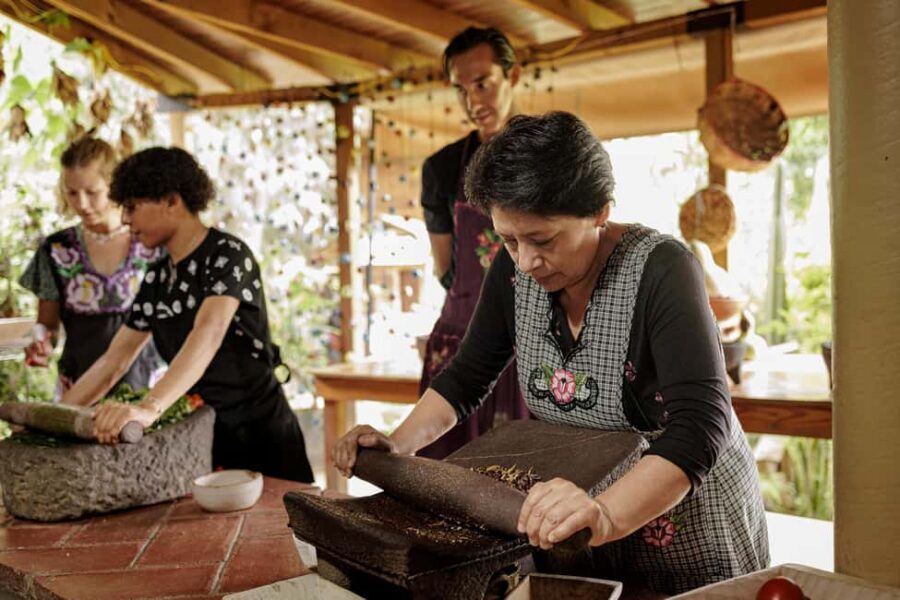
- Grinding cacao and building cocoa paste the traditional way
- Choosing sweetness and mixing regional ingredients
- Making the beverage with a molinillo
- Taking home handcrafted chocolate (and using what you learned)
- Price and value: why $98 can make sense here
- Who this experience fits best (and who should skip it)
- Should you book Oaxaca: The Cocoa Experience from the Grain to Your Cup?
- FAQ
- FAQ
- How long is the Oaxaca cocoa workshop?
- What does it cost?
- Is it a small group?
- What languages are available?
- Where is the meeting point?
- What should I bring?
- Is it suitable for children or people with allergies?
- What’s included and what’s not included?
Key points worth knowing
- Clay-comal roasting: Roast cocoa on a clay griddle (comal) tied to San Marcos Tlapazola in Oaxaca’s Valles Centrales
- Peel and grind by hand: Turn the beans into cocoa paste using traditional steps and basic utensils you can find locally
- Conscious chocolate context: Learn the difference between cocoa, commercial chocolate, and conscious chocolate focused on sustainability and social responsibility
- Control the sweetness: Pick the chocolate sugar percentage and then mix with regional ingredients
- The molinillo method: Learn how to prepare the beverage and integrate the chocolate with the traditional frothing tool
- Taste + snack: You end with a cocoa-based snack designed to match the flavors you just created
Oaxaca cocoa: what this workshop really teaches
If you’ve ever had chocolate that tastes flat or overly bitter, this is the kind of class that can recalibrate your expectations. This Oaxaca cocoa experience is built around the idea that cacao flavor starts in the seed—its aroma, acidity, bitterness, and other organoleptic traits—long before it ever becomes a candy bar.
You’ll first get oriented in the world of Oaxacan cocoa: what you’re tasting, what to look for, and how cocoa can vary. Then the class draws a clear line between cocoa and commercial chocolate, and it also introduces what’s called conscious chocolate. The point isn’t just labels. It’s about how production choices connect to environmental sustainability and social responsibility—so “better chocolate” here means more than sweetness and smoothness.
By the end, you won’t just know how to make a drink. You’ll understand why Oaxacan cacao can taste different from what many visitors associate with European-style chocolate flavors—often less bitter than people expect.
If you're still narrowing it down, here are other tours in Oaxaca De Juarez we've reviewed.

Where it starts in Oaxaca de Juárez (and how to plan your 3 hours)
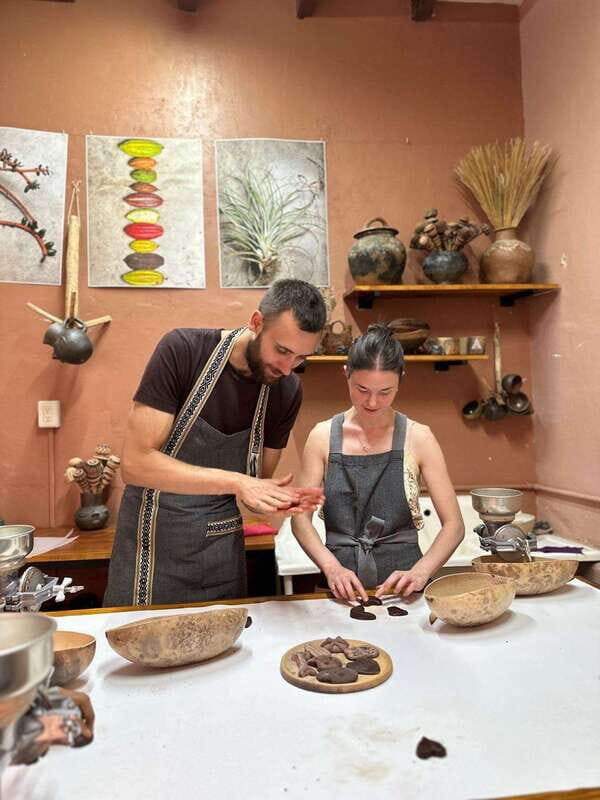
The meeting point is 5 de Mayo 210, Ruta Independencia, Centro, 68000 Oaxaca de Juárez. This is a convenient spot if you’re already staying in the Centro area, and it keeps the experience focused: you’re not spending your limited time hopping between stops.
The whole experience runs about 3 hours, and it’s designed as a single-flow workshop rather than a long route with multiple venues. You’ll be in a small group—limited to 6 participants—so questions don’t feel like an interruption. The instructor can work in English or Spanish, which is a big plus if you’re not fluent.
What to bring is simple but important: comfortable shoes, comfortable clothes, water, and snacks. Even though the tour includes a cocoa-flavor snack at the end, you’ll feel better if you arrive not-too-hungry and not-too-dry. Expect to stand and work with your hands.
One practical note: transportation isn’t included. If you’re not walking from nearby, plan on getting yourself there on your own.
The comal roast: where the flavor story begins
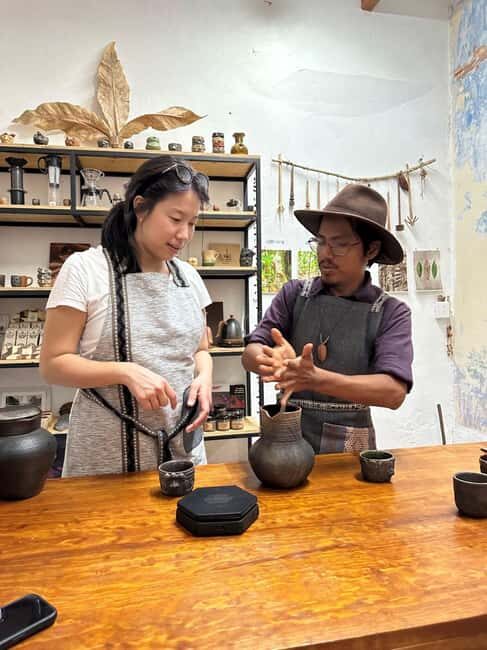
The signature early step is roasting cacao on a clay griddle called a comal. In this experience, the comal comes from the community of San Marcos Tlapazola (in Oaxaca’s Valles Centrales). That matters because it signals the class isn’t treating cacao like a generic ingredient—it’s tying the technique to place.
Roasting is where a lot of cocoa’s character gets created or changed. You won’t just heat beans and hope for the best. You’ll get an introduction to Oaxacan cocoa to help you identify the organoleptic qualities of the seeds. Then the roast process gives you a hands-on way to connect theory to smell and taste.
This is also one of the parts where you can ask real questions, because you can see what’s happening step by step. If you care about flavor, roasting is the moment you start noticing why cacao isn’t all the same.
Peeling the beans by hand: ritual, not just technique
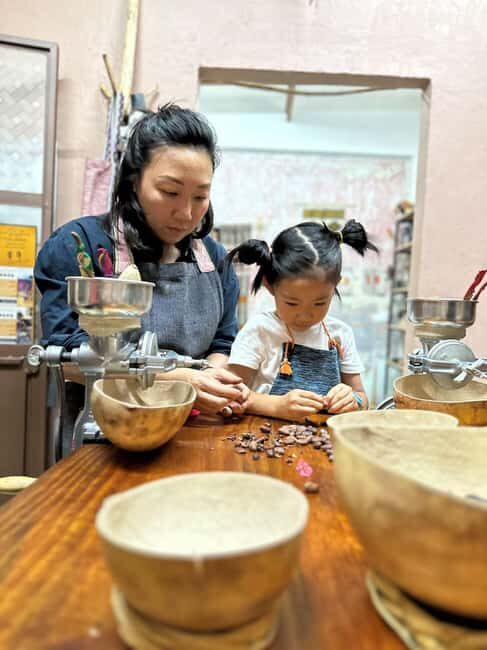
After roasting, you peel the cocoa using your hands. It’s described as a ritual, and the workshop frames it that way, with history and culture shared during the process as you transform the cocoa into chocolate in an artisanal manner.
This is worth paying attention to because it changes the vibe. You’re not watching a demo. You’re doing the work. Your hands are part of the learning.
Peeling by hand also makes the raw materials feel real. It’s one thing to buy chocolate in a shop. It’s another to handle cacao seeds and understand that the craft starts with careful attention to the bean itself.
If you’re the type of traveler who likes making meaning out of food—who wants to understand how practices connect to community—this ritual-focused step is one of the best reasons to choose this specific Oaxaca workshop over a generic tasting.
Grinding cacao and building cocoa paste the traditional way
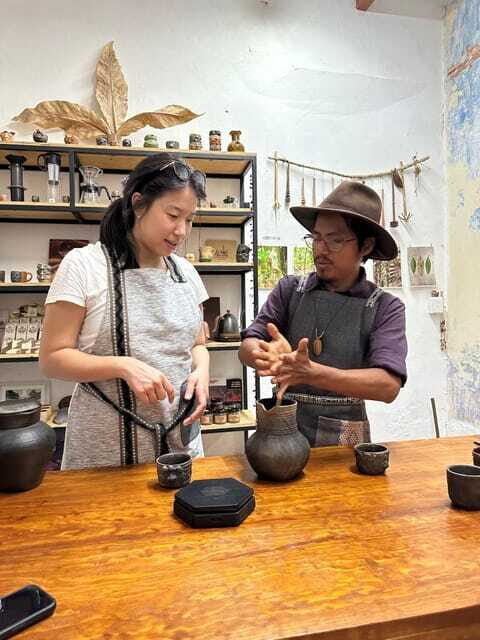
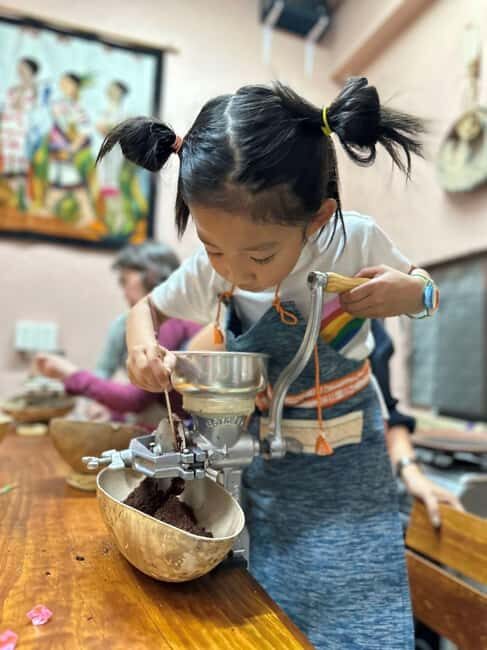
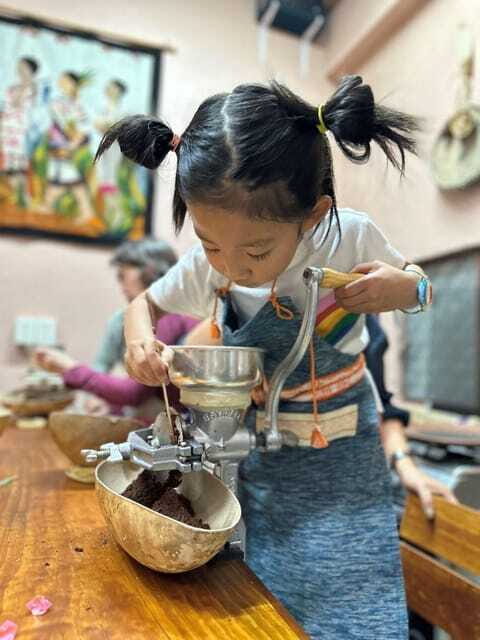
Once the beans are peeled, you grind them and work with cocoa paste. This is where “from the grain to your cup” stops being a catchy phrase and becomes literal.
The workshop emphasizes traditional methods using basic utensils that you can easily obtain at a local market. That’s a helpful detail for you because it means the goal isn’t just to make something once for the tour. You’re learning an approach you can repeat if you’re curious enough to recreate it later.
The grinding step also helps you understand texture. Chocolate-making isn’t only about taste—it’s also about body and how ingredients integrate. That sets you up for the next phase: choosing sugar and mixing in regional components.

Choosing sweetness and mixing regional ingredients
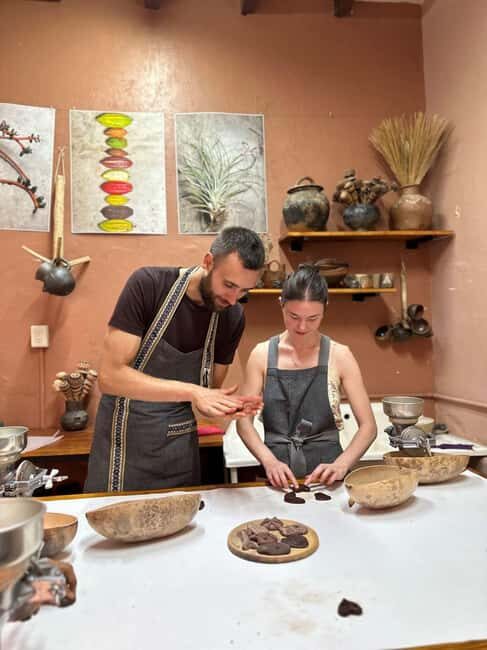
Now you get to personalize. The class lets you choose the percentage of sugar for your chocolate, and then you mix it with different regional ingredients.
That’s a big value point for practical travelers: you’re not stuck with someone else’s sweetness level. If you like your cocoa closer to dark and complex, you can choose accordingly. If you prefer it smoother and more dessert-like, you’ll have that option too.
The “regional ingredients” part is also a reminder that Oaxaca isn’t one flavor. It’s many, and cocoa can pair with other local tastes. Even without needing to know the exact ingredient list ahead of time, you can expect this section to be where your drink starts becoming your version of Oaxacan chocolate.
This stage is also where the conscious chocolate idea comes back into focus. The workshop pushes the idea that crafting chocolate responsibly and thoughtfully changes the outcome. It’s not only about flavor—it’s about method and ethics tied to sustainability and social responsibility.
Making the beverage with a molinillo
The finale craft step is preparing the chocolate drink using a molinillo. This is the traditional utensil used to incorporate and integrate the chocolate so it blends properly.
If you’ve had Oaxacan chocolate before, you may remember the texture—often slightly frothy and smooth in a way that bottled mixes rarely match. The molinillo is central to getting that result, and the tour teaches you how the tool helps the chocolate come together.
In other words, you’re not just “adding hot water” and calling it done. You’re learning a method that affects how the drink feels in your cup.
Then you taste what you made with a cocoa-based snack designed around the rich flavors of cocoa. That pairing step is useful because it helps you notice what you’d otherwise miss when you sip alone: the balance between bitterness, aroma, and sweetness.
Taking home handcrafted chocolate (and using what you learned)
You’ll leave with handcrafted chocolate to take home. That’s more than a souvenir. It’s something you can use to test whether your new understanding sticks.
The best way to use your takeaway is to compare. Make a note of how it tastes now, then when you try it later, think back to the comal roast and the grinding. If you choose different sugar next time, you’ll also learn how sweetness reshapes perceived flavor.
After a workshop like this, you’ll probably start noticing cocoa quality when you’re back in shops or cafés. You’ll know to ask: is it just sweet chocolate, or is it cacao-forward, crafted with intention?
Price and value: why $98 can make sense here
At $98 per person for about 3 hours, this isn’t the cheapest thing on a Oaxaca day. But it isn’t a generic “watch and taste” activity either.
Here’s what you’re getting for your time:
- Hands-on roasting on a clay comal and peeling by hand
- Grinding cocoa to create paste with traditional steps
- Mixing your own chocolate with a chosen sugar percentage and regional ingredients
- Preparing your own beverage with a molinillo
- A cocoa-flavor snack and guided tasting
- Chocolate you can take home
Also, small group size matters. With a maximum of 6 participants, you’re less likely to feel rushed or left out when asking questions or when it’s your turn to work.
So the question for you is simple: do you want a tasting, or do you want a skill? If you want the skill—plus a deeper understanding of conscious chocolate—this price can feel fair.
Who this experience fits best (and who should skip it)
This Oaxaca cocoa experience is a great fit if you:
- Like hands-on food activities where you work with your hands
- Care about sustainability and social responsibility in what you eat
- Want to learn how flavor develops from roast to drink
- Enjoy small-group classes with a clear Q&A rhythm
It’s also a good pick for travelers who don’t just want chocolate—they want context. The class talks about history and culture in the community connected to the comal, plus it explains how cacao flavor can differ from what you might expect.
It may not be for you if:
- You have food allergies (the tour is not suitable for people with food allergies)
- You’re traveling with a small child under 3 (not suitable for children under 3 years)
- You want a passive activity with no prep and no hands-on steps
And note the rules: no smoking during the activity, and pets aren’t allowed.
Should you book Oaxaca: The Cocoa Experience from the Grain to Your Cup?
I think you should book this if you want an Oaxaca food experience that’s more than tasting—one that teaches you how cacao becomes a drink through traditional steps you can repeat. The roast on a clay comal, the hand-peeling ritual, and the molinillo-based beverage prep are the core reasons this feels authentic.
If you’re allergy-sensitive, skip it. If you’re comfortable with a hands-on workshop and you like learning why things taste the way they do, this is a strong choice in Oaxaca’s Centro area.
FAQ
FAQ
How long is the Oaxaca cocoa workshop?
It lasts 3 hours.
What does it cost?
The price is $98 per person.
Is it a small group?
Yes. The group is limited to 6 participants.
What languages are available?
The instructor teaches in English and Spanish.
Where is the meeting point?
You meet at 5 de Mayo 210, Ruta Independencia, Centro, 68000 Oaxaca de Juárez.
What should I bring?
Bring comfortable shoes, comfortable clothes, water, and snacks.
Is it suitable for children or people with allergies?
It’s not suitable for children under 3 years, and it’s not suitable for people with food allergies.
What’s included and what’s not included?
Included: the cocoa introduction, roasting on a clay comal, peeling/grinding, mixing with regional ingredients, making the beverage with a molinillo, tasting, a cocoa-flavor snack, and handcrafted chocolate to take home. Not included: transportation to the venue and personal purchases.