Death turns artistic in Oaxaca City streets.
On The Art of Death in Oaxaca, I love the way the Día de los Muertos symbols show up at every corner, turning a simple stroll into a guided walk about memory and family. I also really liked Juan Pablo’s clear, mural-by-mural explanations that make the skulls and offerings feel meaningful instead of random. One thing to keep in mind: if there’s a local parade, the meeting area can get crowded and timing can shift, so plan for a little extra buffer.
This experience is in Barrio de Jalatlaco, a quieter slice of Oaxaca City with cobblestones, adobe walls, and an old-neighborhood feel. The tour runs about 1 hour 10 minutes, caps at 15 people, and uses a mobile ticket, so it’s simple to show up and start walking.
In This Review
- Key things I’d circle before you go
- Oaxaca’s Art of Death: why Jalatlaco feels different
- Meeting at Templo de San Matías Jalatlaco and what the walk feels like
- Barrio de Jalatlaco stop: skulls, ancestors, and symbol-spotting
- Juan Pablo’s approach: context that makes the art click
- Timing and logistics: how to avoid the common headache
- Price and value: what $59.85 really buys you
- What to bring (and what not to) for a smoother walk
- Who should book this walk in Oaxaca?
- Should you book The Art of Death in Oaxaca?
- FAQ
- Where does the tour start?
- How long is the walking tour?
- How big is the group?
- What’s included in the price?
- Are meals or drinks included?
- Is this a guided walking tour or something else?
- Do I need a printed ticket?
- Are service animals allowed?
- Is it near public transportation?
- What’s the cancellation policy for a full refund?
Key things I’d circle before you go
- Barrio de Jalatlaco on foot: one focused neighborhood walk instead of a rushed stop-and-snap approach
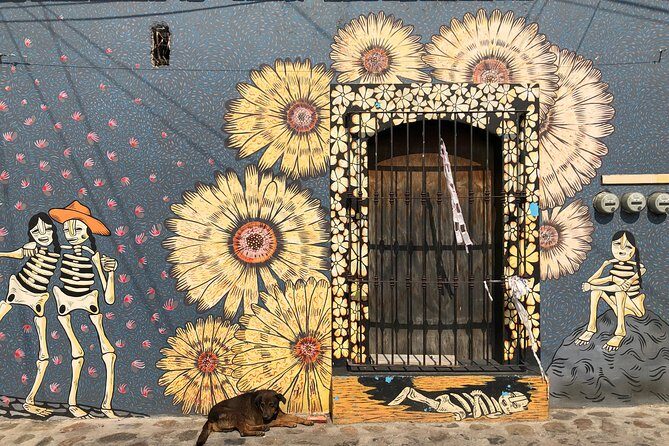
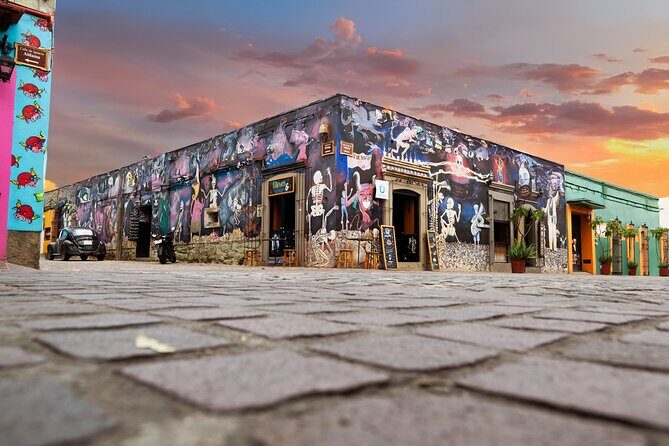
- Murals you can actually read: you’re guided through symbols, skulls, and ancestor imagery
- Juan Pablo’s explanations: clear context that helps you understand what you’re seeing
- Photo-friendly details: close-up mural angles make it feel like a photographer’s dream
- Small group size: up to 15 people keeps the pace calm and conversational
Oaxaca’s Art of Death: why Jalatlaco feels different
If you’ve ever wondered how people talk about death without making it scary, this walk gives you a practical answer—through art. In Oaxaca, death isn’t treated like a subject you hide. It’s shown, symbolized, and placed right into everyday life, and Jalatlaco is where you see that idea made visible.
This experience is built around the idea that you’re not just viewing murals. You’re learning how the living and memories sit side by side, generation after generation. That’s the heart of what you’ll get: an explanation of how a neighborhood can function like an open-air space for identity and remembrance.
And it matters that the setting is Jalatlaco itself. The cobblestone streets and adobe homes create a calm, human scale. You’re not crossing a giant tourist zone; you’re moving through a place that feels like an old village inside the city.
If you're still narrowing it down, here are other tours in Oaxaca City we've reviewed.


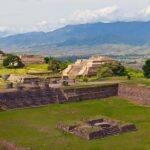
Meeting at Templo de San Matías Jalatlaco and what the walk feels like
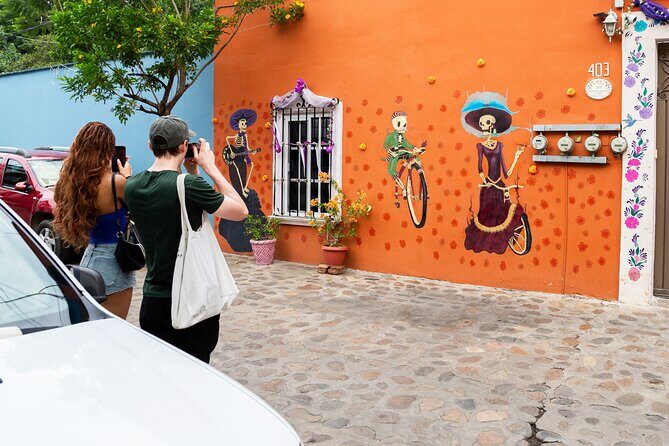
You start at Templo de San Matías Jalatlaco, located at Miguel Hidalgo 211, Barrio de Jalatlaco, 68080 Oaxaca de Juárez, Oax., Mexico. You end right back at the same spot, so you’re not stuck figuring out transportation at the end.
Expect to walk for about 1 hour 10 minutes total. The core moving time is roughly 50 minutes, with the rest of the time used for orientation, stopping, and taking in details at each mural point. It’s not a heavy hike. It’s a focused walk where the pace stays tied to what you’re looking at.
Because it’s capped at 15 people, you’ll usually have enough breathing room to hear the guide and then look again on your own. If you’re the type who likes reading details slowly, this group size helps.
Also, the tour uses a mobile ticket, and you’ll get confirmation at booking. If you like being able to travel light, that’s a nice practical touch.
Barrio de Jalatlaco stop: skulls, ancestors, and symbol-spotting
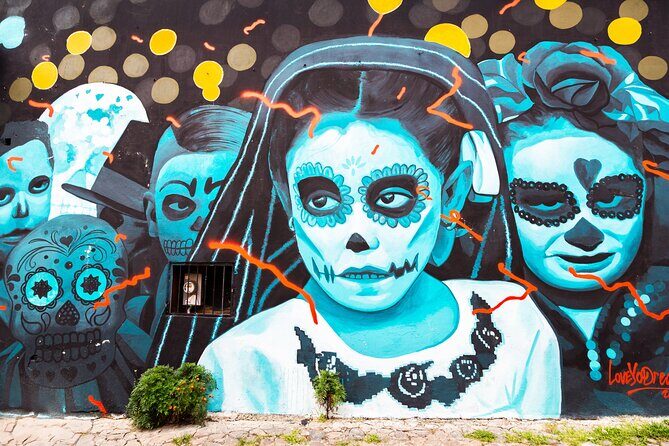
Everything centers on one neighborhood loop: Barrio de Jalatlaco. The whole point is that you see death-themed art as a system of meaning, not just decoration.
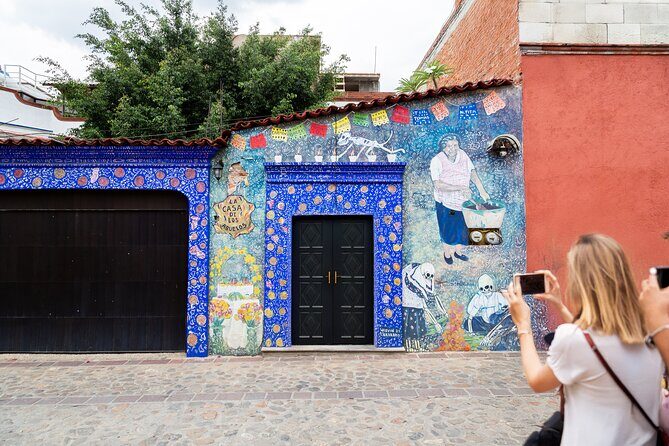
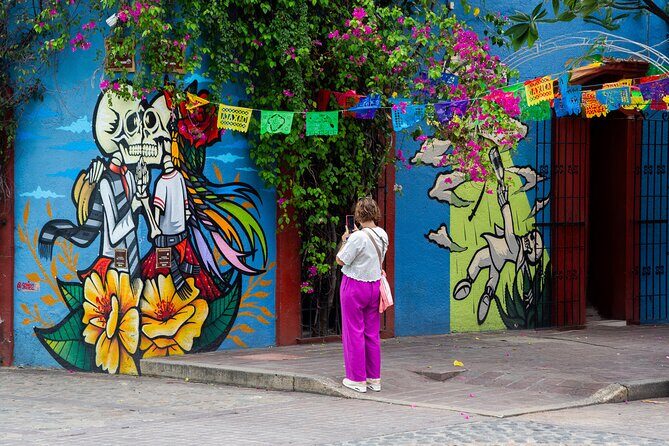
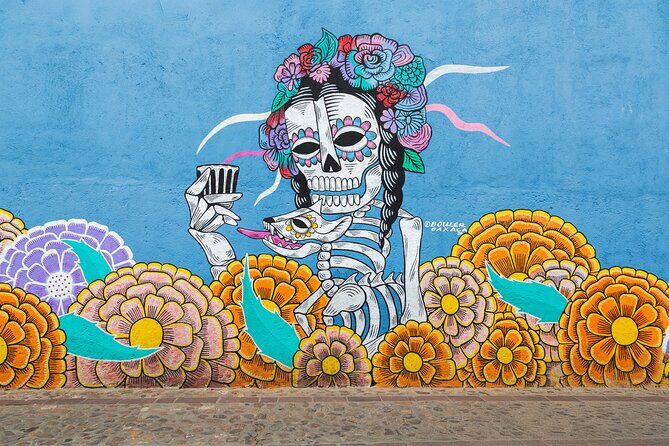
As you walk, you’ll notice how murals act like visual storytelling. You’ll spot ancestors represented through imagery, alongside festive skulls and other symbols packed with interpretation. The guide doesn’t just point at the art and move on. You’ll get help connecting the symbols to the wider worldview behind Día de los Muertos.
Here’s what makes this stop work for your eyes. You’ll learn to slow down enough to notice what’s repeated and what changes from one corner to the next—like particular shapes, motifs, and the way the art blends the solemn with the celebratory. When you understand that pattern, the neighborhood stops feeling random.
The streets themselves add to the meaning. Jalatlaco’s cobblestone lanes and adobe houses create a setting where murals feel like part of daily life, not like a wall you just happen to pass. You’re walking through a space that helps the message land: living people carry memory, and art is one of the bridges that keeps those connections visible.
And yes, if you care about photos, you’ll probably enjoy it. The way the murals are explained makes it easier to frame shots with purpose—what you’re photographing becomes part of the story instead of just a pretty wall.
Juan Pablo’s approach: context that makes the art click
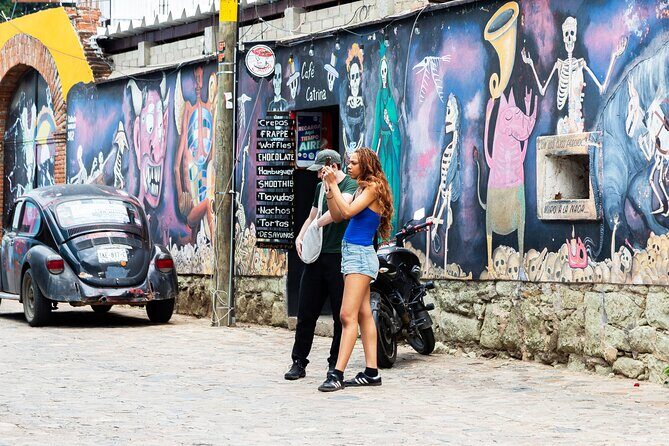
One of the most praised aspects here is the guiding. People highlight how Juan Pablo brings the subject to life in a way that makes it easier to understand the allusive parts of the tradition.
That’s a big deal because death-themed symbolism can look cryptic if you don’t have context. With this walk, you’re given the map for reading what you see. The guide’s job is to help you translate symbols into meaning, so you don’t leave with only photos.
The murals are the main characters, but the explanations are what turn them from images into information you can carry. The result is that the art starts making sense—why it’s placed where it is, why certain motifs show up, and how the neighborhood itself becomes a kind of community message.
From a practical angle, this also changes how you experience the streets. Instead of wandering, you follow a guided rhythm: stop, observe, interpret, then move on. That structure helps you get more out of a shorter tour length without feeling rushed.
Timing and logistics: how to avoid the common headache
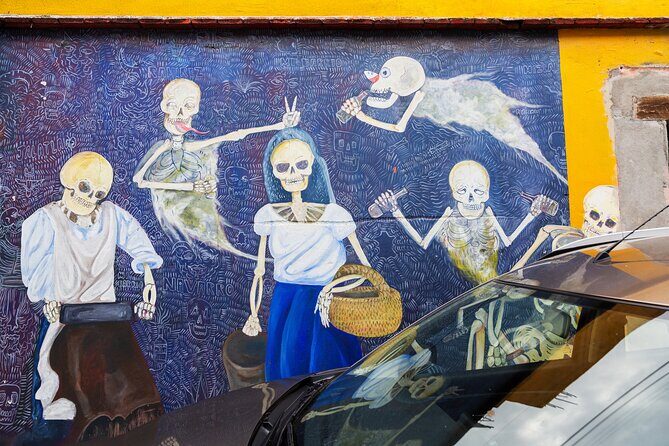
This is a short walking experience, so small delays can feel bigger. One early sign of that came up in a real-world situation: a parade caused overcrowding at the meeting spot, and the start time changed. There was also a communication issue due to poor signal, which led to the guide not reaching the group promptly. A refund was provided afterward.
You can’t control parades. But you can control how ready you are. Here’s how to reduce stress:
- Arrive a bit early so you’re not trying to hunt a guide in a crowd
- If you’re watching the clock, stay flexible if the neighborhood is busy
- Keep your phone charged in case you need to reconnect
If you’re the type who plans travel tightly, shift to a slightly looser mindset for this tour. It’s only about an hour, but it happens in a place where local events can affect movement.


Price and value: what $59.85 really buys you
At $59.85 per person, this isn’t the cheapest walk in Oaxaca City. So the question is: what do you get that you can’t easily get on your own?
You’re paying for three things that matter:
- A guided route through Jalatlaco with stops where the meaning is explained
- A local cultural perspective that connects art to lived worldview
- Time saved by having someone point out what to notice
Because the experience is around 1 hour 10 minutes, you also get a clear time commitment. You’re not booking half a day and hoping the payoff arrives. It’s short enough to fit into a busy itinerary, yet structured enough that the murals don’t blur together.
And because the group size is small (max 15), the guide can actually give attention instead of giving a generic talk that no one can hear. That’s part of what makes the price feel fair for this format.
One more value note: the main walk is listed with admission ticket free for the stop, which usually means you’re not paying extra entry fees on top of the tour price. You’re mostly paying for the guidance and interpretation.
What to bring (and what not to) for a smoother walk
This is a walking tour with a cultural focus, and it’s short. That means you don’t need a huge kit, but a few items can make a difference.
Bring:
- Comfortable walking shoes for cobblestones
- Your camera or phone if you want mural close-ups
- Water, just in case you get thirsty during the walk (drinks aren’t included)
Don’t plan on:
- Meals or drinks being provided. The experience explicitly does not include meals or drinks. If you’re heading straight to lunch, schedule it after the tour.
Also, service animals are allowed, and the tour is near public transportation. So if you want to keep transit simple, this fits well.
Who should book this walk in Oaxaca?
This tour is a good match if you:
- Like street art, but want help understanding it
- Want Día de los Muertos art explained in a way that respects its symbolism
- Prefer smaller groups and a calm pace
- Want a short cultural experience that fits into a packed day
It may not be the best fit if you:
- Hate any chance of schedule changes due to neighborhood events
- Want a long, multi-area tour with lots of different stops
- Are expecting a food-centered experience (meals and drinks aren’t part of it)
If you’re visiting Oaxaca City and you want one focused, meaningful way to connect with local traditions, this one-check “how death becomes art” idea is the strength.
Should you book The Art of Death in Oaxaca?
If you want a short, thoughtful walk that turns murals into interpretation, I’d say yes. The strongest reason to book is the guiding. People consistently praise Juan Pablo for making the symbolism understandable, and that’s exactly what you want when you’re staring at skulls and ancestors on a wall and wondering what you’re actually seeing.
The other reason is setting. Barrio de Jalatlaco feels human-sized, and the cobblestone streets help the art land as part of the neighborhood, not just a backdrop.
My only caution is practical: watch for local crowding. If a parade is happening, arrive early and stay flexible. If you do that, you’ll get a rewarding hour-plus where art teaches you how Oaxaca thinks about memory and death.
FAQ
Where does the tour start?
The tour starts at Templo de San Matías Jalatlaco, Miguel Hidalgo 211, Barrio de Jalatlaco, 68080 Oaxaca de Juárez, Oax., Mexico.
How long is the walking tour?
It runs for approximately 1 hour 10 minutes.
How big is the group?
The tour has a maximum of 15 travelers.
What’s included in the price?
The experience includes a cultural experience with a local.
Are meals or drinks included?
No. Meals and drinks are not included.
Is this a guided walking tour or something else?
It’s a one-hour walking tour through Barrio de Jalatlaco.
Do I need a printed ticket?
No. It uses a mobile ticket.
Are service animals allowed?
Yes. Service animals are allowed.
Is it near public transportation?
Yes. It’s listed as near public transportation.
What’s the cancellation policy for a full refund?
You can cancel for a full refund if you cancel at least 24 hours before the experience’s start time. If you cancel within 24 hours of the start time, the amount paid is not refunded.