REVIEW · OAXACA CITY
Tour Boil the “classic” water
Book on Viator →Operated by Oaxaca Dreams · Bookable on Viator
A long day, but Oaxaca hits hard. This 11 to 12 hour tour is a smart hit-list route around Oaxaca City, with hands-on culture stops and two big-ticket nature and archaeology moments. I especially like the mix of craft + food + ruins, and the highlight pool time at Hierve el Agua gives you a rare chance to slow down in a truly unusual setting.
My other favorite part is the pace that keeps you moving while still letting you actually do things, not just pose for photos. The main drawback is simple: it’s a full day, and depending on the guide’s translation style, the bilingual experience may feel a bit fast—especially if you want extra detail in English.
In This Review
- Key things I’d circle on your map
- The flow of an 8:00 AM start in Oaxaca City
- Stop 1: The Tule Tree and the kind of scale you can feel
- Teotitlán del Valle wool rugs: pigments, patience, and hands-on craft
- Panaderia Artesal Yazmin: a bakery stop that actually teaches
- Hierve el Agua: petrified waterfalls, and the walk-vs-swim choice
- Mitla: the city of the dead, with archaeology that rewards attention
- Lunch at La Choza del Chef: built into the day, but not included
- Mezcal at El Rey de Matatlán: learning how it’s made
- Language, guide style, and why it changes your experience
- Price and value: what you’re really paying for
- Who should book this tour, and who should consider something else
- Should you book Boil the classic water?
- FAQ
- How long is the tour?
- What time does it start, and where do I meet?
- Is pickup available?
- What language is the tour offered in?
- What’s included, and what’s not?
- Which stops have admission tickets included?
- Is it weather-dependent?
Key things I’d circle on your map

- Hierve el Agua pools where you can choose a walk or a swim at the petrified waterfall viewpoint
- Tule Tree for that worldwide-widest-trunk kind of stop, with admission included
- Teotitlán del Valle rugs tied to wool dye work using natural pigments
- Family bakery tasting with classic Oaxaca bread options (including a sweet, spice-forward mix)
- Mitla ruins including an included entry ticket to the Zona Arqueológica de Mitla
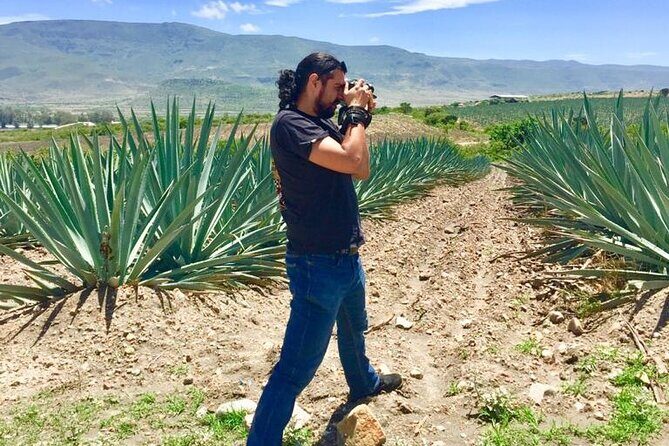
- El Rey de Matatlán mezcal for how mezcal is made, with the tasting/visit included at no extra entry cost
The flow of an 8:00 AM start in Oaxaca City
You meet in central Oaxaca at Plaza Comercial Guerrero on Vicente Guerrero 105, and the tour begins at 8:00 am. Pickup is offered, and you’ll want to be ready in the lobby at least 10 minutes early so you don’t delay the group.
The day runs 11 to 12 hours and ends back in the historic center area, one block from the city plinth near the Zócalo. That matters because you can plan your evening without guessing how far you’ll be from the action.
This is a shared tour (maximum 20 people) in an air-conditioned vehicle, which is a big plus when Oaxaca heat shows up midday. If you want a quieter experience or more attention in one language, keep in mind the operator offers private services that can match your English needs better.
If you're still narrowing it down, here are other tours in Oaxaca City we've reviewed.


Stop 1: The Tule Tree and the kind of scale you can feel
The first stop is the Tule Tree, known for having the widest trunk in the world. You get about 20 minutes here, and admission is included.
This is the kind of sight where short time is enough if you go in with a plan: look for the girth, stand back for scale, then step closer so you don’t miss the texture and roots. The trunk is the whole story, so don’t burn your minutes wandering like it’s a long museum.
If you’re the type who likes to take a few good photos and move on, this is a solid opener. It gets your eyes working before the longer drive and helps set the day’s tone: Oaxaca isn’t just one attraction—it’s a whole web of traditions.
Teotitlán del Valle wool rugs: pigments, patience, and hands-on craft

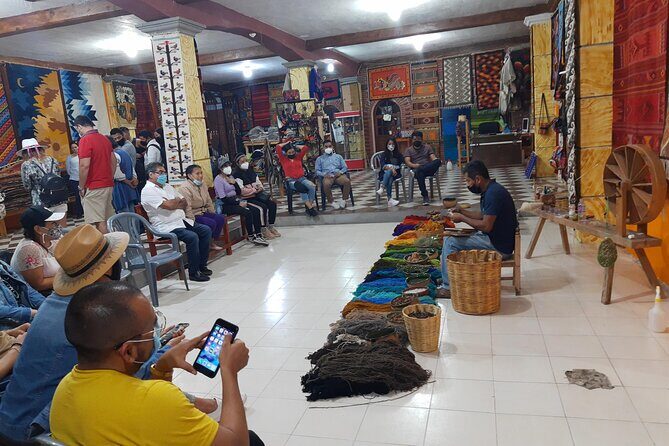
Next you head to Teotitlán del Valle for a wool rug workshop-style visit. You’ll spend about 45 minutes here, and entry is free.
The key idea I like in this stop is that you’re not just seeing a finished textile—you’re learning how wool rugs are elaborated and how natural pigments are used for staining. That means the colors make sense, not just look nice. You can think of it like a small chemistry lesson, but with culture behind it.
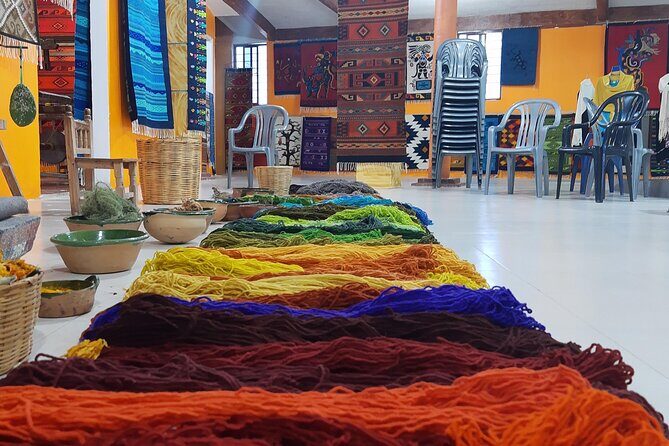
If you want to get more out of this stop, watch how the workshop explains dyeing. Even if your Spanish is limited, the visual process (pigments, shades, and how fabrics take color) gives you something concrete to connect with. This is also a good time to ask one or two questions, because you’re in a working environment and not an indoor showroom.
Panaderia Artesal Yazmin: a bakery stop that actually teaches
Then comes a family bakery stop at Panaderia Artesal Yazmin, about 20 minutes, also with admission-free entry. This is where the tour adds a local flavor break without turning into a random snack run.
You can taste traditional breads, including pan de cazuela—a bread that blends chocolate, raisins, cinnamon, and anise. That combination sounds like a dessert, but it’s also a window into how Oaxacan baking mixes sweet spice notes and deep comfort flavors.
Practical tip: if you’re even slightly sensitive to strong spices, take a small bite first. Anise and cinnamon can be intense for some people, and tasting in a group means you may not get a long pause to adjust. Still, this is one of the most memorable “small” stops because it tastes like Oaxaca, not just looks like it.
Hierve el Agua: petrified waterfalls, and the walk-vs-swim choice
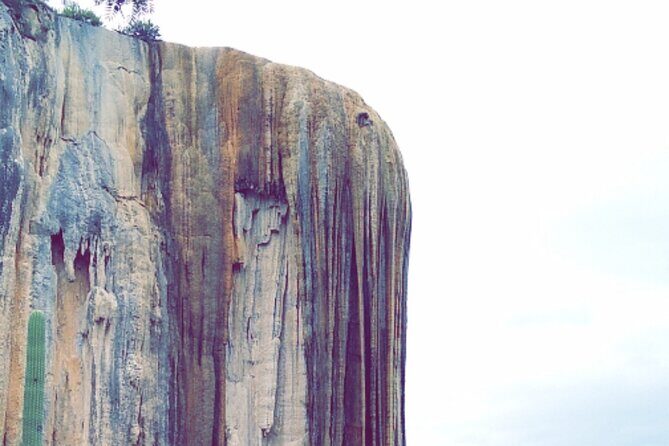
Now for the day’s biggest nature hit: Hierve el Agua and its petrified waterfall views. You get about 1 hour 30 minutes, and admission is included.
Here you can do either a walk or a swim (and you may have to choose depending on timing). The pools are described as natural turquoise, and the setting is genuinely unusual: rock formations that look like waterfalls turned to stone, with water sitting in pools like it belongs in a different kind of science project.
I like this stop because it forces you to decide what kind of memory you want:
- If you love views and photos, focus on the walk.
- If you want that hands-on “I was in it” moment, make time for the swim.
What you should bring: comfortable shoes for the walk part (even if you plan to swim), and swimwear and a towel for pool time. Also sunscreen and a hat help here, because this is outdoors and long stays can get hot.
The only real downside is logistics within the window. If you try to do everything, you can end up rushing. I’d pick your priority early when you arrive so you don’t waste the best weather moment.





Mitla: the city of the dead, with archaeology that rewards attention
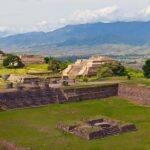
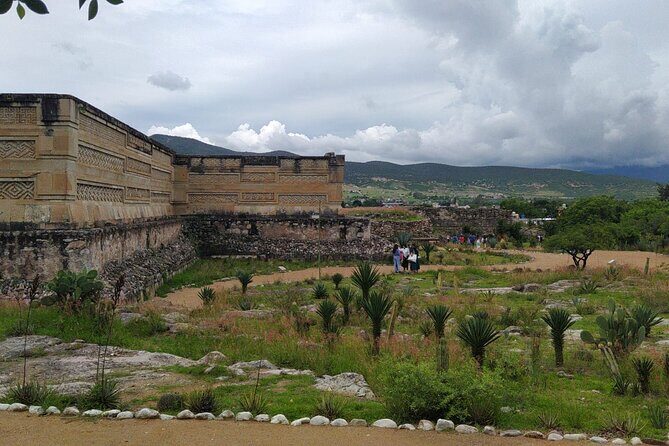
After Hierve el Agua, you go to the Zona Arqueológica de Mitla. This stop is about 1 hour and has admission included.
Mitla is often described as the city of the dead and it’s treated like a magical town because of its mix of meaning and architecture. The visit includes history and culture context, but the most important thing for you is how you experience it: look closely at patterns and details. Even with a short time window, the site’s layout gives you natural “checkpoints” for what to observe.
This is also one place where guide quality matters. If your guide keeps explanations tight and structured, you’ll feel like the ruins connect to something bigger. If explanations stay general, you can still enjoy Mitla visually—just be ready to do a little of your own interpretation while you’re there.
If you want the most from this hour, keep your questions simple and direct:
- What makes Mitla significant compared with other Oaxacan sites?
- What should I notice first in the stonework or layout?
Lunch at La Choza del Chef: built into the day, but not included
Lunch is scheduled as an Oaxacan buffet meal at La Choza del Chef for 1 hour, but it’s listed as not included. That’s normal on shared tours—you’re paying for transportation, key entries, and guided stops, then covering meals separately.
I think the real value here is that lunch time is protected. You’re not stuck hunting food between long drives, which is a common way tours turn stressful. The not-included part means you should budget for it and also plan what you’ll do about snacks, because snacks are not included either.
A smart move: if you’re the type who gets hungry fast, grab something small during the bakery stop so you’re not starving before Hierve el Agua. And drink water when you can. Hydration keeps you feeling good enough to enjoy both the ruins and the swim.
Mezcal at El Rey de Matatlán: learning how it’s made
Next is El Rey de Matatlán, a mezcal making visit about 45 minutes, with admission listed as free.
This stop teaches you how mezcal is made, and it’s an important cultural angle because mezcal isn’t just a drink. It’s tied to local production knowledge and tradition—plus you’ll likely get a better sense of how process shapes flavor.
If you’re someone who likes tasting, this is the part of the day where your senses catch up with the morning’s crafts. You’ve seen dyes become colors; now you’re seeing fermentation and production become a drink.
Small caution: if you’re sensitive to alcohol, treat mezcal tasting as a sample moment, not a night-out situation. You’re still in the middle of an 11 to 12 hour day, with driving afterward.
Language, guide style, and why it changes your experience
This tour is offered in English, but it’s also described as bilingual. That can work really well when the guide alternates or repeats key points clearly. It can also feel rushed when explanations get compact or if English delivery isn’t as strong as you expected.
I’ve seen guide names pop up in real experiences—Adir, Laura, and Angel—and the consistent theme is that when the guide is patient and organized, you get a smoother day and better context at each stop. So your best strategy is to show up with one expectation: you’re buying access to the route, the admissions included at several stops, and a guided framework. If you want an English-heavy day with slower, deeper explanations, private services can match that style better.
Price and value: what you’re really paying for
Even without a listed total price, you can judge value by what’s included:
- Air-conditioned vehicle for long drives
- Admission tickets included for Tule Tree, Hierve el Agua, and Mitla
- Several additional visits are listed as free entry (like Teotitlán del Valle and the mezcal factory visit)
- A full day route that covers nature, ruins, craft traditions, and food
What you pay extra for:
- Lunch at La Choza del Chef (not included)
- Snacks and tips (not included)
So this tour is best viewed as transportation + a curated route where big-ticket entries are already handled for you. If you would otherwise need taxis or a rental car, the shared format can feel like strong value. If you already have your own transport and want a slower pace, the value may feel less impressive because you could spread out the stops on your own schedule.
Who should book this tour, and who should consider something else
This one is a good fit if:
- You have limited time around Oaxaca and want a structured “around the city and beyond” day
- You don’t want to plan logistics between multiple regions
- You enjoy hands-on culture stops—rugs, bakery tasting, and mezcal process—plus one major nature moment and one major archaeology moment
You might choose a different option if:
- You hate long days and would rather enjoy fewer stops in more depth
- You need very detailed English explanations for every site
- You’d rather build your own route and control walk time vs swim time at Hierve el Agua without a group schedule
This shared group max of 20 helps keep things manageable, but it still won’t feel like a private experience.
Should you book Boil the classic water?
I’d book it when you want a one-day checklist that still includes real activities: a trunk-famous tree, dye-linked rug craft, a family bakery tasting, a petrified waterfall swim-or-walk moment, Mitla ruins, and mezcal-making education. It’s a practical way to see a lot of Oaxaca region variety without spending your vacation hours on transit planning.
Skip it if you’re hoping for a relaxed day with no rushing, or if you’re very particular about how much English you get at each stop. In that case, look for private services where the language matches your pace and attention level.
If you do book: get a solid breakfast before 8:00 am, pack swimwear for Hierve el Agua, and decide early what you want most—walk photos or pool time—so the best part of the day doesn’t slip away.
FAQ
How long is the tour?
The tour lasts about 11 to 12 hours.
What time does it start, and where do I meet?
It starts at 8:00 am. The meeting point is Plaza Comercial Guerrero, Vicente Guerrero 105, in Oaxaca City (Centro).
Is pickup available?
Pickup is offered, and you’ll be told the agreed pickup details. Be ready in the lobby at least 10 minutes before the agreed time.
What language is the tour offered in?
The tour is offered in English, and it is described as a bilingual experience (English and Spanish).
What’s included, and what’s not?
Included: air-conditioned vehicle and some admission tickets (notably for Tule Tree, Hierve el Agua, and Mitla). Not included: snacks, tips, and lunch at La Choza del Chef.
Which stops have admission tickets included?
Admission tickets are included for Tule Tree, Hierve el Agua, and the Zona Arqueológica de Mitla.
Is it weather-dependent?
Yes. The experience requires good weather, and if it’s canceled due to poor weather, you’ll be offered a different date or a full refund.