REVIEW · OAXACA CITY
Visit to workshops and studios of contemporary art artists
Book on Viator →Operated by JOSE ANTONIO PAREDES ENRIQUEZ · Bookable on Viator
First-rate art, made in real places. This private studio tour takes you past the usual sights and into contemporary artists’ working spaces around Oaxaca City, where you can ask questions face-to-face. Two things I really like: the no-pressure vibe with time to talk, and the chance to see how different mediums get made, not just how they look. The one thing to think about is the route runs for 5–6 hours, so it’s more watch-and-walk than sitting in a comfy van.
If you care about Oaxaca beyond crafts-and-postcards, this is a strong use of a day. You’ll meet artists who explain their process in plain language, and the tour moves at a patient pace, with short stops that still feel substantive.
In This Review
- Key Points I’d Plan Around
- Contemporary Studio Visits Outside Oaxaca City
- The Best Part: No-Pressure Conversations With Working Artists
- Price and Logistics You Can Actually Plan Around
- How the 5–6 Hour Route Moves (and Why It Works)
- Stop-by-Stop: Oaxaca Artists Working in Their Real Mediums
- Enrique Flores and the Art of Engraving at Villa de Etla
- Caballero’s Expressionism and the Characters That See the World
- Jesús Cuevas: Color, Atmosphere, and a Classic Feel
- Eddy Vasquez and Family Memory Made Physical
- Maestro Manuel Miguel: Metal, Ceramics, Wood, Graphics, and Geometric Meaning
- El Mirador: Quick Oaxaca City View for a Final Photo
- Who Should Book This Studio Tour?
- Quick Reality Check: The Main Consideration
- Should You Book This Tour?
- FAQ
- How long is the Oaxaca contemporary artist studio tour?
- How much does the tour cost?
- Is pickup included?
- Does the tour include admission fees?
- Is the tour private?
- What language is the tour offered in?
- What days and times does it operate?
- What happens if the weather is bad?
Key Points I’d Plan Around
- Private studio access with only your group, plus pickup from the Centro meeting point.
- Free admission tickets for each stop, so your money goes to the guiding and the experience, not entry fees.
- Artist Q&A time where the conversations can be as interesting as the artwork.
- A mix of techniques and materials, from engraving and painting to metal, ceramics, wood, and graphic work.
- Good “see and photo” timing, including a quick viewpoint stop for a Oaxaca City souvenir picture.
Contemporary Studio Visits Outside Oaxaca City
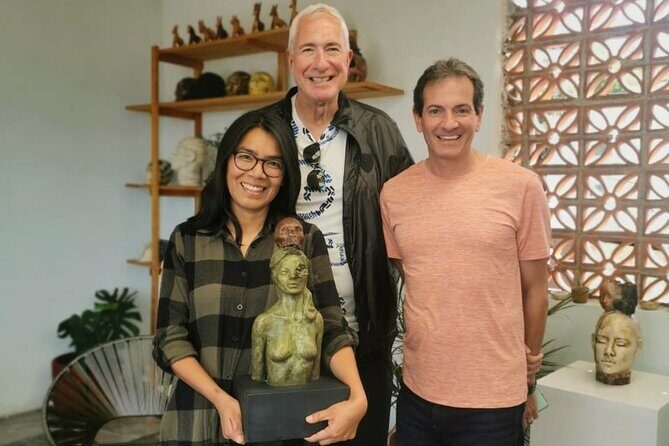
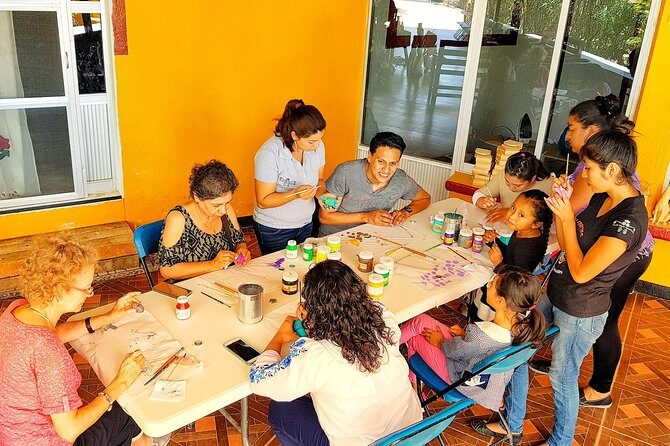
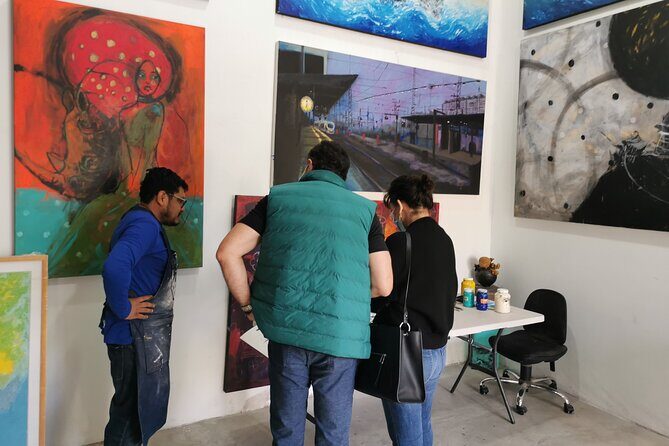
Oaxaca City has art everywhere, but most tours keep you outside the doors. This one does the opposite. You spend the afternoon at studios and workshops, where you see tools, surfaces, and work-in-progress energy.
What makes it feel different is that you’re not hunting for a list of famous murals. You’re watching contemporary creators at work and hearing how they think. That’s where the day starts to click.
If you're still narrowing it down, here are other tours in Oaxaca City we've reviewed.



The Best Part: No-Pressure Conversations With Working Artists
I love experiences where I can ask questions without feeling like I’m interrupting. Here, the tone is calm. The artists welcome you, and your guide helps keep the conversation going so it doesn’t turn into awkward small talk.
One review highlight was the kind, patient guidance and the clear lack of pressure to buy. That matters in Oaxaca, where it’s easy to get pushed toward shopping. This tour puts the focus on understanding, not selling.
Price and Logistics You Can Actually Plan Around
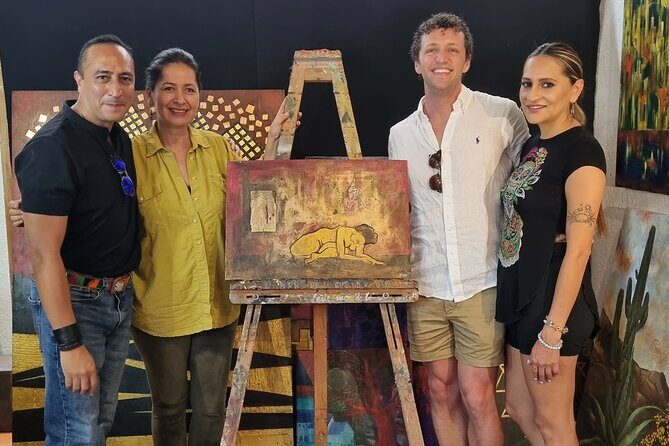
At $101.27 per person for about 5–6 hours, this is solid value for what you’re getting: pickup, English guiding, and multiple studio visits with admission included as free tickets.
A few practical notes that help you enjoy the day:
- Pickup happens 15 minutes before departure from Mariano Matamoros 500, Centro.
- The tour ends back at the same meeting point.
- You’ll use a mobile ticket.
- It runs Monday–Saturday, 10:00 AM to 4:00 PM, so you’ll want to pick a day when your schedule is wide open.
Also, the tour is private, meaning only your group participates. That usually leads to better conversations and fewer rushed moments.
Finally, this is one of those experiences that books ahead. It averages about 69 days in advance, so if you’re traveling in peak periods, don’t wait until the last minute.
How the 5–6 Hour Route Moves (and Why It Works)
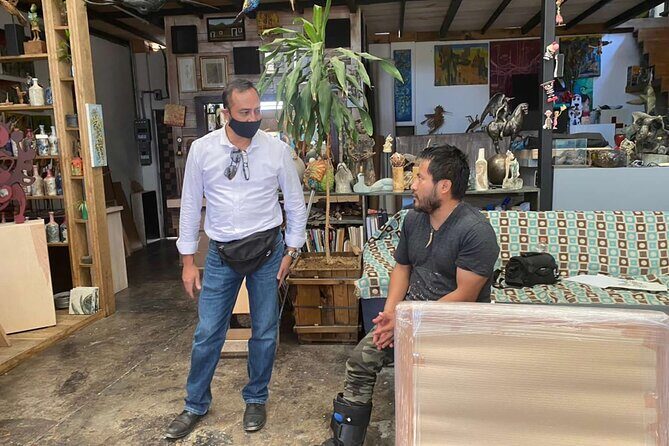
The pacing is built from short, focused stops. Most visits are around 40 minutes, plus a quick 10-minute viewpoint photo break at the end portion of the day.
That structure helps you in two ways:
- You get enough time to ask questions and look closely.
- You don’t lose the whole afternoon to one long stop.
The downside is obvious: there’s some driving between stops and you’ll be on the move for most of the tour. Wear comfy shoes. Bring a camera if you want one. And if you get cold easily, a light layer is smart, since studio visits can vary in temperature.
Stop-by-Stop: Oaxaca Artists Working in Their Real Mediums
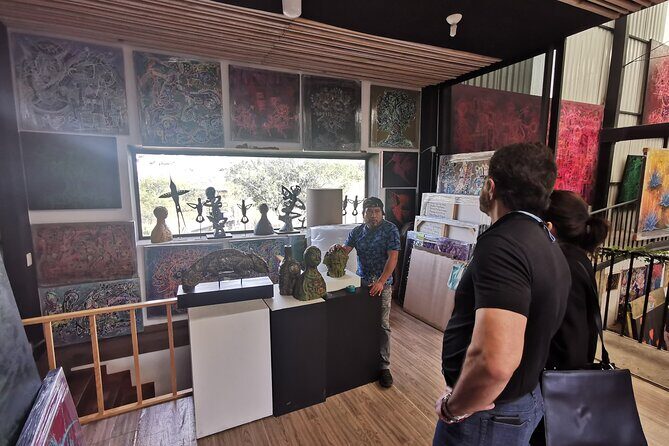
This tour hits five studio/workshop stops plus a final scenic pass. The common thread is contemporary Oaxaca art, but each stop brings a different mindset and technique.
You’ll see how artists treat materials like they’re part of the story:
- engraving and printmaking traditions,
- abstract-figurative expression,
- color-and-atmosphere painting styles,
- memory-based textures and experimental surfaces,
- and multi-medium work from metal and ceramics to graphics and design.
By the time you reach the viewpoint pass at El Mirador, your brain feels more awake about what you’re looking at.




Enrique Flores and the Art of Engraving at Villa de Etla
Your first stop takes you to the Villa de Etla area. There, you’ll meet Enrique Flores, tied to the first generation of the Rufino Tamayo plastic arts workshop.
This isn’t a quick “look at prints” stop. You’re there because Flores dedicated decades to the study and improvement of engraving techniques, learning from teachers including Atanasio García Tapia, Octavio Bajonero, and Juan Alcázar. He’s also linked to the free graphic workshop Oaxaqueña, with principles of the stamp understood since the mid-1970s.
What I like about starting here is that it sets a baseline for how Oaxaca artists treat technique. You’re seeing craft with memory in it—rules, methods, and a long learning curve—rather than only the final image.
Practical takeaway: use this stop to ask the “process” questions. Engraving artists often talk differently than painters. It’s a useful contrast for the rest of the day.
Caballero’s Expressionism and the Characters That See the World
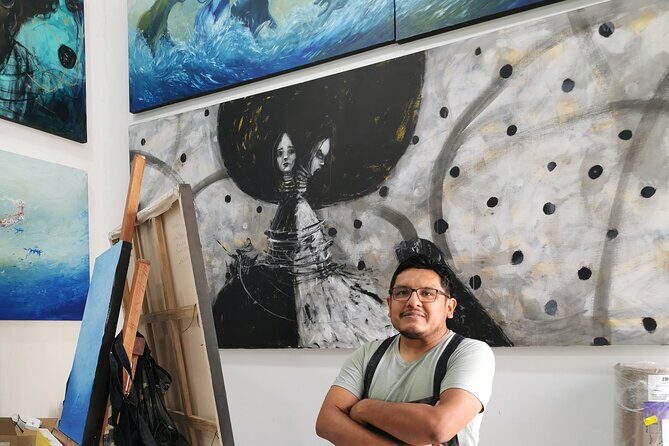
Next you’re in the studio of Caballero, whose style is abstract-figurative Expressionism. The tour frames his themes around imagined characters, with stories that seem to multiply as you look longer.
One specific artistic idea you’ll hear is about eyes—round and square eyes, explained as how everyone sees the world through their own experiences. It’s one of those small details that changes the whole way you read the artwork.
You’ll also get attention paid to a younger artist, Alexis, described as part of a new generation whose work is already producing strong impact.
This stop can be a favorite if you like art that feels emotional, personal, and slightly offbeat. Expressionism rewards time spent looking—so don’t rush your questions here.
Jesús Cuevas: Color, Atmosphere, and a Classic Feel
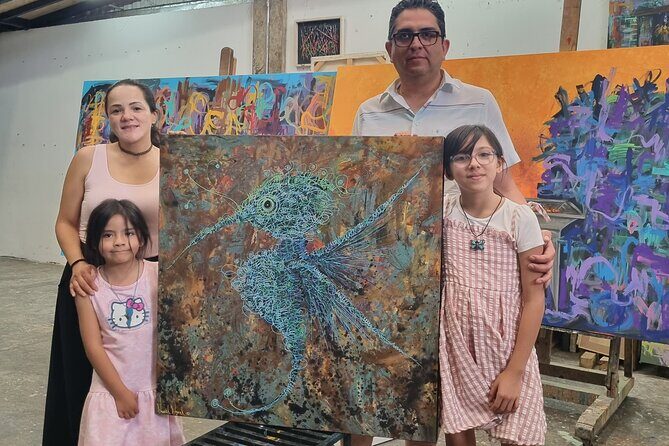
At the next studio, the focus shifts to Jesús Cuevas and how his work moves through techniques that resemble French impressionism, especially through handling of color and atmosphere.
You’re not just looking at pretty colors. The point is mood. The guide’s framing makes it clear that the textures and color choices are meant to carry emotional weight, and that the “elements” inside the works act like the main characters.
If you’re the type who usually skips museum lectures, this stop is still worth it. It’s where the tour helps you see that impressionist influence isn’t only a style label—it’s a way of building presence on the canvas.
Eddy Vasquez and Family Memory Made Physical
Then you’ll meet Eddy Vasquez, whose art is animated by powerful memories of the past and his own family history. The idea is simple and powerful: personal history can become a visual engine.
His works also stand out for technical prowess that works in dialogue with a natural and biodiverse world. You might encounter imagery like grasshoppers, mantises, palm trees, pochotes, and even details described as elephant feet, plus willows.
The tour explains his continuous experimentation with substances to create texture—aiming to recreate a sense of place with diverse colors, joy, music, and movement.
This is the stop I’d recommend if you love art that feels alive even before you know the story. Memory-based work often lands best when you’re willing to stare for a minute longer than you planned.
Maestro Manuel Miguel: Metal, Ceramics, Wood, Graphics, and Geometric Meaning
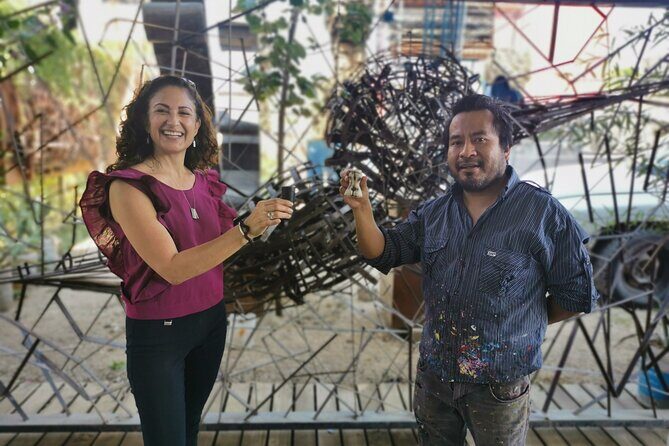
The next workshop belongs to Maestro Manuel Miguel, and the most impressive part is the range. His work covers multiple techniques, including sculpture in metal, ceramics, wood, and also graphics, oil, acrylic, and graphic design.
The description also frames him as someone who paints like a fantastic chronicler—busy with fauna and flora. And there’s a builder-and-architect angle too: he’s fascinated by geometric shapes, networks of meaning, and the modern world of interconnection.
If that sounds like a lot, it is. But it works because the tour doesn’t just say he’s “multi-disciplinary.” You get the sense of a mind that treats geometry and texture as related tools.
This stop is a great one for shoppers too, though you’re not pressured. If you’re open to buying, you’re likely to see pieces that feel both personal and technically serious.
El Mirador: Quick Oaxaca City View for a Final Photo
At the end, the tour passes El Mirador, a viewpoint over Oaxaca City. It’s a short stop, but it’s a nice way to reset your brain before you head back.
Think of it as a “photo and orientation” moment. If you’ve spent the day heads-down on art, this gives you a chance to remember where you are.
Who Should Book This Studio Tour?
Book this if you:
- care about contemporary art more than tourist crafts,
- like meeting artists and hearing about process,
- want a private experience with English guiding,
- and you’re the type who actually enjoys art questions.
It’s also a good pick if you’re traveling with one or two friends who have different tastes. Studio visits create a natural conversation across styles—engraving, expressionism, impression-like color work, texture experiments, and multi-medium design.
If you only have time for one art activity and you want something active with strong human contact, this earns its place.
Quick Reality Check: The Main Consideration
This tour is longer than a quick gallery hop. You’re in studios, which means time standing, looking, and moving. It’s not presented as a slow “art lecture.” It’s an artist-to-artist day.
Also, the experience requires good weather. If conditions are bad, you’ll be offered another date or a full refund.
Should You Book This Tour?
I’d book it if you want Oaxaca art in the context it’s actually made. The mix of techniques and the focus on artist conversation give you more than photos and a shopping stop.
The price also makes sense for the day you get: private group time, pickup, English guiding, and multiple studio visits where the admissions are handled with free tickets.
If you dislike walking around or you’re only in town for a single afternoon window, you might consider a shorter option. But if you can give this one a real chunk of time, it’s one of the better ways to understand contemporary Oaxaca.
FAQ
How long is the Oaxaca contemporary artist studio tour?
It runs about 5 to 6 hours.
How much does the tour cost?
The price is $101.27 per person.
Is pickup included?
Yes. Pickup is offered, and you’re picked up about 15 minutes before departure time from the Centro meeting point.
Does the tour include admission fees?
Admission tickets for the stops are listed as free.
Is the tour private?
Yes. It’s private, so only your group will participate.
What language is the tour offered in?
The tour is offered in English.
What days and times does it operate?
It runs Monday to Saturday from 10:00 AM to 4:00 PM.
What happens if the weather is bad?
The experience requires good weather. If it’s canceled due to poor weather, you’ll be offered a different date or a full refund.