REVIEW · OAXACA CITY
Bicycle Tour through Oaxaca learning about its Urban Art and History
Book on Viator →Bookable on Viator
Oaxaca looks better from a bike. This 2-hour urban art tour zips through Oaxaca City neighborhoods where murals, old churches, and local traditions sit right next to daily life. I really like that the ride focuses on street art plus history, with photo breaks built into the plan and an easy pace run by Daniel.
You’ll also appreciate the included bicycle and helmet, plus technical help if anything feels off with the bike. It’s a simple, good-value way to get oriented fast, especially in central areas you might not connect on your own.
One thing to consider: you’ll pedal over cobblestones and share the road with city traffic, so it helps if you’re comfortable riding in busy streets even at a slow pace.
In This Review
- Key highlights and what to expect
- Starting point and bike ride basics in Oaxaca Centro
- Stop 1 in Oaxaca: street art routes through Jalatlaco and Xochimilco
- Templo de San Matías Jalatlaco: architecture plus Day of the Dead-linked spirit
- Los Arquitos de Xochimilco: the aqueduct story hiding in plain sight
- Cerro del Fortín viewpoint: panoramic photos and a Benito Juárez pass-by
- Santo Domingo de Guzmán: New Spain baroque and multiple culture spaces
- Price and value: what $34.65 buys you in the real world
- Pacing and safety: cobblestones, traffic, and how the guide keeps it workable
- Who should book this Oaxaca street art bike tour
- Quick practical tips before you go
- Should you book this tour?
- FAQ
- How long is the bicycle tour?
- Is the tour offered in English?
- What is included in the price?
- What should I bring since bottled water is not included?
- Where does the tour start?
- Does weather affect the tour?
Key highlights and what to expect
- Small group (max 8) keeps the ride calmer and easier to manage on tight streets
- Jalatlaco and Xochimilco give you old-neighborhood texture alongside bold murals
- San Matías Jalatlaco connects architecture to Day of the Dead-linked celebrations
- Xochimilco arches tie street views to the mid-1700s San Felipe aqueduct
- Cerro del Fortín offers panoramic city photos and a pass by Benito Juárez’s former house
- Santo Domingo de Guzmán complex is more than a church, with multiple culture spaces in one walled site
Starting point and bike ride basics in Oaxaca Centro
You meet at Bike & Roadtrips Oaxaca on C. de Mariano Abasolo 315, Centro, back near the action but still reachable without a complicated plan. The tour uses a mobile ticket, and it’s offered in English, which matters in Oaxaca where art, history, and neighborhood context can get lost if you only skim signs.
The ride is set up for real life street conditions, not a closed-course path. You’ll get helmet support and bike use, and there’s technical assistance on hand, which is practical when you’re dealing with different rider sizes (S, M, L, XL). Also, keep expectations realistic on timing: a chunk of your “2 hours approx.” can go to getting everyone fitted and rolling, so plan for about 90 minutes of active sightseeing/riding time rather than nonstop movement.
Bring some water planning to your day. Bottled water isn’t included, so I recommend carrying a small bottle or buying one nearby before you start. And if you’re the type who enjoys photos, you’ll be happy you dressed with that in mind, because the schedule includes multiple short breaks specifically to look closely and shoot pictures.
If you're still narrowing it down, here are other tours in Oaxaca City we've reviewed.


Stop 1 in Oaxaca: street art routes through Jalatlaco and Xochimilco
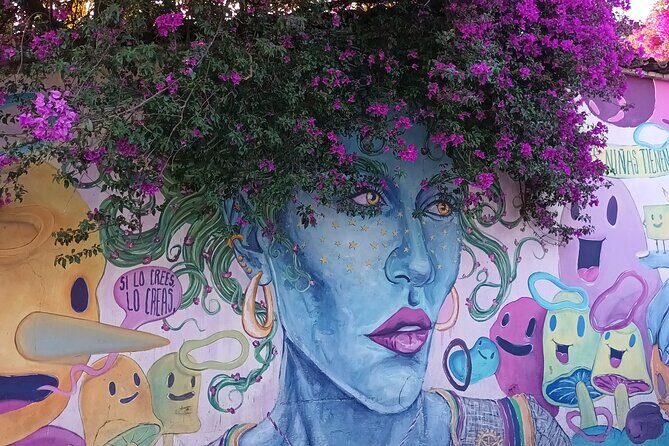
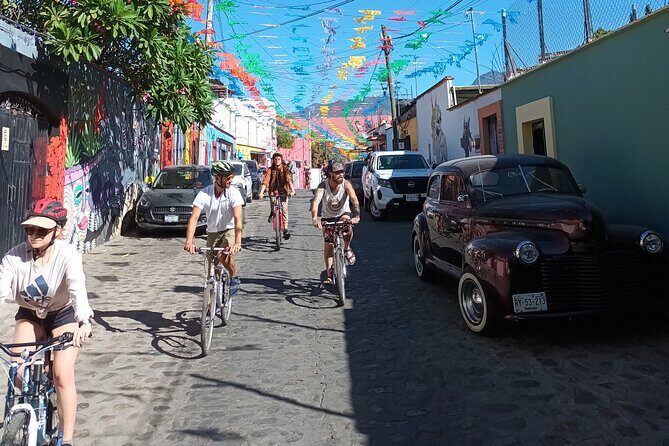
This first segment is the “set your eyes” portion of the tour. You’ll visit representative spots in central Oaxaca by bike, moving through picturesque streets where urban art isn’t separated from the neighborhood. The guide’s job here is key: it’s not just where the mural is, but what it’s saying, and how it fits the block around it.
You’ll also be in the oldest areas, especially Jalatlaco and Xochimilco, with alleys decorated by Oaxacan artists. The value of starting here is that it gives you a visual map. After a few mural stories, you start noticing details on your own—patterns, symbols, and the way walls become public memory.
The tour includes breaks to observe art and take photos, and the stop time is listed as about 30 minutes with admission ticket free. The “free admission” note sounds minor, but it’s actually helpful: you’re spending time looking instead of lining up. If you’re short on days in Oaxaca City, this stop is a strong use of your first afternoon because it builds context for the sites that come next.
Possible drawback: photo breaks are good, but if you rush, you’ll miss the small visual stuff. The best approach is simple—pause, look up, and read the mural like it’s a page, not like it’s wallpaper.
Templo de San Matías Jalatlaco: architecture plus Day of the Dead-linked spirit
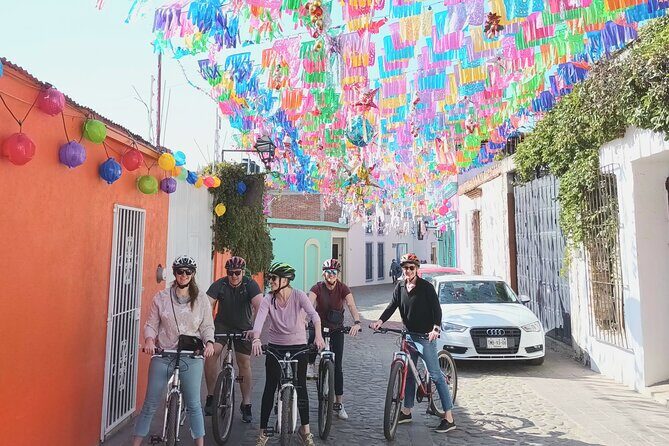
Next you head to Templo de San Matias Jalatlaco, about 20 minutes of time at the site. This is where the tour connects neighborhood identity to place. Jalatlaco is known for colorful murals tied to Day of the Dead festivities, and it’s also associated with traditional comparsas—the kinds of community performances that turn streets into stages.
You’re not just seeing a church. You’re seeing a neighborhood storytelling system: murals, architecture, and celebration traditions all reinforcing each other. For photography, this stop tends to deliver strong results because it’s built for angles—church details, nearby walls, and street scenes that feel lived-in rather than staged.
Admission is listed as free, so you can focus on looking and listening. The best way to get value here is to ask the guide to explain what you’re seeing before you shoot. If you know the meaning behind a symbol or motif, the photo becomes more than a screenshot.
Practical consideration: if you’re not comfortable standing around in busy street areas, keep your pace steady and don’t linger in the middle of walkways. Short stops work best when the group stays coordinated.
Los Arquitos de Xochimilco: the aqueduct story hiding in plain sight
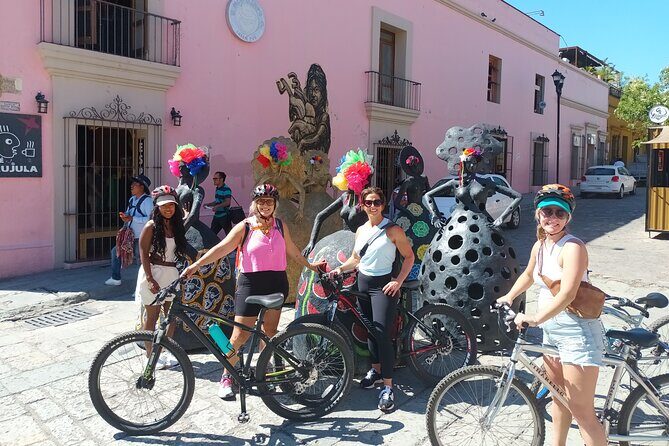
Then you roll into Xochimilco, a neighborhood with color, old houses, and a sense of depth. The tour notes it as one of the oldest neighborhoods in the city, founded in 1486 by Xochimilca–Aztec warriors. That early foundation matters because it shapes the layered feel of what you see now: older roots, then colonial change, all visible in how spaces were repurposed.
Here you visit Los Arquitos de Xochimilco, with 20 minutes allocated. The star feature is the set of arches tied to colonial-era infrastructure: these arches were part of the San Felipe aqueduct, built in the mid-eighteenth century to supply water to the population.
That’s the kind of detail that makes the tour worth paying for. Without a guide, you might admire the arches as pretty architecture. With the story, you understand why they’re here and why they shaped daily life—water systems determine neighborhoods, and neighborhoods become culture.
Admission is listed as free. So you can get close, look around, and grab photos without paying extra. If you like “small fact, big meaning,” this is one of the most memorable stops in the route.
Cerro del Fortín viewpoint: panoramic photos and a Benito Juárez pass-by
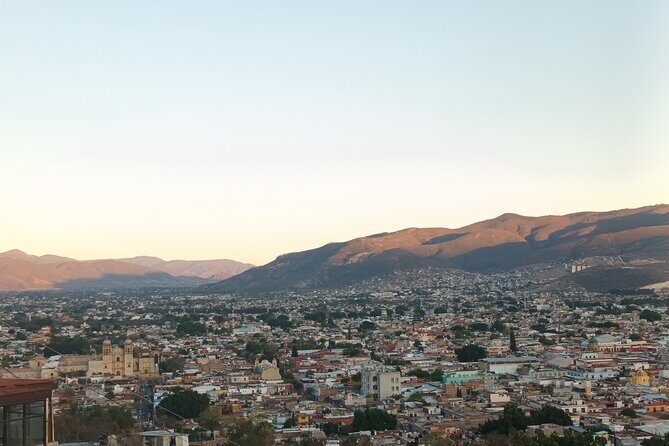
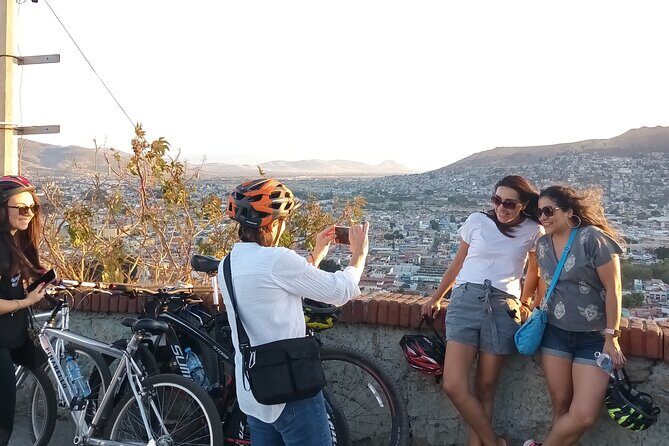
If the group’s physical condition allows, the tour adds a scenic push to Cerro del Fortín, about 30 minutes in this segment. The payoff is a viewpoint near the center of the city with panoramic views. This stop is also a sunset-friendly option if your timing works out, because you’ll be capturing Oaxaca from above instead of only at eye level.
The route includes a pass by two notable places: an Oaxaca crafts house and the house of Benito Juárez García, described here as one of the most emblematic characters of Mexico. Even if you don’t do a full museum-style visit, seeing these landmarks from the bike route helps you connect the city’s political and cultural story to everyday streets.
The practical upside of this stop is the photo variety. Street art is colorful and close, but viewpoints change everything—light, composition, and scale. That contrast is what keeps a short 2-hour tour from feeling repetitive.
The main consideration is effort and traffic coordination. Since you’re cycling through parts of Oaxaca, you’ll want to keep a steady pace, listen for direction, and don’t assume the road will feel easy just because the hill is the main event.



Santo Domingo de Guzmán: New Spain baroque and multiple culture spaces
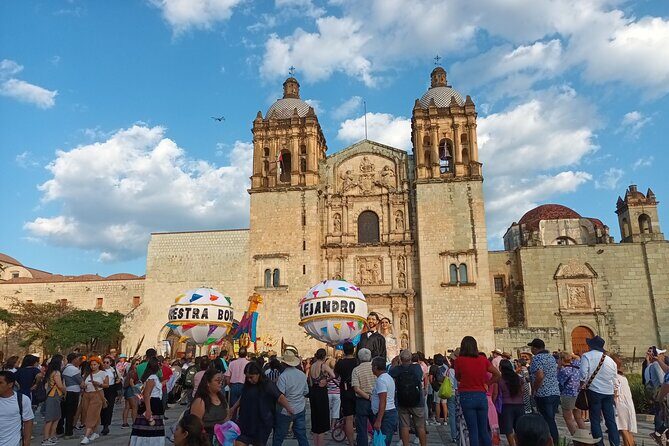
The final major site is Templo de Santo Domingo de Guzmán, timed at about 20 minutes. This is not a quick peek at a façade. Today, the complex functions as a culture space made up of several components: the ex-convent, the Museum of the Cultures of Oaxaca, an Ethnobotanical Garden, the Burgoa Library, and the Public Newspaper Archive.
The tour also highlights the New Spain baroque architecture and calls out the complex as Cultural Heritage of Humanity. Even with limited time, you’ll get a sense of how massive and multi-use the enclosure is. It’s a reminder that Oaxaca’s story isn’t only painted on walls; it’s also held in libraries, gardens, archives, and old church spaces.
There’s a street-life bonus too. The schedule notes that with luck you might see a calenda or “wedding” processional in the streets. Oaxaca is known for public celebration energy, and having that possibility on your route is a nice reminder that the city’s traditions continue, not just display cases.
Admission is listed as free. So you’re not juggling tickets while trying to enjoy the setting. Still, this is one of those stops where you get more out of it if you slow down for details: doors, stonework, and the way the complex holds space around it.
Price and value: what $34.65 buys you in the real world
At $34.65 per person for about 2 hours, this is a budget-friendly way to cover a lot of ground—especially because it includes the big-ticket logistics. You get a bicycle, helmet, a local guide, and technical assistance. Those items are often add-ons in other city bike tours, so the value is real.
Also, the itinerary is packed with free admission stops, which helps your overall day-plan stay simple. You’re not paying extra to access murals, viewpoints, or key cultural locations along the route. And because the group size is capped at 8, the guide can keep you together without rushing you into a constant sprint.
One small miss: bottled water isn’t included. That’s easy to solve, but it’s still something you should plan for. If you’re riding in warm conditions, you’ll want at least one bottle on hand before you begin.
If you’re trying to decide whether this is worth it versus doing Oaxaca on your own, here’s the practical angle: the guided storytelling is what turns the ride from “pretty streets” into “I understand what I’m looking at.” The tour is built to help you spot meaning—murals, architecture, and neighborhood traditions—without needing to research each block ahead of time.
Pacing and safety: cobblestones, traffic, and how the guide keeps it workable
This isn’t framed as a casual scooter glide. You’re on a bike in an active urban environment, and the tour includes cobblestone streets and city traffic. Reviews connected to this kind of route often note that cobblestones can feel tough under bike tires, even if the distance is manageable.
That’s why the guide’s role matters here. You’ll want a leader who stays alert about group spacing, turns, and roadside hazards. The good news: this tour includes technical assistance, and the ride is designed for short time blocks rather than long endurance cycling.
What you should do:
- Wear shoes with grip and comfort for uneven pavement.
- Leave room in your schedule so you aren’t rushing to beat other plans.
- If you’re new to city biking, signal early and let the guide set your pace.
If you’re comfortable biking in town, you’ll probably find this route fun and not stressful. If you’re not, consider whether you can handle slow riding over uneven streets.
Who should book this Oaxaca street art bike tour
This tour fits best if you:
- want a first-day orientation to Oaxaca City Centro neighborhoods
- enjoy street art but also want the story behind it
- like short guided stops that combine photos with context
- prefer moving by bike over walking, especially when you want to cover multiple areas quickly
- want an English-speaking guide for smoother interpretation of history and architecture
It’s also a smart choice if your time is limited. With an itinerary that hits major neighborhood markers—Jalatlaco, Xochimilco, a viewpoint on Cerro del Fortín, and Santo Domingo de Guzmán—you can build a “mental map” fast.
If your top priority is quiet museum time, this might feel short for full inside exploration. The tour includes access to a complex with major cultural institutions, but your stop time is brief. Still, it’s a great launching pad if you plan to come back later.
Quick practical tips before you go
- Bring water since it isn’t included.
- Wear clothing you can move in; the ride includes multiple short stops.
- Use sunscreen and a hat if the sun is strong.
- Bring a camera or phone with enough storage for murals and city views.
- If you’re sensitive to uneven pavement, take it easy on the cobbles and follow the guide’s route closely.
Weather matters too. The experience is described as requiring good weather, so if conditions are poor, you may need an alternative date. That’s also why it’s smart to book early in your visit window.
Should you book this tour?
I think you should book it if you want Oaxaca in a single, well-structured afternoon: murals with meaning, neighborhoods with history, and a fun bike format that gets you more variety than walking alone. The price is reasonable because you’re not paying for bike logistics separately, and the group size stays small enough to feel personal.
Skip it or plan something else if you hate biking in traffic, feel uneasy on cobblestones, or want long museum-style time. This tour is built for looking, listening, photographing, and moving on—not for staying put for hours.
FAQ
How long is the bicycle tour?
It runs for about 2 hours (approx.), with shorter stops at each location for looking and photos.
Is the tour offered in English?
Yes. The tour is offered in English.
What is included in the price?
You get bicycle use, a helmet, a local guide, and technical assistance.
What should I bring since bottled water is not included?
Bring bottled water or plan to buy it before or during the tour. You’ll also want comfortable, grippy shoes for cobblestone streets.
Where does the tour start?
The meeting point is Bike & Roadtrips Oaxaca at C. de Mariano Abasolo 315, Centro, 68000 Oaxaca de Juárez, Oax., Mexico. The tour ends back at the meeting point.
Does weather affect the tour?
Yes. The experience requires good weather. If it’s canceled due to poor weather, you’ll be offered a different date or a full refund.