REVIEW · OAXACA CITY
Oaxaca Central de Abastos Market Food Tour
Book on Viator →Operated by Oaxaca Street Food Tour · Bookable on Viator
Mercado de Abastos is not for the faint of appetite. This is Oaxaca City food at the source, in a market that stretches across more than 16 hectares, with tastings, drinks, and craft stops that help you move through the chaos without guessing.
I especially like the set menu tasting built around real market favorites, and I really enjoy the craft-area detours where you can buy directly from local Maestros and Maestras from their own workshop stalls. One consideration: this is a lot of food in about four hours, so you’ll want to pace yourself and be ready to pass on extras if you get full.
In This Review
- Key things to know before you go
- Mercado de Abastos: Oaxaca’s food maze, made walkable
- The 9:30 am plan: how the timing works for a four-hour food sprint
- What you actually eat: pulque, tacos, and the market’s comfort-food logic
- The surprise hit: crafting stops where the makers sell directly
- Drinks, water, and the part that trips people up
- The cultural approach: respectful food, not a performance
- Guide time: what it feels like when you get a real market pro
- Value check: is $83.40 for four hours a smart trade?
- Practical tips you’ll be glad you followed
- Who this tour is best for (and who should skip)
- Should you book it? My straight answer
- FAQ
- How long is the Oaxaca Central de Abastos Market Food Tour?
- What is the price per person?
- Where does the tour start, and what time does it begin?
- Is the tour offered in English?
- What is included in the tasting menu?
- Are drinks or bottled water included?
- Is this tour private?
- Should I book it anyway? (One last check)
Key things to know before you go
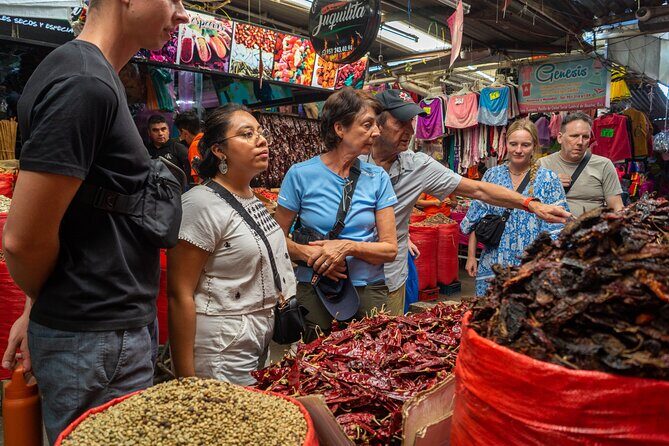
- The market size is the real challenge: more than 16 hectares, so a guide saves you real time and wrong turns
- Start with a fermented-drink vibe: pulque often kicks things off, with other local fermented drinks sometimes included on the route
- Tacos and Oaxacan sweets are the focus: barbacoa and suadero, then nieves for the finish
- You’ll see craft work up close: Maestros y Maestras selling from their workshop-style stalls
- You travel with a small, private group: only your group participates
- Included means included: the tasting menu and tips are covered, but drinks and water beyond the menu are not
Mercado de Abastos: Oaxaca’s food maze, made walkable
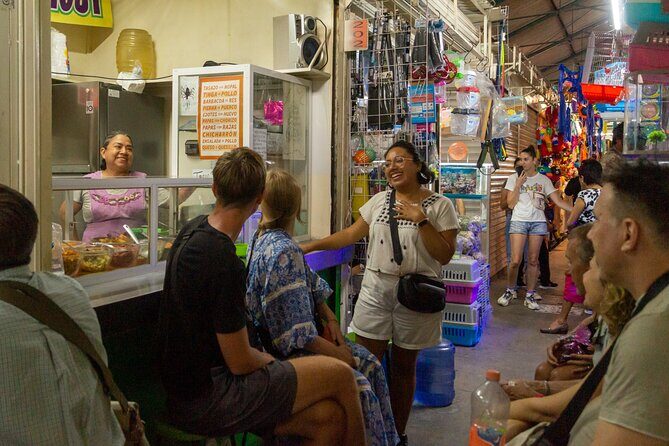
Mercado de Abastos, also called Mercado Margarita Maza de Juárez, is the big one. You’re in Oaxaca City proper, about a 15-minute walk from the Zócalo area, but once you step inside, the scale hits you. The market spreads over more than 16 hectares, so if you’re trying to explore solo, you’ll spend a lot of time figuring out where to go next.
That’s exactly where this tour earns its keep. Instead of wandering and risking wrong choices, you get a guided route through the sections that actually matter for eating and shopping. You also get a structure that helps you sample more without guessing.
What I like about this kind of market tour is that it’s not just a food sampler. It’s also a chance to watch how people buy, trade, and snack in real time. And you’re not stuck in the tourist strip, where everything feels a bit staged.
If you're still narrowing it down, here are other tours in Oaxaca City we've reviewed.



The 9:30 am plan: how the timing works for a four-hour food sprint
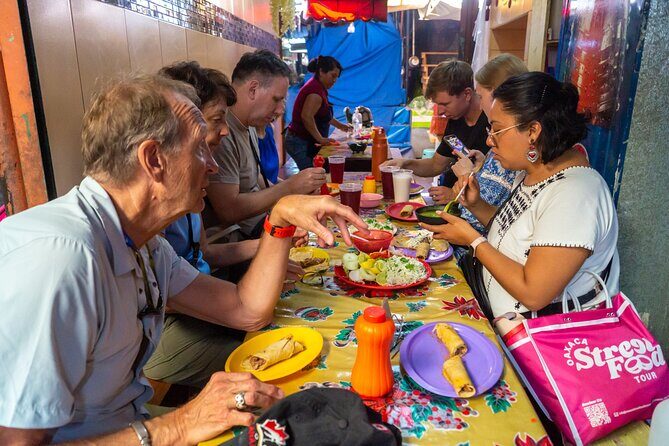
The tour meets at Jardín Sócrates on Av. de la Independencia (Centro), starting at 9:30 am. It runs for about four hours and ends back at the meeting point. That timing is smart. Late morning in Oaxaca City is when markets are very much alive, but you’re still early enough to avoid the worst mid-day slow-down.
You’ll also feel the “you’re eating now” pace from the get-go. The route is built around multiple stops within the market environment, and the food keeps coming. If you’re the type who likes to stop and smell everything, you can still do it, but you should expect the guide to keep you moving so you can hit the main tastings before you’re too full.
This is a private tour, offered in English, and it’s designed for most travelers. Service animals are allowed too, which matters if you travel with a companion that needs to stay with you.
What you actually eat: pulque, tacos, and the market’s comfort-food logic
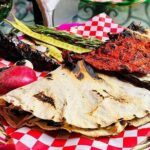
This tour is centered on a tasting menu at Mercado de Abastos. The core items are straightforward and delicious: pulque as the starter, tacos de barbacoa and tacos de suadero as main tastings, and nieves for dessert.
Here’s why that lineup is a good plan. It covers three different sides of Oaxacan eating culture:
- Pulque gives you a traditional fermented-drink entry point. It’s a strong flavor, and it also signals that you’re in a real local food space, not a theme-park version of one.
- Barbacoa and suadero let you compare two common taco styles you’ll hear about constantly in Oaxaca. You get to notice differences in seasoning, texture, and how each filling is served.
- Nieves brings it home. After savory and rich flavors, the frozen fruit-and-dairy sweets act like a reset.
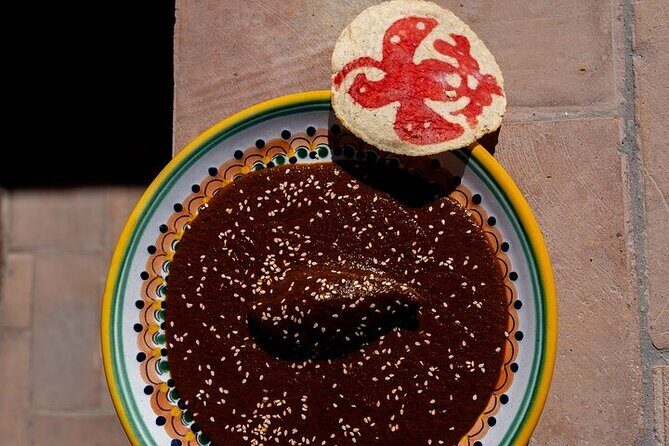
On some runs, the tasting route may add more classic market foods and drinks. You might see items like tepache (another fermented drink), Oaxacan bread such as pan de cazuela with hot coffee, grilled cheese-style bites with zucchini flowers, memelas with lard and frijoles, empanada with yellow mole, and even a chocolate sampling at a local counter. You could also be offered fruit and sugar-cane style snacks like chico zapote and sugar cane stalks, plus a passion-fruit drink.
One more thing you’ll likely notice: the food isn’t just random. The tastings are often staged so you’re ready for the next flavor. Fermented drinks tend to show up early for a reason, and the rest of the menu follows that logic.
The surprise hit: crafting stops where the makers sell directly
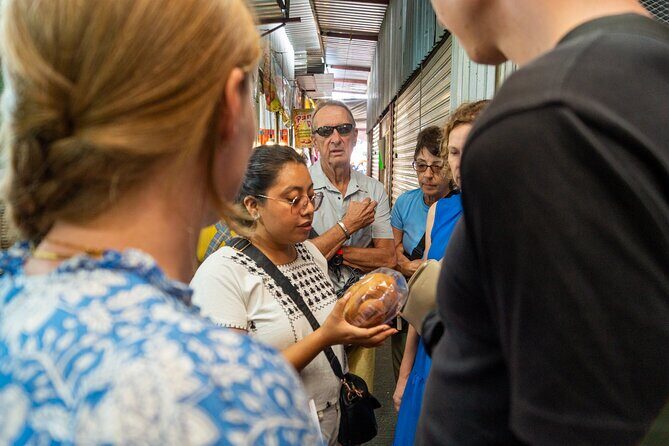
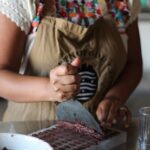
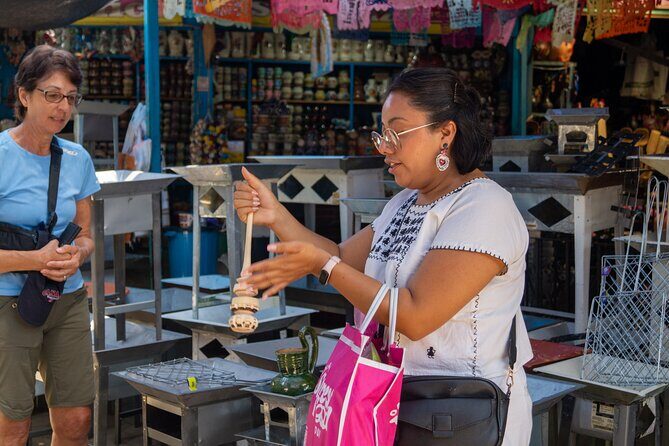
Food draws you in, but the craft detours are what make the experience feel grounded. Mercado de Abastos isn’t just stalls selling hot plates. There are also craft areas where local Maestros and Maestras Artesans sell products directly from their own workshops.
Practically, that means you get a more personal shopping moment. You can ask questions, look at materials, and browse with less pressure than you’d find in more touristy shopping zones. If you like functional souvenirs—things you’ll actually use later—this is a good place to look.
And because the tour includes a built-in route to these stops, you’re less likely to wander in circles with your hands full of food.
Drinks, water, and the part that trips people up
The tasting menu includes the food portion and also tips, which is great value. What’s not included is refrescos (soft drinks), water bottles, and anything beyond the menu.
That matters because market tours can turn into surprise add-ons if you treat every drink station like a free trial. If you want to keep this tour great value, plan around the included tastings and only buy extra drinks if you really need them.
Also, expect the pace to be hearty. Even when the tour is timed well, the amount of food can catch you off guard. A useful strategy is to share when that option is offered by the group flow. If you’re hungry at the start, you’ll still want to avoid turning the last stops into a struggle.




The cultural approach: respectful food, not a performance

Oaxaca has attracted a lot of tours, chefs, influencers, and media in recent years. The issue is not interest—it’s intention. This tour’s guides are set up to focus on culture-sharing and encounter rather than extraction or exotization.
You’ll feel that in how the experience is framed and how questions are answered. Instead of treating the market like a stage, you’re guided through it as a living place where locals eat, shop, and talk. That tone matters, especially if you’ve done other food tours where the guide speeds through the social context and just calls out what to photograph.
This tour still gets you eating and tasting—just without the weird vibe.
Guide time: what it feels like when you get a real market pro
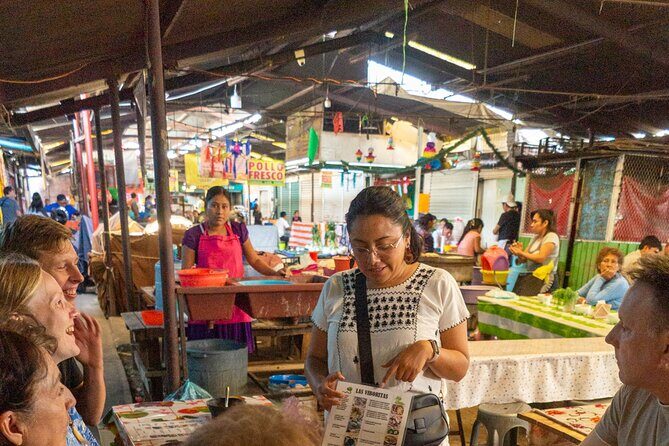
People remember guides in Oaxaca market tours because markets demand quick decisions: where to stand, what to order, how to keep the group together, when to move on.
In this experience, guides are a big part of the value. One guide named Dani has been highlighted for making the whole thing feel smooth and for explaining so much that people felt like they learned more than they expected. Another guide named Luis has been praised for being extremely knowledgeable and keeping the group moving through lots of tastings without rushing the culture side.
You should pick this tour if you care about not just eating, but understanding why certain foods show up together and how markets work as everyday community spaces.
Value check: is $83.40 for four hours a smart trade?
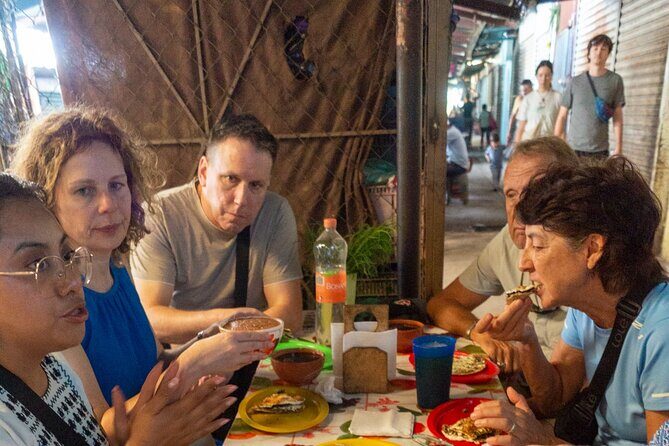
Let’s look at the real value. At $83.40 per person for about four hours, you’re getting:
- a guided route through a huge market you’d find hard to explore alone
- a structured tasting menu (with the included breakfast menu items)
- tips included
- English service
- private group format (only your group participates)
What you’re not getting is unlimited drinks and bottled water. Also, you’ll pay extra if you buy souvenirs outside the menu.
So the value is best when you treat it as a planned meal experience, not a random snack hunt. If you’d otherwise spend time trying to pick places on your own (and then buy a few items at full price), a guided tasting route often makes more sense than you expect. Here, the guide helps you sample widely in a short window.
Practical tips you’ll be glad you followed
A market is a physical place. You’ll enjoy this more if you show up ready for it.
- Wear shoes you can walk in for several blocks and uneven flooring.
- Pace your tastings. If you’re offered a lot at once, it’s normal to take smaller bites or share.
- Don’t plan a heavy meal right before the tour. The tastings can add up fast.
- Bring a little extra money for crafts and for anything beyond the menu (especially drinks). Buying opportunities come up naturally.
If you hate fermented flavors, be honest with your guide early. You don’t need to force it. A good guide will help you focus on what you’ll enjoy while still keeping the menu flow.
Who this tour is best for (and who should skip)
This is a strong pick if you:
- want authentic Oaxaca food without spending your whole morning figuring out where to go
- like guided structure in busy places
- enjoy market energy and don’t mind close quarters while tasting
- want to mix eating with hands-on craft shopping
It may not be ideal if you:
- can’t handle a lot of food in one sitting
- are only looking for a light snack experience
- strongly prefer restaurant-style meals over street-level market eating
Should you book it? My straight answer
If you’re staying in Oaxaca City and you want more than a quick taste of food, I’d book this. The market is huge, so the guide saves effort. The included tasting menu hits big Oaxaca staples like pulque, barbacoa, suadero, and nieves, and the craft stops add real shopping value beyond food.
Just go in with one mindset: you’re here to eat and walk, not to linger at one stall for an hour. If that fits your travel style, this tour is a smart, high-satisfaction way to experience Oaxaca’s daily food world.
FAQ
How long is the Oaxaca Central de Abastos Market Food Tour?
It runs for about 4 hours.
What is the price per person?
The price is $83.40 per person.
Where does the tour start, and what time does it begin?
The meeting point is Jardín Sócrates, Av. de la Independencia, Centro, 68000 Oaxaca de Juárez, Oax., Mexico, and the start time is 9:30 am.
Is the tour offered in English?
Yes. It’s offered in English.
What is included in the tasting menu?
The tasting menu and tips are included, as part of the breakfast tasting menu.
Are drinks or bottled water included?
No. Bottled water, refrescos, and anything outside the menu are not included.
Is this tour private?
Yes. It’s a private tour/activity, and only your group participates.
Should I book it anyway? (One last check)
If you want a guided way to sample real market foods and also buy directly from local artisans, this is an easy yes. If you want a light snack only, or you don’t want to handle a big market setting, you might prefer a smaller food experience instead.