REVIEW · OAXACA CITY
Oaxaca City tour – Santo Domingo museum & the colorful market
Book on Viator →Operated by Encuentro T · Bookable on Viator
Baroque churches and chocolate in one loop. This is a tight Oaxaca Centro intro that pairs the showy Templo de Santo Domingo de Guzmán with a hands-on stop at the Mercado Benito Juárez, where you’ll taste a chocolate drink tied to pre-Hispanic traditions. I also like how the guide connection feels personal—people like Jose, who grew up there and learned from his father, the first tour guide in Oaxaca, bring the streets to life.
I enjoyed the way the route moves you from big architecture to everyday market energy without feeling rushed. The main catch is simple: it’s a walking tour, so plan for steady steps and bring comfortable shoes.
In This Review
- Key highlights to know
- Why this Oaxaca Centro loop works (even if it’s your first day)
- Santo Domingo de Guzmán: the baroque church that refuses to be boring
- Teatro Macedonio de Alcala: culture with a clock and a date
- Oaxaca Cathedral of Our Lady of the Assumption: centuries you can measure
- Mercado Benito Juárez: chocolate from pre-Hispanic roots and real shopping time
- Guides like Jose, Diego, and Marta: why the human touch matters here
- Price, timing, and how much walking to expect
- Who this tour suits best
- Should you book this Oaxaca City tour?
- FAQ
- How long is the Oaxaca City tour?
- How much does the tour cost?
- Do you offer hotel pickup?
- What language is the tour offered in?
- What’s included in the price?
- Are meals included?
- What places do you visit during the tour?
- Is it a walking tour?
- What’s the maximum group size?
- Is there free cancellation?
Key highlights to know
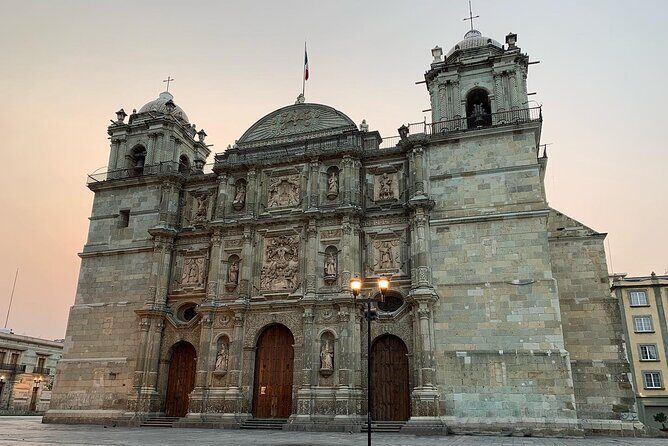
- Santo Domingo’s baroque interior: 3D reliefs, gilt details, and painted figures packed into every corner
- A quick theater stop at Teatro Macedonio de Alcala, a cultural anchor since 1909
- Cathedral scale with construction starting around 1535 and consecration in 1733
- Chocolate mills + market time in Mercado Benito Juárez, plus browsing local crafts
- Small group size with a maximum of 22 people, which helps questions and pace
Why this Oaxaca Centro loop works (even if it’s your first day)
If your Oaxaca plans are still fuzzy, this tour is a good way to get your bearings fast. You get the core sights in about three hours, with stops that show how the city’s faith, art, and daily life overlap.
I like that the pacing gives you enough time at each landmark to actually look, not just pose. You’ll also get a professional guide and a driver handling the moving parts, so you’re not constantly checking maps in the middle of the Centro crowds.
One smart value detail: the stops are paired with admission tickets listed as free. That means your $50 isn’t mostly paying for entries—it’s paying for the guide, the small-group attention, and the best parts of the route, including a chocolate moment you don’t want to skip.
If you're still narrowing it down, here are other tours in Oaxaca City we've reviewed.


Santo Domingo de Guzmán: the baroque church that refuses to be boring
This stop is the star of the show. The Templo de Santo Domingo de Guzmán is described as late sixteenth to early seventeenth century work, and once you’re inside, you see why people call it the most splendid church in Oaxaca.
What I really love here is the focus on detail. The baroque facade is finely carved, and inside the decoration is so dense—swirls of gilt design and a profusion of painted figures—that the guide can help you spot themes instead of you just trying to catch everything at once.
You’ll spend about 25 minutes here. That’s a practical amount of time: long enough to notice the 3D relief look in the decor, but short enough that you can keep your energy for the rest of the walk.
A possible consideration: if you have a hard time with long indoor viewing, this is still worth it because the look is different from most churches. But pace yourself. Take a breather and let the guide point out what matters, then return to your own looking.
Teatro Macedonio de Alcala: culture with a clock and a date
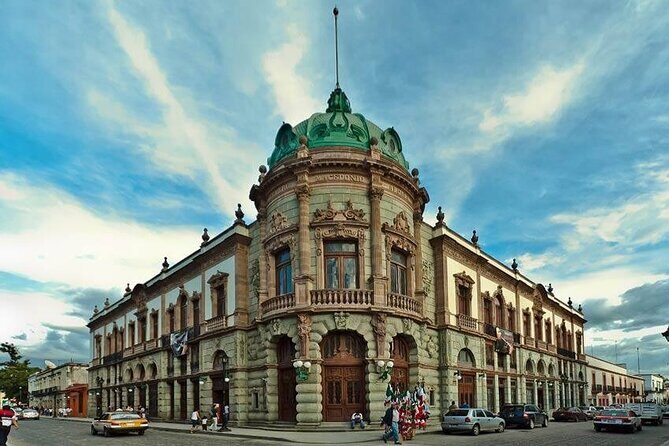
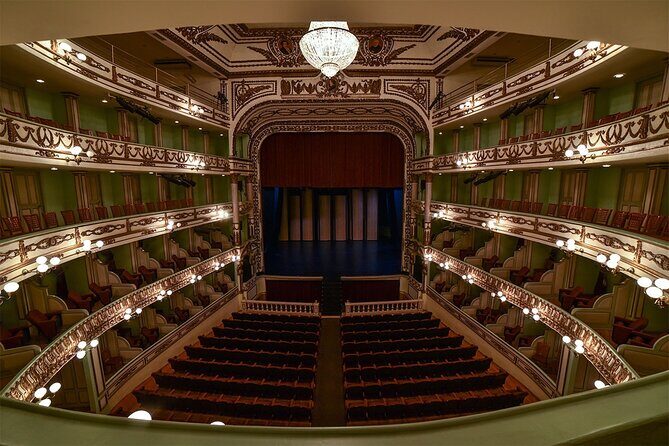
After the church intensity, the Teatro Macedonio de Alcala feels like a breather. This is one of Oaxaca’s emblematic theaters, and it’s tied to a specific date: it was inaugurated on September 5th, 1909.
The payoff of a short theater stop is how it rounds out the Centro story. Oaxaca isn’t only churches and courtyards. A theater like this points to how the city organized culture—how people gathered, performed, and built a public artistic life.
You’ll have around 10 minutes here. That’s enough to orient yourself, learn what makes it important, and then move on while the day still feels fun instead of checkbox-y.
If you’re someone who prefers only major sights, this might feel like the shortest stop. But I think that short timing is the right call. You’re not losing the day; you’re adding context.
Oaxaca Cathedral of Our Lady of the Assumption: centuries you can measure
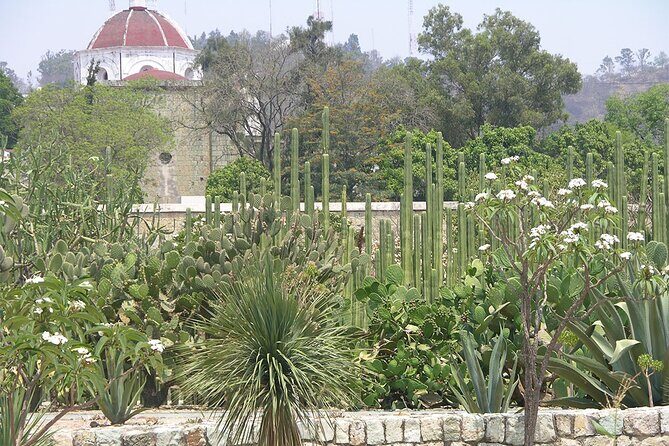
Next comes the Cathedral of Our Lady of the Assumption. It’s the seat of the Roman Catholic Archdiocese of Antequera, Oaxaca, and it carries a clear timeline: construction began around 1535, and it was consecrated on July 12th, 1733.
This is where you start seeing Oaxaca as a place built over time, not invented all at once. The cathedral is dedicated to Our Lady of the Assumption, so the guide can frame what you see around that devotion and the way architecture reflected power, community, and belief.
You’ll have about 20 minutes at this stop. Again, it’s long enough to look without getting stuck. In that time, you can step back, notice the overall feel, and then come back for closer details if you want them.
A small consideration: if you’re very sensitive to religious spaces that are active or crowded, be patient. This is a major cathedral, so it can feel busier than the other points on the route. The upside is that you’ll see it as a working landmark, not a museum-only set.
Mercado Benito Juárez: chocolate from pre-Hispanic roots and real shopping time
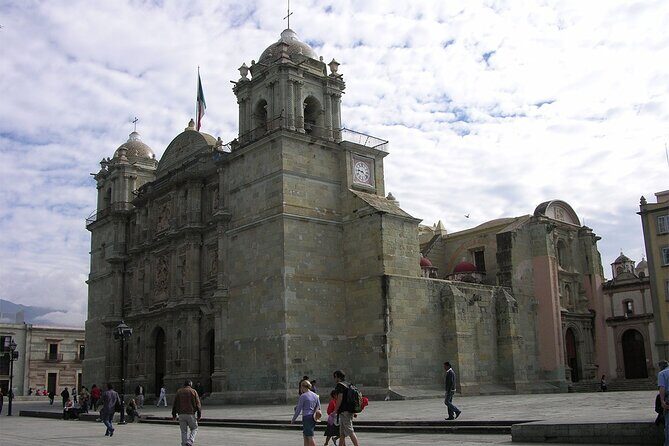
This is where the tour turns from monuments to everyday Oaxaca. Mercado Benito Juárez is built for browsing, and the stop isn’t only about walking stalls—it includes the chocolate side that makes this experience memorable.
First you visit the chocolate mills. The idea is to learn about the ingredients and how the preparation of Oaxaca’s chocolate drink connects to pre-Hispanic times. Then you head into the market itself, where you can look at typical products and local specialties.
What’s great here is choice. You’ll likely see things like mole, cheese, and local flavor beverages, and yes, even Oaxaca snacks that can look surprising if you’ve never done market food shopping. On the craft side, you can find alebrijes, textiles, and leather goods—plus plenty of souvenir options if that’s part of your plan.
You’ll get about 45 minutes for this whole market segment, which is a solid chunk for shopping and tasting. Since food and drinks aren’t included, think of this stop as your opportunity to buy what you want at a price that matches your own style. If you want to keep the budget tight, you can focus on chocolate and a small craft. If you want gifts, you’ll have time to compare.
A quick practical note: markets are where your “I’ll just browse” plan gets tested. Set a loose target—one edible item and one craft category—so you don’t end up overwhelmed.





Guides like Jose, Diego, and Marta: why the human touch matters here

The best part of a tour like this is the guide. I saw a clear pattern in how the experience is described: people don’t just learn facts; they get a sense of why Oaxaca feels the way it does.
Jose’s story stands out because it’s rooted in family knowledge—he learned from his father, who was the first tour guide in Oaxaca, and his life-long presence makes the details feel grounded. Diego also gets credit for being fun while staying clear about what you’re looking at. And Marta is highlighted for showing how interesting the Centro is and explaining what to notice at each place.
Even without naming every detail, the effect is the same: you stop treating Oaxaca like a list and start treating it like a connected map. That’s what makes a three-hour loop worth repeating later with a slower walk of your own.
Price, timing, and how much walking to expect
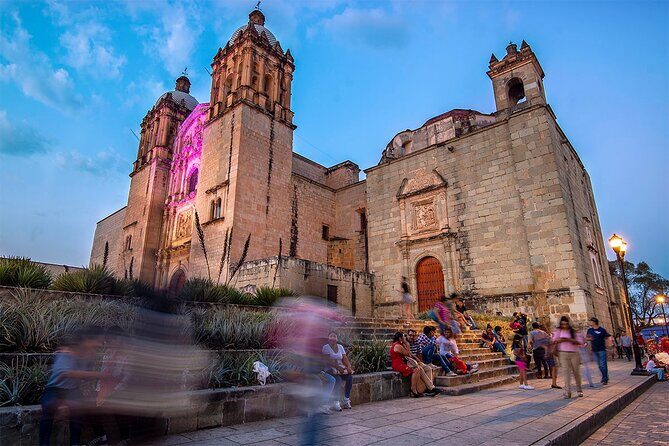
At $50 per person for about three hours, the value is mostly in three things: the guide, transportation support, and the included chocolate experience. You’re also getting hotel pickup from selected downtown hotels, plus air-conditioned minivan transport and a professional driver.
The free admissions at each stop also help the math. You’re not paying separate entry fees for the church, theater area, and cathedral stops as part of the tour structure. The cost is instead focused on interpretation and time, which is exactly where tours can save you effort if you want context fast.
The main consideration is physical. It’s a walking tour, and the Centro route means you’ll move steadily. This isn’t a “sit down every five minutes” outing, so plan for steps and uneven sidewalks.
If you hate rushing, this can still work. With a maximum group size of 22, you usually have room to pause, ask questions, and look at details without feeling like you’re stuck behind a wall of shoulders.
Who this tour suits best
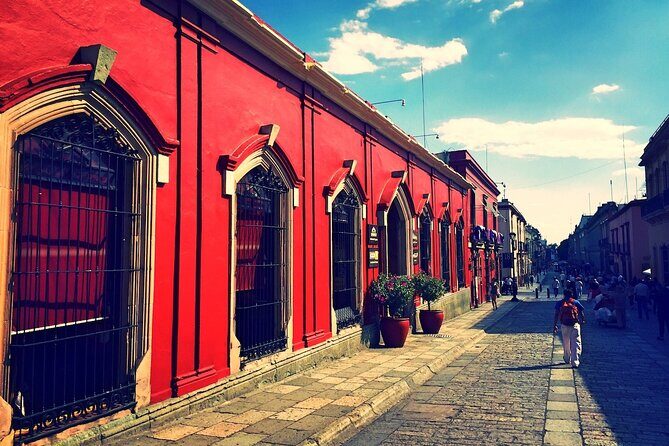
This one is best for you if:
- It’s your first visit to Oaxaca City and you want a structured overview
- You care about architecture and what you’re looking at (not just where the photo spots are)
- You want market time, including a chocolate drink tied to Oaxaca’s older traditions
- You’d rather pay for a guide than fight the Centro alone with a phone
It might be less ideal if you want a mostly relaxed, low-walking day. This is still a proper walking tour with real sights in real time.
Should you book this Oaxaca City tour?
I’d book it if your goal is to learn the Centro in one clean pass and leave with chocolate-and-shopping momentum. The mix of Santo Domingo, cathedral scale, a cultural stop at Teatro Macedonio de Alcala, and a market segment with chocolate tasting makes it feel like Oaxaca in miniature.
Skip it only if you’re trying to avoid walking completely or you already know these landmarks well and don’t care about a chocolate-focused market introduction.
If you’re on your first day in Oaxaca, this is the kind of tour that helps you plan what to do next—because you’ll know where you want to go back, and why.
FAQ
How long is the Oaxaca City tour?
The tour lasts about 3 hours.
How much does the tour cost?
It costs $50.00 per person.
Do you offer hotel pickup?
Yes. Hotel pickup is offered from select downtown hotels, and the operator meets you in your hotel or Airbnb lobby.
What language is the tour offered in?
The tour is offered in English.
What’s included in the price?
Included are hotel pickup (selected hotels), a professional driver, transport by air-conditioned minivan, and a guide. Admission tickets at the listed stops are shown as free.
Are meals included?
No. Food and drinks are not included.
What places do you visit during the tour?
You visit Templo de Santo Domingo de Guzman, Teatro Macedonio de Alcala, the Cathedral of Our Lady of the Assumption, and Mercado Benito Juarez.
Is it a walking tour?
Yes. It is described as a walking tour, so be prepared for a fair amount of walking.
What’s the maximum group size?
The tour has a maximum of 22 travelers.
Is there free cancellation?
Yes. You can cancel for a full refund up to 24 hours before the experience starts.