REVIEW · OAXACA DE JUAREZ
Oaxaca: Day of the Dead Tour
Book on GetYourGuide →Operated by PARAISO HUATULCO · Bookable on GetYourGuide
Oaxaca’s Day of the Dead feels like a living ritual. I like how this tour combines altar details and cemetery atmosphere, and it also puts you in the middle of the La Muerteada street action in San Agustín Etla. You’re not just watching from far away—you’re learning what the pan de muerto and offerings mean, and then you get to move with the crowd.
The biggest thing to think about: the experience is language-dependent and fast-paced, so if you want lots of English context or strict food needs (like vegetarian), you should plan carefully before choosing the night.
In This Review
- Key things to look forward to
- Arriving at La Merced Square: the easiest way to start on time
- Oct 31 at 7:00 PM: Pantheon altars, incense, and cemetery glow
- What you learn about the altar of the dead (and why it matters)
- Joining the ceremony: when you’re near the music, you feel the pace
- Nov 1 at 8:00 PM: San Agustín Etla and the La Muerteada parade
- The dinner that comes with the Muerteada option: tamales and chocolate
- The value equation: is $75 for 4–5 hours worth it?
- Practical tips that make the difference on night-of-the-dead tours
- Language and guide quality: what to expect, and how to handle it
- Who should book this Oaxaca Day of the Dead tour?
- Should you book it?
- FAQ
- What’s the duration of the Oaxaca Day of the Dead tour?
- Where is the meeting point?
- What time does the Pantheon option start on October 31?
- What time does the La Muerteada option start on November 1?
- What’s included in the tour?
- Is food included?
- What should I bring?
- Is it okay to bring pets or luggage?
- What if I need to cancel?
Key things to look forward to
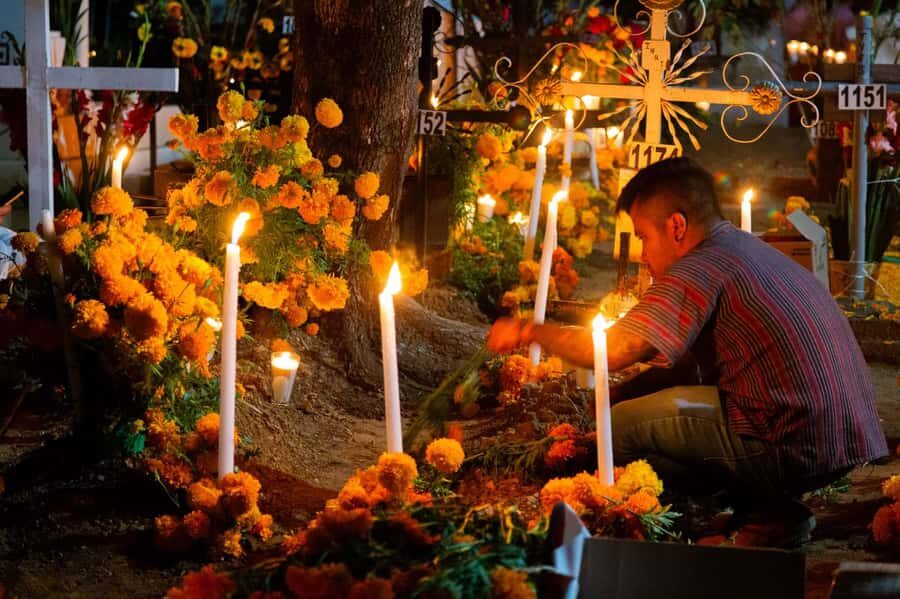
- Pantheon night (Oct 31, 7:00 PM): marigold altars, incense, candles, sugar skulls, and a cemetery ceremony atmosphere.
- Cultural context about altar traditions: you’ll hear the background behind the Day of the Dead altar and what families place on them.
- Etla night (Nov 1, 8:00 PM): San Agustín Etla turns into a midnight parade scene with wind band music.
- Costume choreography you can’t ignore: mirror and bell costumes are heavy, intricate, and require serious endurance.
- Dinner on the Muerteada option: tamales and chocolate are included with the La Muerteada choice.
- English and Spanish guide support: tour includes a live guide, but the amount of English detail can vary by guide.
Arriving at La Merced Square: the easiest way to start on time
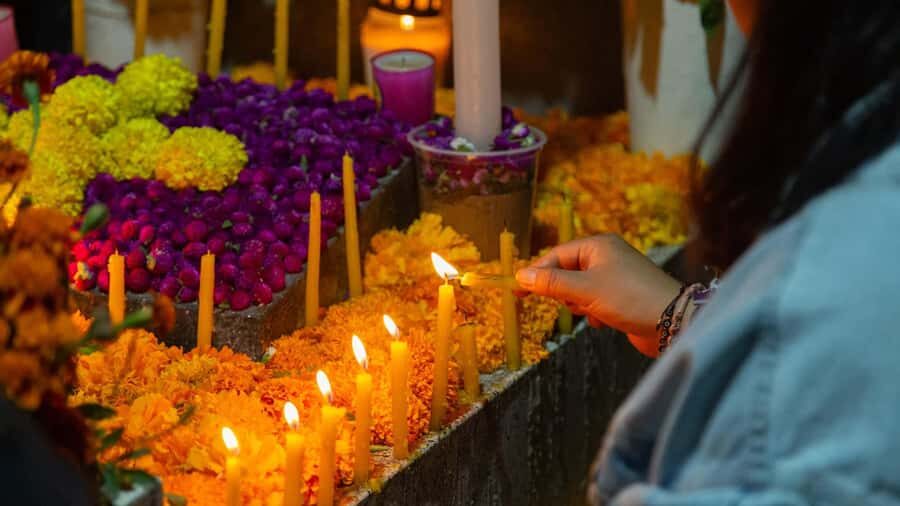
Your night begins in the front area of La Merced Square in Oaxaca City. Guides wear a blue and yellow shirt with the Paraiso Huatulco logo, so you can spot them quickly when you arrive.
Day of the Dead tours run on timing and night light is tricky, so give yourself a little cushion for meeting. If your voucher lists a slightly different pickup time than you expect, don’t panic—your guide should direct you once you’re in the right place.
If you're still narrowing it down, here are other tours in Oaxaca De Juarez we've reviewed.

Oct 31 at 7:00 PM: Pantheon altars, incense, and cemetery glow
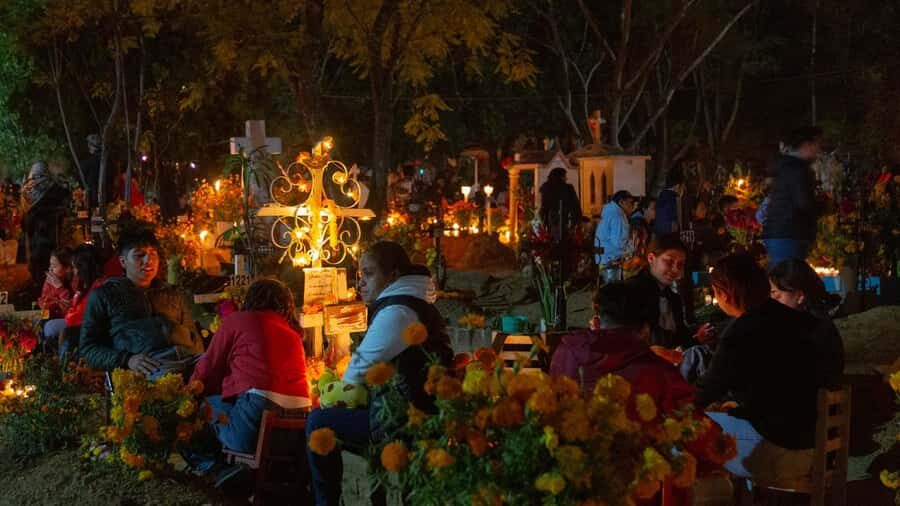
If you choose the Pantheon option for October 31st at 7:00 PM, you’ll focus on the altar side of the celebration and the emotional heart of the ritual: the cemetery.
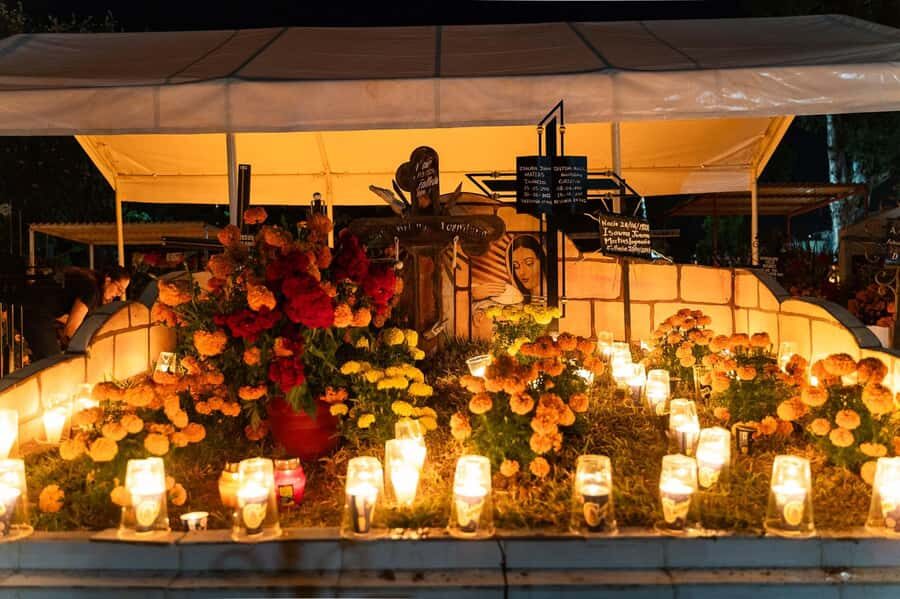
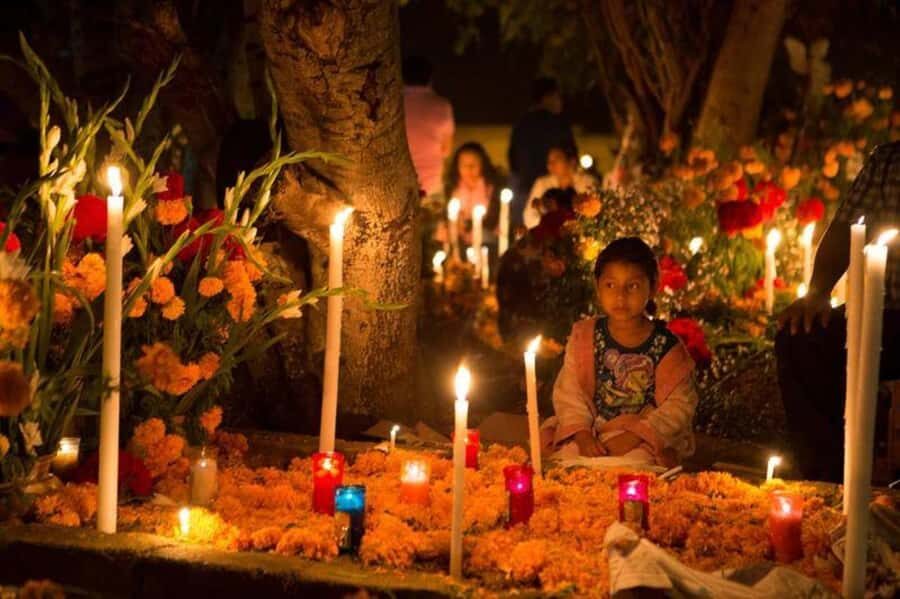
First, you’ll see beautifully decorated altars. Expect yellow marigolds, traditional pan de muerto, incense, candles, sugar skulls, and offerings that reflect what people loved—favorite foods, drinks, and music. It’s not random decoration. The altar is a map of remembrance, and you’ll hear how families use it to welcome loved ones back.
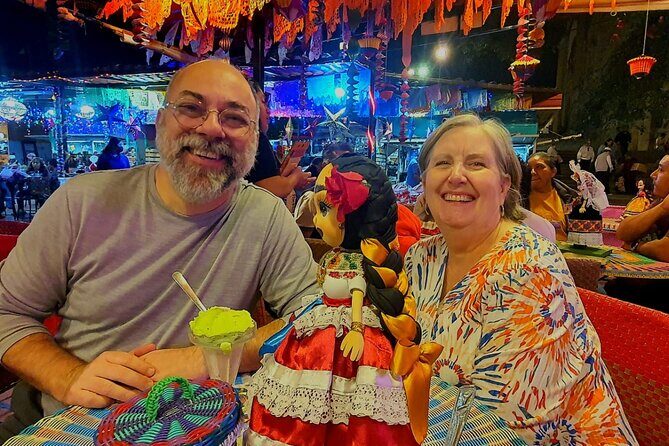
Then you’ll head to the town’s main cemetery. Tombs are surrounded by the scent of copal, live music carries through the space, and candlelight does what it does best: it makes everything feel intimate, even when you’re in a group. This part is where you really notice the difference between watching a show and seeing a community practice.
What you learn about the altar of the dead (and why it matters)
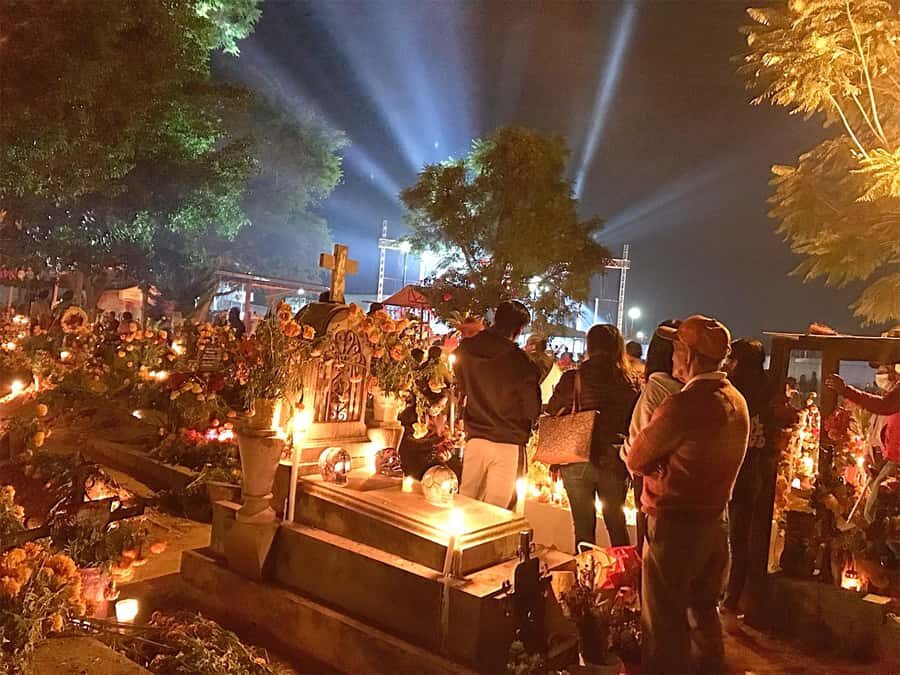
The tour specifically includes learning about the history of the altar of the dead, which is the key to understanding what you’re seeing. Without that context, it can feel like a pretty nighttime photography stop.
With the context, the details snap into place:
- Marigolds aren’t just color; they’re tied to guiding and symbolism.
- Incense and candles aren’t just mood; they’re part of how the atmosphere is shaped.
- Pan de muerto and sugar skulls connect the culinary and decorative sides of mourning with the celebration side.
You’ll also get a sense of how families and visitors treat the cemetery like a place of honor, not a tourist checkpoint. In practice, that means you’re more likely to notice how people move, pause, and interact around altars and graves.
Joining the ceremony: when you’re near the music, you feel the pace
One of the most memorable moments is joining community members in traditional costumes and dancing alongside locals. This is the part where the evening stops being purely informational and turns physical.
You’ll want comfortable shoes and clothes you can move in. Nighttime dancing is different from daytime strolling—you’re on uneven ground, sometimes longer than expected, and the energy is real. If you’re sensitive to crowds or chaos, keep your expectations grounded: this celebration is social and kinetic.
One caution: you’re a visitor to something personal. If the idea of participating feels uncomfortable to you, you can still observe respectfully. This is where good guidance helps, because it sets tone for what’s appropriate and where the focus should stay.
Nov 1 at 8:00 PM: San Agustín Etla and the La Muerteada parade
The La Muerteada option is the big street-night experience. San Agustín Etla is about 40 minutes from Oaxaca City, and once you arrive, you’ll see the town transform for the celebration.
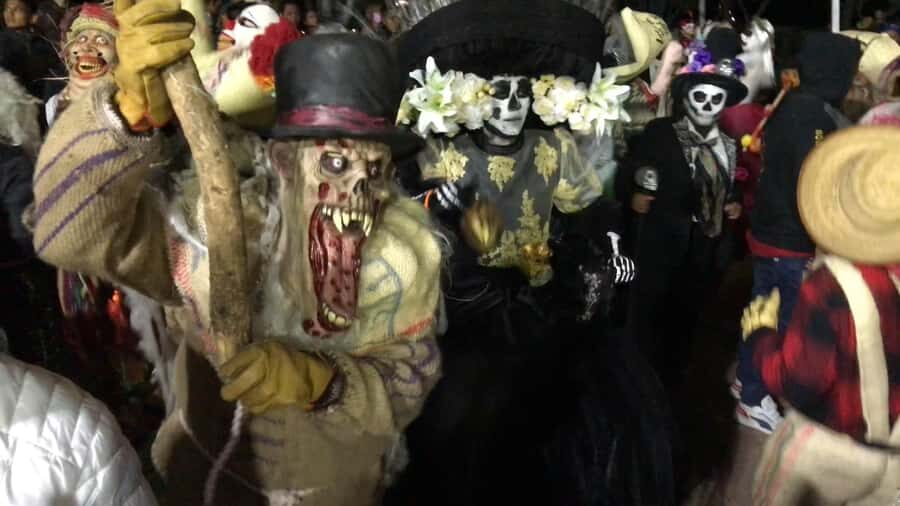
The main action starts around midnight, but your scheduled meeting is earlier—so you’re not just sprinting in at the last second. The streets come alive with wind band music, dancing, and parades, with locals dressed in elaborate costumes representing death.
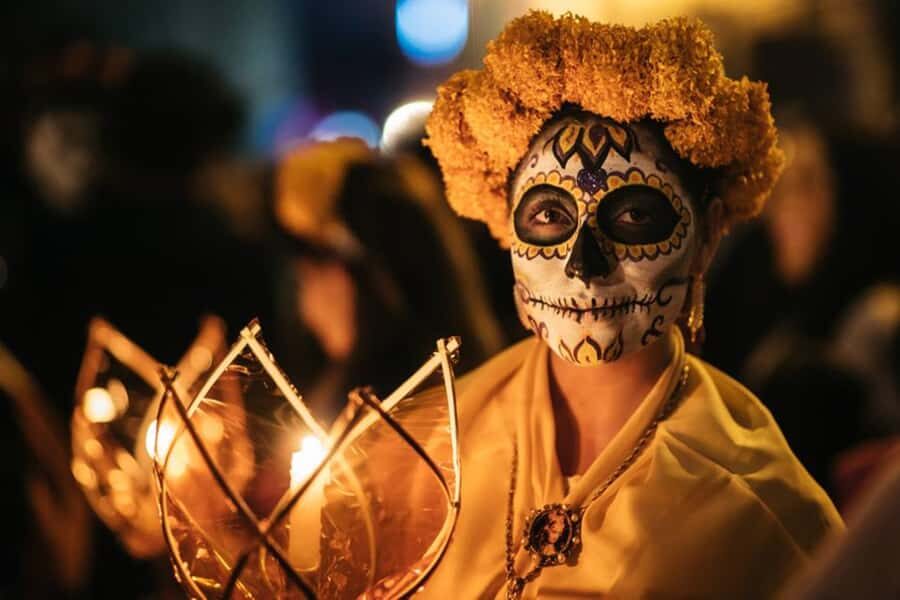
Two costume styles are especially famous: mirror costumes and bell costumes. They’re heavy and intricate. You can see, quickly, that the performers aren’t doing quick steps—they’re doing choreography that demands stamina. If you pay attention, you’ll spot how the movement works with the sound, not against it.

The dinner that comes with the Muerteada option: tamales and chocolate
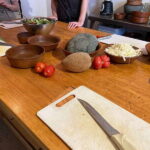
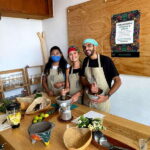
If you pick the Muerteada night, dinner is included. The included meal is tamales and chocolate, and it’s part of the experience rather than a random restaurant stop.
This is a real value point for the tour. Paying for evening transportation and a guide for a 4–5 hour block is one thing; including food on the right night can noticeably improve the economics, especially if you’d otherwise grab something quick and expensive later.
Food note for picky eaters: the dinner included for the Muerteada option is not presented as vegetarian-focused. If you have dietary needs beyond what’s listed, I’d ask your guide before you go, so you’re not stuck scanning menus mid-celebration.
The value equation: is $75 for 4–5 hours worth it?

At $75 per person for 4–5 hours, you’re paying for more than a ride. You’re paying for:
- A driver/guide and live guidance
- Liability insurance
- Access to the cemetery/ceremony spaces at the right moments
- On the Muerteada option, food and drinks (tamales and chocolate)
The Pantheon night includes the cultural and ceremony components, but it doesn’t include dinner. The Muerteada night adds dinner, so it can feel like a better deal if you’re choosing between options.
Where the price can feel less justified is if you specifically want lots of detailed English interpretation for every segment. The tour offers English and Spanish, but the amount and flow of English explanation can vary depending on the guide. If you’re traveling with someone who needs English, pick your night with that in mind.
Practical tips that make the difference on night-of-the-dead tours
This is the kind of tour where small prep pays off.
Bring:
- Comfortable shoes (you’ll be on the move in the dark)
- Comfortable clothes (you may be standing and walking longer than you expect)
- Insect repellent (you’re outside, and nighttime insects are a thing)
Also, plan around what’s not allowed:
- Pets aren’t allowed
- Avoid luggage or large bags
And a quick health reality check:
- The tour is listed as not suitable for people with back problems or mobility impairments.
- Children under 10, and also listed as not suitable for children under 11, so assume this is an adult-focused night.
Language and guide quality: what to expect, and how to handle it
The tour includes a live guide in English and Spanish. That’s good on paper, but in real life, the guide you get matters.
If you want cultural context and time for questions, the Pantheon night may feel more lecture-like, while the Etla night can feel more event-driven. On the Muerteada parade side, your attention will naturally go to movement and costumes, so don’t expect long explanations mid-parade.
If you’re bilingual or can follow some Spanish, you’ll likely get more out of it. If you rely fully on English, arrive ready to listen fast. A good strategy is to note what you want to understand beforehand—altar meaning, costume symbolism, or what you’re seeing in the cemetery—so you’re asking targeted questions when there’s a chance.
Who should book this Oaxaca Day of the Dead tour?
I’d say this tour is a great fit if you:
- Want the Day of the Dead experience that includes both altar/cemetery and the Etla street celebration
- Like guided context, not just photos
- Are comfortable walking, standing, and following the pace of an evening ceremony and parade
I’d skip it (or pick a lighter option) if you:
- Need guaranteed, detailed English interpretation the whole time
- Can’t handle crowds, music, and nighttime walking
- Have mobility or back limitations
- Are traveling with very young kids
Should you book it?
If you want Oaxaca’s Day of the Dead with real structure—altar details, cemetery atmosphere, and then the Etla midnight parade—this tour is a strong choice. The value improves on the Muerteada option because dinner and drinks are included, and the costume parade is the kind of cultural moment you don’t recreate later.
My final advice is simple: choose the night that matches what you most want. Go Oct 31 if you’re drawn to altars and the cemetery ceremony. Go Nov 1 if you want the big street celebration in San Agustín Etla—and you’re okay with food that’s not marketed as vegetarian-friendly.
FAQ
What’s the duration of the Oaxaca Day of the Dead tour?
The tour lasts about 4–5 hours.
Where is the meeting point?
Meet at the front of La Merced Square.
What time does the Pantheon option start on October 31?
The Pantheon option is reserved for October 31st at 7:00 PM.
What time does the La Muerteada option start on November 1?
The La Muerteada option is reserved for November 1st at 8:00 PM.
What’s included in the tour?
The tour includes a driver/guide and liability insurance.
Is food included?
Food and drinks are included with the La Muerteada option. The Pantheon option does not list food/drinks as included.
What should I bring?
Bring comfortable shoes, comfortable clothes, and insect repellent.
Is it okay to bring pets or luggage?
Pets are not allowed, and luggage or large bags are not allowed.
What if I need to cancel?
Free cancellation is available up to 24 hours in advance for a full refund.