Oaxaca has stories carved into stone. This walk blends colonial art with Oaxacan urban mythology, so the center feels like one big living text. I love how the guide, Verónica (often called Vero), ties architecture to human drama.
Two things I really liked: you get hands-on context at Templo de Santo Domingo de Guzmán and the experience doesn’t stop at history—it adds paranormal folklore tied to specific addresses and streets. That mix helps you remember what you’re seeing instead of just taking photos.
One consideration: it’s a walking tour through Centro, so if you’re sensitive to stairs or sun, plan on going slow and bringing water, especially during warmer hours.
In This Review
- Key highlights worth your time
- Why Oaxacan Urban Mythology Works So Well on Foot
- Walking the Center in 2 Hours 30 Minutes (Small Group, Real Pace)
- Stop-by-Stop: Santo Domingo, Soledad, Street Legends, and the Zócalo
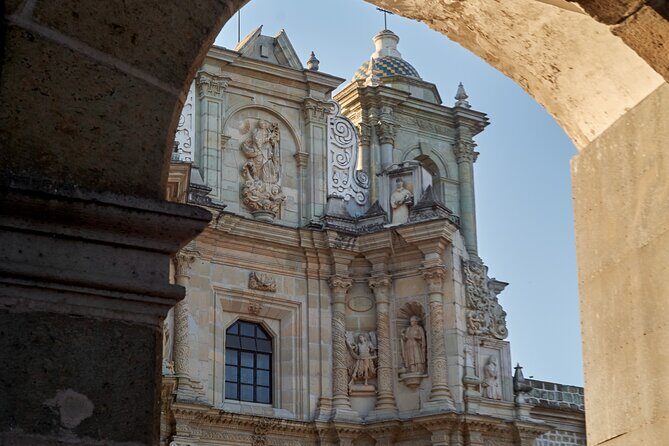
- Templo de Santo Domingo de Guzmán: Colonial art you can read
- C. de Manuel García Vigil 205: Architecture with a complicated history
- El Calvario 103: The XIX-century paranormal legend moment
- Avenida de la Independencia: The color-and-music plaza stop
- Basilica de Nuestra Senora de la Soledad: A relic tied to local legend
- Zócalo: City founding clues in the layout
- How the Guide’s Storytelling Changes Your Sightline
- The Included Ice Cream Stop at Av. de la Independencia (and the Mezcal Bonus Moment)
- Value for $38.81: What You’re Getting Beyond the Price Tag
- Who Should Book This Tour (and Who Might Want Another Option)
- Quick Tips So You Get More From Every Stop
- Should You Book Oaxacan Urban Mythology and Colonial Art?
- FAQ
- How long is the Oaxaca City Urban Mythology and Colonial Art tour?
- What does the tour cost?
- Is the tour offered in English?
- Are tickets or admissions included for the stops?
- Where does the tour start and where does it end?
- How big is the group?
- Are service animals allowed?
Key highlights worth your time
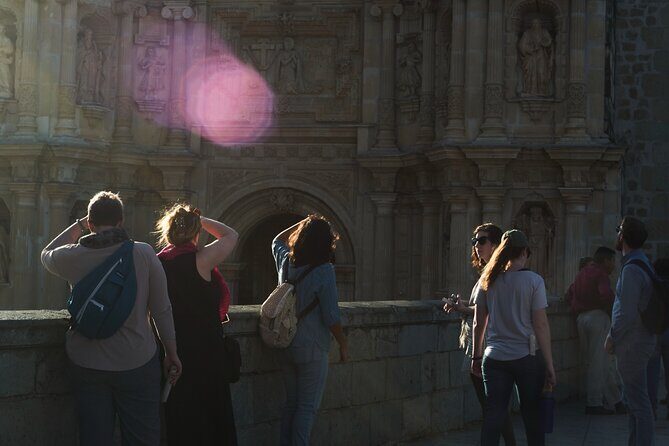
- Santo Domingo + Soledad façades: you’re taught how to look, not just where to stand
- Specific street legends: the paranormal tales are tied to El Calvario 103 and nearby stops
- A small group (max 8): it stays conversational, and questions feel welcome
- Included treats: you’ll get ice cream at Av. de la Independencia, and mezcal may be part of the moment
- City-layout clarity at the Zócalo: you learn how Oaxaca’s founding choices shaped what you see
Why Oaxacan Urban Mythology Works So Well on Foot
If you’ve ever felt like Oaxaca’s center is too pretty to be complicated, this tour corrects that. The point isn’t just to admire churches. It’s to understand why colonial-era buildings coexist with legends that locals still talk about.
I like the way Verónica uses the city as evidence. She doesn’t treat myths like random spooky add-ons. Instead, she frames them alongside colonial art and city planning, so you start noticing details in the façades and street corners—things you would usually ignore if you were wandering alone.
And the stories help you get a mental map fast. You leave with places tied to plot points, not just names.
If you're still narrowing it down, here are other tours in Oaxaca City we've reviewed.


Walking the Center in 2 Hours 30 Minutes (Small Group, Real Pace)
This is a 2 hours 30 minutes walk designed to move you through key points without rushing you past them. The total time adds up to about six stops plus orientation, with a strong emphasis on explanation at each one.
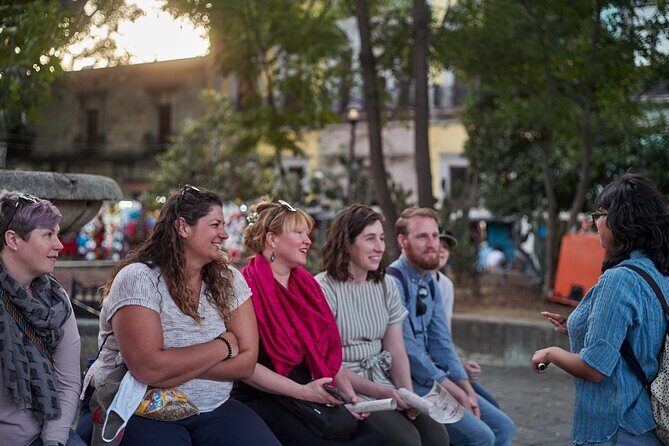
The group size matters. With a maximum of 8 travelers, the tour doesn’t feel like a conveyor belt. You can ask questions in real time, and the guide can adjust based on what you’re curious about—whether that’s colonial religious art, the meaning of architectural features, or why a legend sticks around for generations.
The tour is offered in English and uses a mobile ticket. You also get confirmation at booking, and service animals are allowed. It’s near public transportation, so it’s easy to pair with other plans in Oaxaca City.
Stop-by-Stop: Santo Domingo, Soledad, Street Legends, and the Zócalo
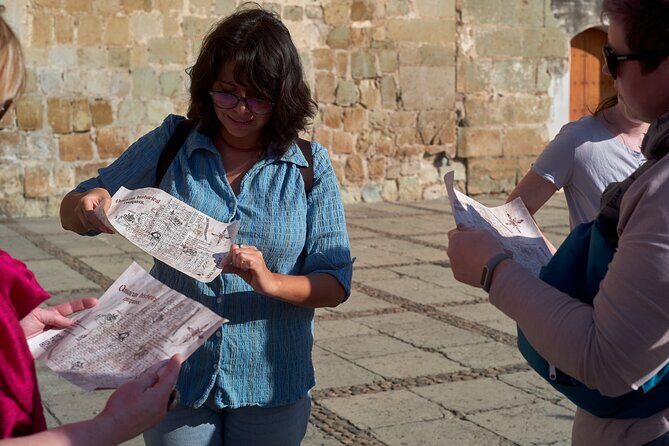
Here’s what you can expect, and what each stop is doing for the larger story.
Templo de Santo Domingo de Guzmán: Colonial art you can read
You start at Templo de Santo Domingo de Guzmán, and you’ll spend about 25 minutes here. Admission is free, and that’s a nice way to kick things off: you focus on observation without worrying about extra entry costs.
What makes this stop special is how the guide helps you look at the colonial-era art as more than decoration. You learn to connect façade choices to the period’s religious and cultural priorities. After this, later churches make more sense because you’ve been given a way to interpret what you’re seeing.
If you only remember one early takeaway, make it this: churches in the Centro aren’t just landmarks. They’re public statements, and they were designed to be understood by people who were part of the same city life you’re walking through now.
C. de Manuel García Vigil 205: Architecture with a complicated history
Next is C. de Manuel García Vigil 205, where you spend around 15 minutes. Admission is free here too.
This stop is valuable because it widens your view beyond the “big famous church” model. You’re shown a building that’s had several uses through time and has a unique architectural style in the city. In other words, it teaches you how Oaxaca adapted, reused, and repurposed spaces rather than keeping everything frozen in time.
It’s a good reminder that colonial history isn’t a single chapter. It’s layers stacked on layers, and buildings often carry more than one meaning depending on who controlled them and what the city needed.





El Calvario 103: The XIX-century paranormal legend moment
Then you head to El Calvario 103 for about 10 minutes. Admission is free, but the focus isn’t just architecture.
This is where the tour leans into Oaxaca’s folklore tradition: a popular paranormal legend that takes place in the XIX century. Since the story is tied to a specific street address, you don’t experience the legend as something abstract. You experience it in a real, walkable place, which is what makes these tales feel believable and local rather than imported.
You’ll likely find that the guide’s storytelling style is the point here. It’s not fear-for-fear’s-sake. It’s folklore as a way a community explains uncertainty, power, and the unknown.
Avenida de la Independencia: The color-and-music plaza stop
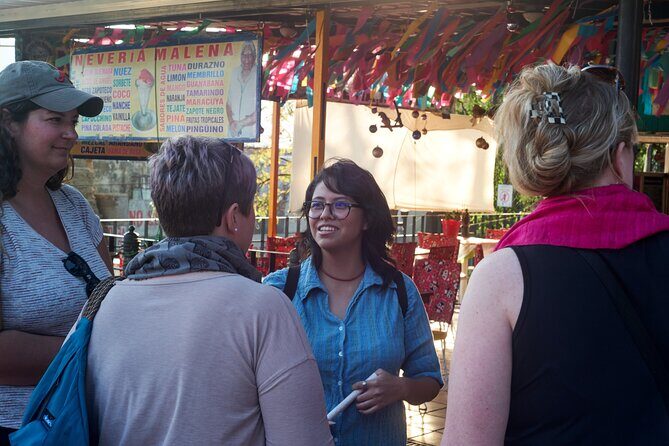
At Av. de la Independencia, you spend about 30 minutes, and this is one of the tour’s most relaxed parts. Admission is included, and the experience centers on a small plaza that’s full of color.
You may also catch musicians playing Mexican songs and melodies, and you’ll have traditional ice cream as part of the stop. This matters more than you might think. Mid-tour breaks keep the walking tour from becoming a blur of religious buildings.
It also gives you a chance to shift from “listening mode” to “people-watching mode.” Oaxaca works best when you’re not stuck only in your own schedule.
Basilica de Nuestra Senora de la Soledad: A relic tied to local legend
Next is Basilica de Nuestra Senora de la Soledad for about 25 minutes. Admission is included.
This stop is a strong match for anyone who likes the intersection of art, faith, and storytelling. The guide points out the church’s architecture and the art on the façade. And she also connects the visit to a relic that’s part of local legends around Oaxaca.
That combination—visual inspection plus myth context—helps you understand why the basilica is not just a pretty exterior. It becomes part of the cultural memory of the city.
One more reason I like this stop: it’s different from Santo Domingo. Even without comparing styles in a textbook way, you feel how each religious space reflects its own priorities, and the guide helps you notice those differences.
Zócalo: City founding clues in the layout
You finish at the Zócalo with about 30 minutes for orientation. Admission is free.
This is where you step back and see Oaxaca City as a planned whole. The guide explains how the city was founded, and how earlier moments left clues in the layout of the city and its buildings.
This matters because it turns your scattered stops into a single mental map. After the churches and legends, you finally connect why these places sit where they do and how the center evolved into the city you’re experiencing now.
If you’re the type who enjoys “okay, now I get it” moments, this is the part that does it.
How the Guide’s Storytelling Changes Your Sightline

A big reason this tour earns near-perfect scores is the narration style. People consistently describe Verónica as a thoughtful storyteller who keeps things engaging, easy to follow, and flexible if you need small adjustments along the way.
What I take from that for you: the value isn’t just that the guide knows facts. It’s that she organizes those facts into scenes you can picture. You hear a legend, then you look at the setting. You learn how a façade works, then you understand why it was built that way for its time.
That pattern is why the tour feels like a crash course in Oaxaca City’s mindset, not only its dates.
Also, there’s a social warmth here. Many comments mention it felt like making a new friend. Even if you’re traveling solo, that tone makes it easier to ask questions without feeling like you’re slowing the group down.
The Included Ice Cream Stop at Av. de la Independencia (and the Mezcal Bonus Moment)

This tour doesn’t use food as a random add-on. The ice cream stop is built into the schedule at the right moment: around the middle-to-later portion of the walk, when you’ve already seen enough churches that you need a reset.
The plaza environment helps too. If you catch musicians playing Mexican songs, it adds to the sense that you’re in a living neighborhood, not a theme park.
In the reviews, people also mention mezcal as part of the tasty stop. Since that detail is connected to the tour experience as described by participants, it’s a reasonable expectation that you may have a mezcal moment during the time in this area.
Bring a little patience with yourself here. You’re not just tasting. You’re giving your brain room to connect the story you just heard with the sights around you.
Value for $38.81: What You’re Getting Beyond the Price Tag
At $38.81 per person for roughly 2.5 hours, the cost is low enough that you can justify it even if you already planned to visit churches on your own.
But the value isn’t the number. It’s what’s bundled into the walk:
- You spend meaningful time at major façades (Santo Domingo and Soledad), where guided interpretation makes the difference between seeing and understanding.
- Some admissions are free and some are included, so the ticket isn’t asking you to do extra math mid-day.
- The smaller max group size means you get a real conversation instead of a lecture you can’t react to.
- You get included ice cream at Av. de la Independencia, which offsets part of the day’s normal spending.
In practical terms, you’re paying for orientation and interpretation. For me, that’s usually worth more than trying to “figure it out” alone while also managing tickets and routes.
Who Should Book This Tour (and Who Might Want Another Option)

This tour is a great fit if you want:
- A walking overview of Oaxaca City’s core without feeling lost
- Colonial-era churches with story context, not just architecture photos
- Urban mythology tied to real places, especially if you like folklore and local legends
- A guide who explains so you understand what you’re looking at
It may be less ideal if you want a purely academic museum-style approach or if you dislike paranormal-themed stories. This tour leans into legends and uses them as a way to understand the culture.
And if you have mobility limits that make long walks uncomfortable, the tour being “most travelers can participate” is encouraging—but you should still plan based on your own comfort in Centro streets.
Quick Tips So You Get More From Every Stop
- Wear shoes you trust for steady walking. The whole experience is built around moving between points.
- Bring water. Even a short break doesn’t replace hydration in warm weather.
- If you like photos, take them after the explanation. You’ll frame better when you know what to look for.
- Come with curiosity about why people keep telling the same stories. The tour treats legend as part of city identity.
Should You Book Oaxacan Urban Mythology and Colonial Art?
Yes, you should book this if you want Oaxaca City to feel personal and connected. It’s one of the more efficient ways to get a grounded sense of colonial art, then see how folklore still shapes how people read the same streets today.
You’ll likely appreciate it most if you enjoy walking tours with a strong storyteller, clear explanations, and a calm pace that still covers enough ground to feel like you accomplished something in a half-day. If that’s your style, this one is an easy yes.
FAQ
How long is the Oaxaca City Urban Mythology and Colonial Art tour?
It lasts about 2 hours 30 minutes.
What does the tour cost?
The price is $38.81 per person.
Is the tour offered in English?
Yes, it’s offered in English.
Are tickets or admissions included for the stops?
Some admissions are free, and ice cream plus admission for the Av. de la Independencia area and the Basilica de Nuestra Senora de la Soledad are included as part of the experience.
Where does the tour start and where does it end?
It starts at Templo de Santo Domingo de Guzmán (C. Macedonio Alcalá s/n, Centro, Oaxaca de Juárez). It ends at C. De Manuel Doblado 117, Centro, and that final point is about 5 blocks from the Zócalo.
How big is the group?
The tour has a maximum of 8 travelers.
Are service animals allowed?
Yes, service animals are allowed. The tour is also near public transportation, and most travelers can participate.