Stone ruins, giant trees, and mezcal in one day. I love how this tour stacks Hierve el Agua with Zapotec art and Teotitlán del Valle rug-making in the same 9-hour day. You also get a guided, crafts-focused route that makes the scenery feel meaningful, not random driving stops. One thing to consider: the pacing depends on timing, and long moments at the mezcal factory can push the later sights later in the day.
I also appreciate that it’s built for convenience: hotel pickup and drop-off, a certified English-speaking guide, and entrance fees handled for the main stops. For 85 USD, that’s a lot of ground covered without you renting a car or playing bus-schedule roulette—just plan for a full day and a lunch that’s not included.
In This Review
- Key things to know before you go
- A 9-hour Oaxaca craft-and-nature day, starting at 8:00
- Hierve el Agua’s petrified waterfall pools and the two-level amphitheater
- Mitla Zapotec ruins: Place of the Dead and carved-stone design
- El Árbol del Tule: why one cypress stops you in your tracks
- Teotitlán del Valle rug-making: domestic looms and dye chemistry you can see
- Mezcal factory stop: learning the spirit and tasting the agave story
- Price and value: what $85 buys you on this route
- Is this the right tour for you?
- FAQ
- FAQ
- What’s the price for this Oaxaca City full-day tour?
- How long is the tour?
- What time does the tour start?
- Do I get hotel pickup and drop-off?
- Is the tour offered in English?
- Are tickets or entrance fees included?
- Is lunch included in the price?
- What’s included in the visit to Teotitlán del Valle?
- What happens at the mezcal factory stop?
- Is Hierve el Agua always open?
- What’s the cancellation policy?
Key things to know before you go
- Hierve el Agua’s petrified pools: two viewing levels and a built-in amphitheater-style layout
- Mitla’s Zapotec stonework: five grouped areas, including the Column and Church sets
- El Árbol del Tule scale: a 2,000-year-old cypress with striking, huge measurements
- Teotitlán del Valle rug workshops: domestic looms and natural dyes like indigo and cochineal
- Mezcal factory learning + tasting: agave spirit education built into the route
- Real-world pacing: your schedule can feel tight if the mezcal stop runs long
A 9-hour Oaxaca craft-and-nature day, starting at 8:00
This is the kind of Oaxaca day that looks busy on paper but works well if your goal is variety. The tour runs about 9 hours, starting around 8:00 am, with hotel pickup and drop-off included. The group cap is 40 people, so you get a guided feel without it turning into an all-out mob scene.
You’ll use a mobile ticket, and you’ll meet your pickup from your hostel lobby. The guide is certified and the tour is offered in English, which matters when you want context at places like Mitla and during the rug-making explanation.
The practical tradeoff is simple: it’s a lot of stops. You’ll be moving through multiple towns, so you’ll want comfortable shoes and a “full-day” mindset. Also, budget for food—there’s no included lunch. A buffet lunch is listed at 150 pesos, which you can plan to buy if you want a sit-down meal instead of snacks.
If you're still narrowing it down, here are other tours in Oaxaca City we've reviewed.


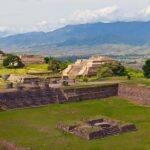
Hierve el Agua’s petrified waterfall pools and the two-level amphitheater
Hierve el Agua is the star name on this trip for a reason. You’re going to see the famous petrified waterfall effect, where mineral salts and high mineral concentration helped turn parts of the landscape into stone-like formations. The site also references a prehispanic irrigation system, and that connection is part of what makes it feel more than just a pretty viewpoint.
Here’s what I’d focus on once you arrive: the visitor area is described as an esplanade called the amphitheater, which gives you structured places to look out over the scenery. There are two distinct levels:
- On the lower level, you’re closer to springs and the irrigation system elements.
- On the upper level, you’re in the main visitor area designed for viewpoints.
That split helps you understand what you’re seeing instead of treating it like one flat photo stop. If you like getting that “oh, I see how it works” feeling, this place delivers.
Important timing note: Hierve el Agua is closed in rainy season. If your dates fall during wetter months, this tour may still run but you may need to be flexible about what you actually see at that location.
One bonus for planning: the admission ticket is free for this stop as listed for the experience. That keeps the day’s budget more predictable.
Mitla Zapotec ruins: Place of the Dead and carved-stone design
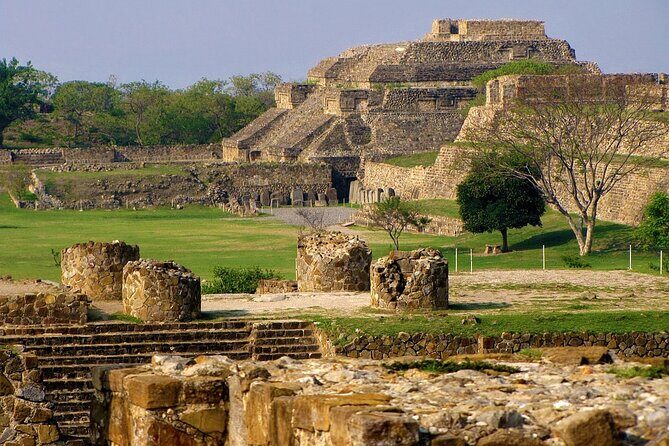
Next is Mitla, and this is where the tour shifts from surreal geology to human-made art. Mitla’s name is explained in two ways: in Nahuatl it’s linked to Place of the Dead, while the Zapotec name is lyobaa, meaning Place of burials. That helps you frame what you’re looking at—this wasn’t a random city grid, it was a place tied to ritual life.
The historical timeline given is specific. Mitla was inhabited from the classic period of Monte Albán (100 to 650 AD), then reached its peak in the post-classical period (750 to 1521 AD). In other words, you’re looking at a long-lived center with layers of significance.
What’s especially useful for your visit is the way the layout is described. The city is probably planned with structures grouped into five sets, currently called:
- the Columns
- the Church
- the Stream
- the Adobes
- the South
If you go in with that list, the ruins start to “click” while you walk. You’re not just wandering through stones; you’re mapping patterns.
Like Hierve, admission ticket is free in the information provided for this stop, and the tour includes entry fees for Mitla and other main sights.
El Árbol del Tule: why one cypress stops you in your tracks
After Mitla, the tour hits Santa María El Tule for the huge ahuehuete cypress called El Árbol del Tule. Even if you’ve seen photos before, this is one of those places where size feels hard to grasp until you’re standing next to it.
The details are wild: it’s described as about 40 meters high, with a diameter of 52.58 meters, weighing around 509 tons, and estimated at around 2,000 years old. Whether you focus on height, age, or the sheer mass, the point is the same: you’re looking at a living landmark that holds the town’s identity.
This stop also comes with practical advice: you’re encouraged to visit the community handcraft market and sample local foods. That’s a nice change of pace after the ruins and gives you a chance to buy something small and local if you’re into textiles or wood/handmade items.
Since it’s still part of a fixed-day itinerary, I’d treat the market as a quick browse rather than a long shopping mission unless your guide gives extra time.
Teotitlán del Valle rug-making: domestic looms and dye chemistry you can see
Teotitlán del Valle is where the tour becomes hands-on, and it’s a great fit if you want Oaxaca crafts with more than just a storefront. This town is known for woolen rugs made on domestic looms, and you’ll visit an artisan’s house to see the process.
What I love here is that the information isn’t vague. The use of natural dyes is spelled out with examples like:
- indigo
- moss
- grana cochinilla
Cochineal dye (grana cochinilla) is especially interesting because it ties modern craft color to older sourcing and traditions. Even if you don’t catch every step of dye preparation, you can see enough of the process to understand how the rug gets its character.
This is also one of the moments where you can shop—there’s time at least twice during the day where buying woven goods (and also mezcal later) is possible. The tone is not described as high-pressure, so you can browse, ask questions, and only buy if the price and quality make sense for you.
If you’re sensitive to being rushed in workshops, just remember: it’s still a day tour with multiple stops. The benefit is that you’ll go beyond a quick photo and actually see weaving in action.






Mezcal factory stop: learning the spirit and tasting the agave story
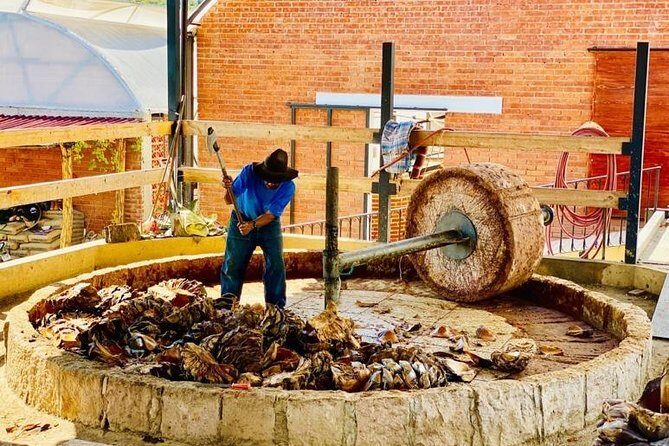
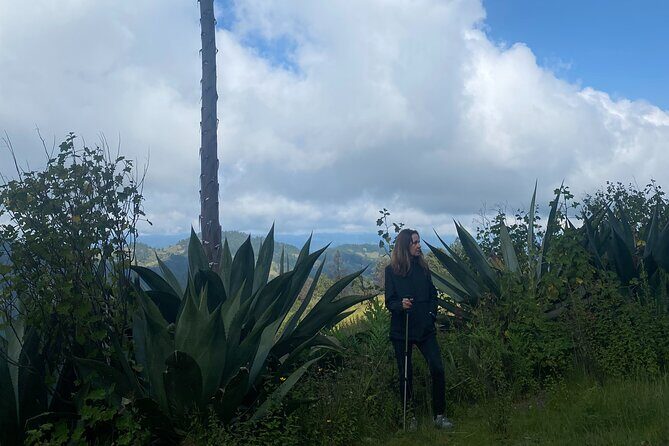
No Oaxaca craft day is complete without mezcal, and this route includes a stop at a mezcal distillery where you can learn about how mezcal is made. The description contrasts mezcal with tequila as an agave-based spirit, noting mezcal’s growing popularity beyond Mexico. You’re also told to expect to try it.
Here’s the value for your day: even a short distillery stop can turn mezcal from a bottle on a shelf into a process you understand. You’ll get the basics of the agave-to-spirit story and a taste to anchor it in your memory.
That said, this is the one part of the schedule where pacing can matter. Because mezcal involves tasting and explanation, the time you spend here can expand or contract. If you’re someone who hates being late for later viewpoints, I’d keep your expectations flexible and stay patient if the group runs a little behind.
As with the other main sights, the tour includes entrance fees to the mezcal factory, and the admission is indicated as free for this stop in the experience info.
Price and value: what $85 buys you on this route
At $85 per person, you’re paying for a lot more than “transportation.” The tour includes:
- hotel pickup and drop-off
- transportation between sites
- a certified English-speaking guide
- visits to Hierve el Agua, Mitla, Teotitlán del Valle, and a mezcal factory
- entrance fees for the included sights
- a mobile ticket
The free entry wording for multiple stops helps your value math. You’re not paying separate gate fees on top of everything else for the big attractions listed. And because the pickup and drop-off are included, you’re saving time and effort compared with coordinating your own taxis across three or four towns.
The one clear extra cost is food. A buffet lunch is listed at 150 pesos and isn’t included. If you skip it, bring snacks and water so you don’t feel shaky late in the afternoon. If you buy it, you’ll likely feel more comfortable keeping to the pace.
So is it worth it? For most people who want a structured “greatest hits plus crafts” day, it’s a solid deal. If you already know you’ll want a long, slow day at one site only, you might feel squeezed by the set routing.
Is this the right tour for you?
This works best if you:
- want one guided day covering multiple Oaxaca highlights
- care about crafts (especially rug-making in Teotitlán del Valle) and don’t want to hunt for workshops on your own
- like having context explained while you look at ruins and natural sites
- prefer hotel pickup over renting a car or stitching together taxis
You might skip or pick a different operator if:
- you’re very time-sensitive and want to maximize time at Hierve el Agua, Mitla, or Teotitlán del Valle without any schedule wobble
- you’re traveling during the period when Hierve el Agua can be closed due to rain
- you’d rather focus on fewer stops and slow down
FAQ
FAQ
What’s the price for this Oaxaca City full-day tour?
It’s priced at $85.00 per person.
How long is the tour?
The duration is about 9 hours.
What time does the tour start?
The start time is 8:00 am.
Do I get hotel pickup and drop-off?
Yes. Accommodation pick-up & drop-off is included.
Is the tour offered in English?
Yes, it’s offered in English, with a certified English-speaking guide.
Are tickets or entrance fees included?
Yes. Entrance fees for Hierve el Agua, Mitla, Teotitlán del Valle, and the mezcal factory are included, and the provided details list admission as free for those stops.
Is lunch included in the price?
No. A buffet lunch (150 pesos) is not included.
What’s included in the visit to Teotitlán del Valle?
You’ll visit Teotitlán del Valle and see an artisan’s house where you can watch the process of making woolen rugs on domestic looms using natural dyes.
What happens at the mezcal factory stop?
You’ll visit a mezcal distillery to learn how mezcal is made and you’ll be able to try it.
Is Hierve el Agua always open?
No. Hierve el Agua is closed in rainy season, according to the tour details.
What’s the cancellation policy?
The experience is non-refundable and cannot be changed for any reason.